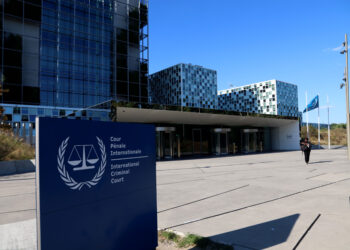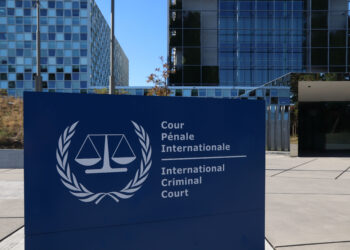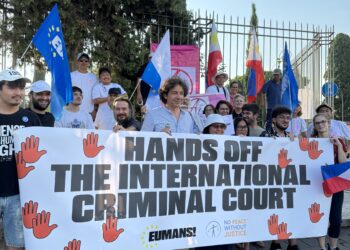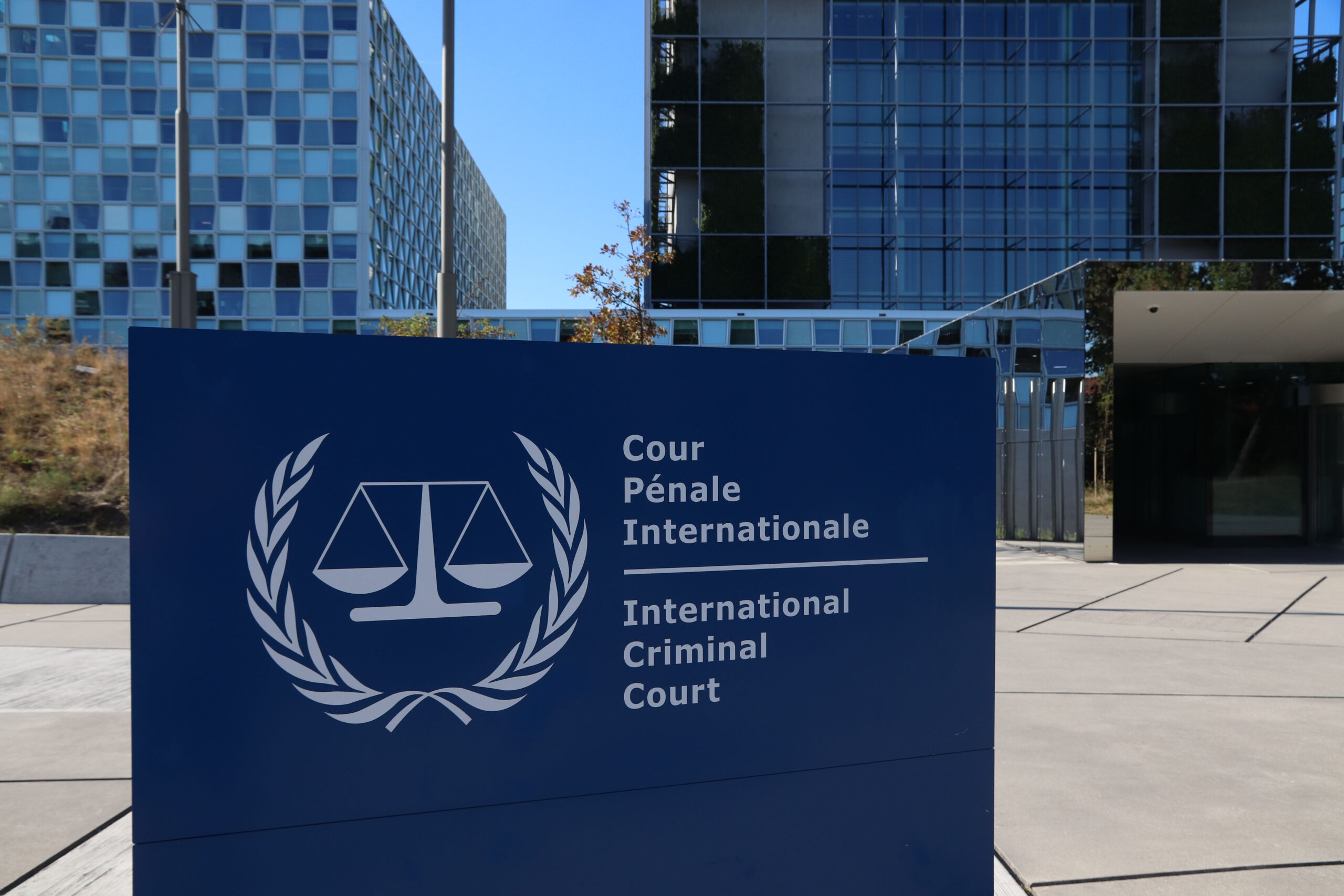
Brussels – The United States has announced sanctions against the International Criminal Court (ICC) – following numerous threats – and the European Union has come out in defence of the court, assuring that it will take all necessary measures to ensure its continued operation. Washington’s decision, as announced by the US Treasury Department, comes at the very same time as the award of the 2026 Nobel Peace Prize to Navanethem “Navi” Pillay, a South African lawyer and former judge at the ICC and United Nations High Commissioner for Human Rights. “We will ban transactions with this rogue court, cutting off its resources and paralysing its operational capacity,” said US Secretary of State Marco Rubio, announcing the sanctions. “President Trump will never allow the International Criminal Court to prosecute American citizens,” he added.
The US position is aimed at preventing the ICC from prosecuting US citizens, against a backdrop of tensions with the international judicial body, to which the United States is not a party. The sanctions risk undermining the court’s activities and hindering the work of those who collaborate with it.
The International Criminal Court has entrusted the states that established it with the responsibility of safeguarding its future. “The Rome Statute represents a collective promise: the most serious crimes, which are of concern to the entire international community, must not go unpunished,” reads the body’s statement, which calls on countries to take concrete measures to ensure the resources necessary for the continuation of its activities.
“This is not merely a matter of defending a single institution, but of safeguarding the international order based on the rule of law,” the Court emphasises, warning that the consequences of the crisis also affect the protection of victims of mass atrocities. “No one should be punished for serving the cause of justice,” continues the statement, which places the responsibility on the international community to demonstrate whether it intends to uphold the proclaimed principles or abandon them under pressure.
“It is deeply regrettable that the United States has announced its intention to impose sanctions,” said the European Commission in a note, reiterating the EU’s support for the ICC. Brussels has given assurances that it will work “in close contact” with the court to ensure its continued and effective operation and with all 125 States Parties to the Rome Statute to safeguard its independence.
The EU is also prepared to take “all necessary measures” to enable the Court to continue its work in investigating and prosecuting war crimes and crimes against humanity, while safeguarding the interests of European operators in the single market. The Commission has also emphasised that “the six-month period” provided for before the measures come into force “still leaves room for dialogue.”
Before the US decision against the ICC was announced, the Nobel Peace Prize runner-up, Pillay, had called on political leaders to fulfil their responsibilities in safeguarding human rights and upholding international law. “You have a legal obligation: beyond any other moral commitment, you have a legal obligation to protect human rights, to prevent war and to give substance to the United Nations Charter,” she stated during a brief press conference at the International Academy of the Nuremberg Principles.
Words which, in light of the sanctions announced a few hours later by Washington, take on an even greater significance. “The last thing we want is for rogue states to act on their own initiative, as in the case of the attack on the International Criminal Court,” she added, calling on every state to fulfil its obligations.
English version by the Translation Service of Withub