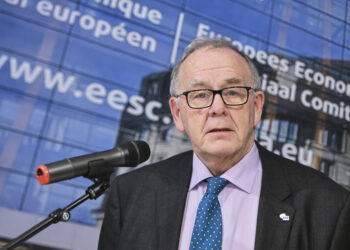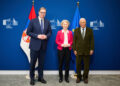
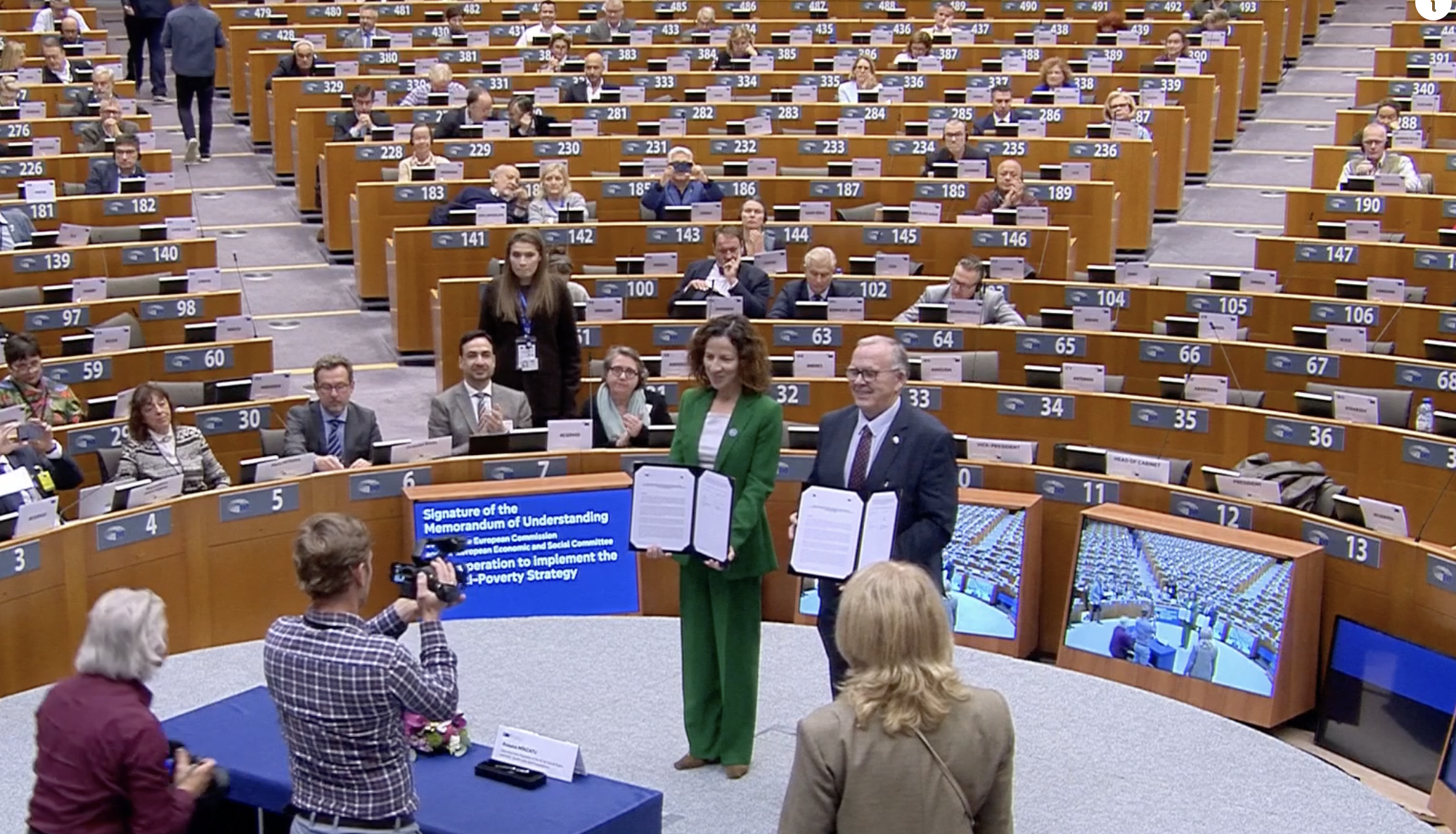
Brussels – Joining forces to tackle poverty in Europe. This is the aim of the Memorandum of Understanding on the European strategy to combat poverty, signed today (22 October) by the President of the European Economic and Social Committee (EESC), Séamus Boland, and the Executive Vice-President of the European Commission for Education, Culture, Labour and Social Rights, Roxana Mînzatu, representing the European Commission. The stated aim is clear, explained Boland: “To jointly implement the EU’s first strategy against poverty.” And in this endeavour, “I cannot emphasise the importance of this memorandum of understanding enough,” he added.
The text is structured around four key points. Firstly, provision has been made for “the establishment of a framework for cooperation” between the Berlaymont and the EESC to support the implementation of the EU strategy against poverty, the strengthened European Child Guarantee, and other related initiatives. The text also provides for a strengthening of political dialogue between the two institutions, including annual debates in plenary session and regular exchanges between the relevant Commissioner and the President of the EESC.
Besides “contributing through its normal consultative procedures,” the EESC is also called upon to contribute “in particular by drawing up opinions, providing analytical input on policies to combat poverty, and facilitating consultation with employers, workers, and civil society organisations.” The aim is to publicise the Commission’s initiatives and guidelines, supporting the implementation and monitoring of the Anti-Poverty Strategy, and to promote the participation of people living in poverty through further awareness-raising and communication activities. Finally, the text includes proposals for the EESC to undertake to provide “training for its members on the policy frameworks for combating poverty (with the support of the Commission) and to support awareness-raising activities for the future EU Coalition against Poverty.”
The signing “is a sign of our shared determination to work more closely together, to strengthen our dialogue and to turn our shared ambitions into concrete results,” said Mînzatu. It is “an honour and a responsibility that we are happy to take on,” concluded Boland.
According to the estimates from the Berlaymont Building, poverty affects 1 in 5 people in Europe, including 1 in 4 children, while around one million people are homeless across the EU. For this reason, in May 2026, the Commission proposed the EU’s first strategy against poverty, a document setting out a roadmap towards the EU’s objective of reducing the number of people at risk of poverty or social exclusion by at least 15 million by 2030 and eradicating poverty by 2050. The European Child Guarantee is an instrument established in 2021 to prevent and combat child poverty and social exclusion, ensuring that vulnerable children and young people have access to a range of essential services. In May, the Berlaymont Building incorporated it into the EU’s anti-poverty strategy.
English version by the Translation Service of Withub