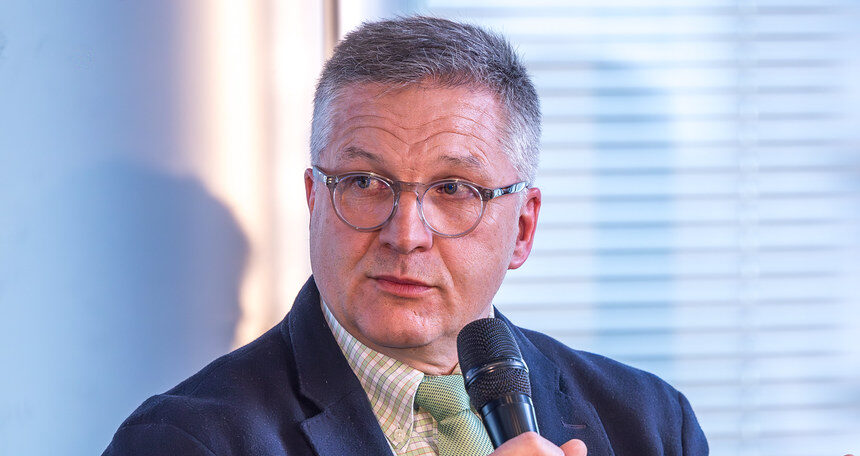
Brussels – “According to the FAO’s State of Food Security and Nutrition in the World 2026 (SOFI) report, approximately 645 million people worldwide experienced hunger in 2025, equivalent to 7.8 per cent of the global population. We need global coordination to make progress in strengthening food security, given that these people still go to bed hungry today.” This was what Stoyan Tchoukanov, President of the NAT section (Agriculture, Rural Development and Environment) of the European Economic and Social Committee (EESC), told Eunews in an interview. This week, from October 19 to 23, 2026, Tchoukanov is in Rome for the 54th plenary session of the FAO Committee on World Food Security (CFS) at its headquarters. During his visit, Tchoukanov will hold bilateral meetings with various stakeholders, participate in multilateral discussions, and attend several thematic events, including a panel focused on the role of women in rural areas. The President explained to Eunews the significance of his mission, while providing an overview of the state of food security in Europe. The NAT section is one of the EESC’s specialized bodies: it coordinates work and drafts opinions on topics such as agriculture, the Common Agricultural Policy (CAP), rural development, and more.
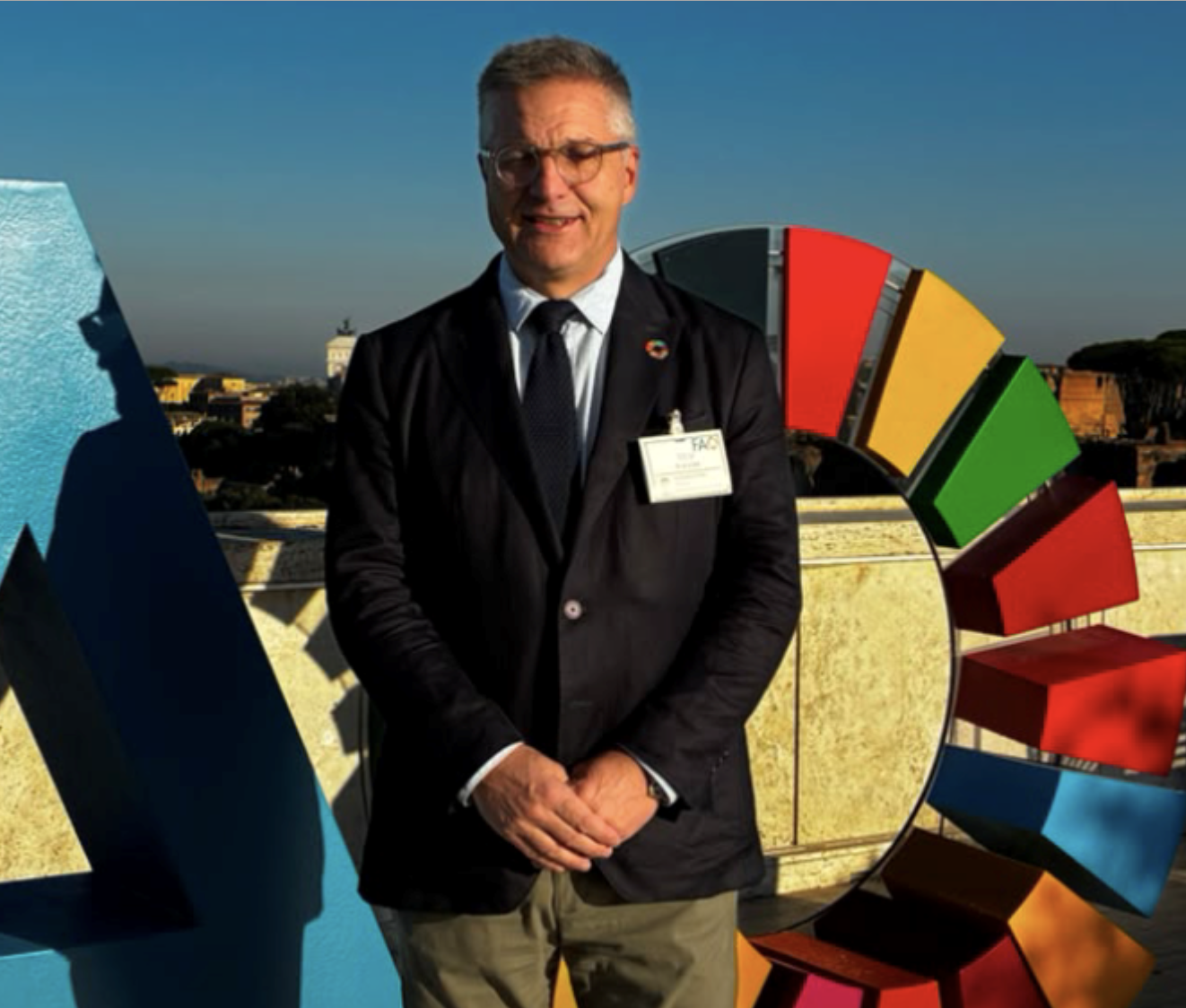
Eunews: What is the EESC’s agenda for the Sustainable Development Goals (SDGs), and what messages is it conveying in Rome?
Stoyan Tchoukanov: “For us, the CFS and, more broadly, our collaboration with the FAO, is of utmost importance, as it provides a global perspective on the issues we work on. As a European institution representing organized civil society, our efforts naturally tend to focus on these two dimensions. Many processes unfold on a global scale, and it is impossible to remain isolated from them. In an era marked by misinformation, the FAO stands out as a highly reliable source, offering a level of precision that is invaluable. Since the EESC is an advisory body, we must be able to make choices and reach decisions based on accurate, timely information. Consequently, this collaboration enables us to champion the perspective of European organised civil society, supported by precise data and a comprehensive view of the global processes that shape the entire food system.”
E.: What does the EESC do at the European level to ensure food security across the continent?
S.T.: “We represent organized civil society, divided into three groups: employers, workers and, finally, civil society organizations. The key to food security lies in the interaction between these three groups. Farmers play a central role because they are the producers, while environmental activists focus on soil health and climate change. Then there are those working in the food industry, supermarkets, and the entire agri-food supply chain. In short, the food we consume travels a long way before reaching our tables. For us at the EESC, it is essential to take every element of this chain into account. If even one of its links is missing, the whole structure collapses.”
E.: Do you believe there are specific European regions that are particularly affected by this issue?
S.T.: “Southern Europe is certainly more affected by climate change, but it is not the only part. We are seeing effects beginning to manifest in the North as well, albeit in different forms. Another urgent problem is the abandonment of rural regions, an issue that impacts many parts of Europe. This is especially true for areas bordering Russia, due to the war. The situation is quite complex and does not follow a single trajectory.”
E.: Could you comment on the ongoing negotiations regarding the Multiannual Financial Framework (MFF), specifically the cuts proposed by the Irish presidency to the funds allocated for the Common Agricultural Policy (CAP) and cohesion policy?
S.T.: “We believe that food security is an integral part of the European Union’s overall security. Cuts to the budget for the Common Agricultural Policy (CAP) are deeply concerning for the entire European agricultural community. However, we are not prepared to give up. Throughout human history, most wars have been fought over food; therefore, I believe that failing to support production (and, by extension, European food and water sovereignty) would be an irreparable mistake. We must not allow the food industry to suffer the same fate as the textile or photovoltaic sectors. Today, production in both those industries has been offshored outside of Europe, and we cannot accept the same happening to our food products. It would mean losing our industrial competitiveness and our standing as a global player in food production. For this reason, the current proposal for the MFF remains a massive nutritious question mark.”
E.: What is the impact of the war in Ukraine on food security in Europe, as well as in regions that are particularly hard-hit, such as Africa?
S.T.: “Naturally, there is a particular focus on Europe. However, it must be noted that Ukraine and Russia are currently competing for exports to African nations, which rely on these supplies. In this context, the Black Sea region has become a vital hub for agri-food trade, one that must be protected at all costs. Given the recent attacks by Moscow in this area, we can see increased pressure on the markets; more importantly, it is clear that Putin is once again using food as a weapon. As is often the case, it is the most vulnerable countries and individuals who bear the consequences, as they cannot afford to pay higher prices for basic commodities.”