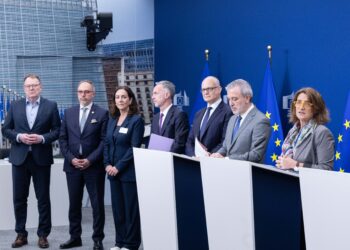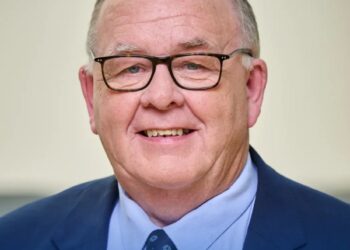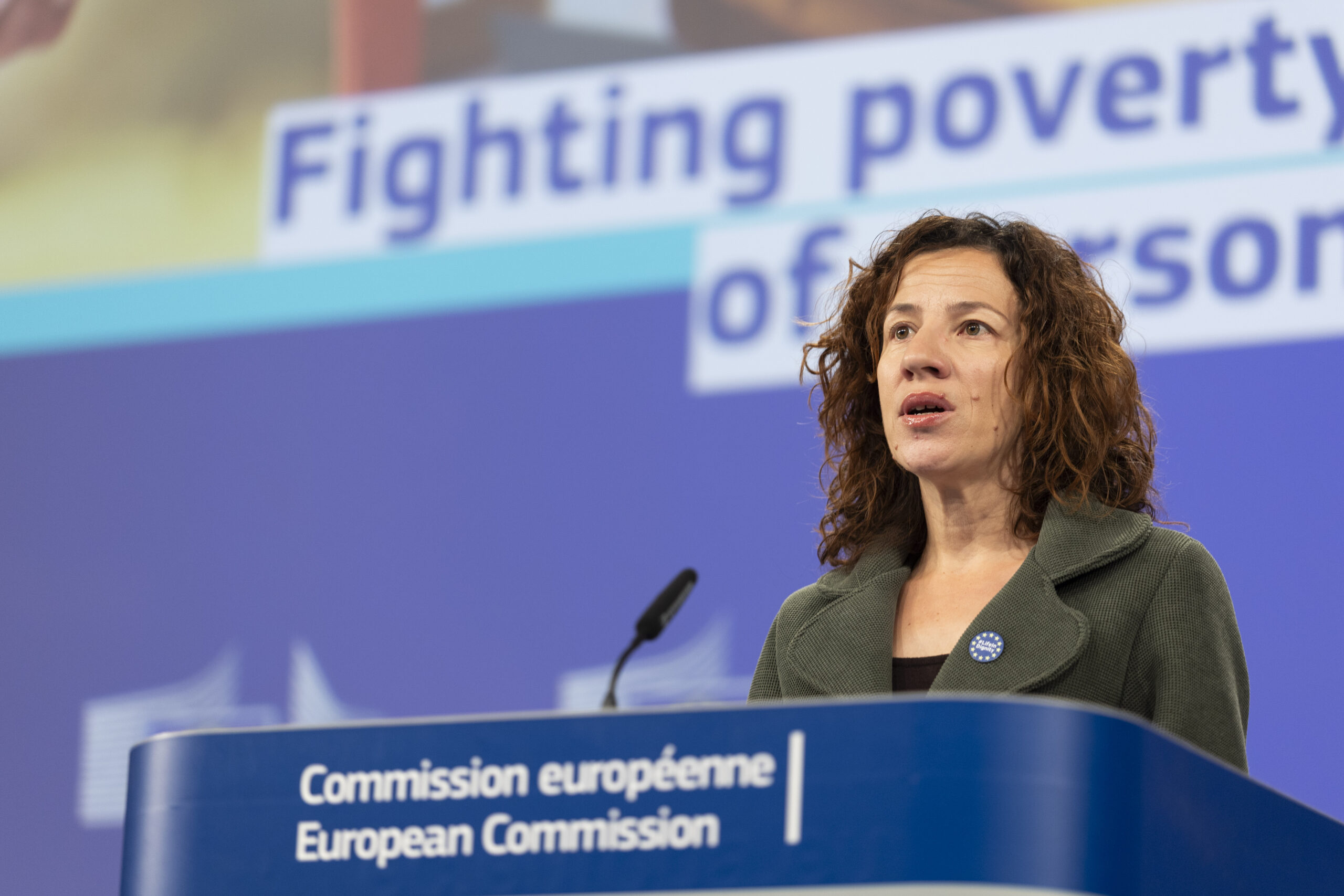
Brussels – “One in five Europeans is considered to be living in poverty” and, therefore, “the question is not whether we can afford to act, but whether we can afford not to act.” With these words, the European Commission’s Executive Vice-President for Education, Culture, Labour and Social Rights, Roxana Mînzatu, presented the proposal for new measures to tackle poverty and improve the lives of people with disabilities. To achieve this goal, the Berlaymont building also plans to allocate at least €100 billion in the 2028–2034 European Union budget. In detail, the package includes the first-ever European strategy against poverty, a proposal for a Council recommendation on combating housing exclusion, and two communications, dedicated respectively to breaking the cycle of child poverty and to strengthening the strategy for the rights of people with disabilities until 2030.
The aim of the package is to achieve the target set in 2021 to reduce the number of people at risk of poverty or social exclusion by at least 15 million by 2030 and eradicate poverty by 2050. This is because the situation is rather worrying, as confirmed by the European Union’s statistical office, Eurostat, which has published today data for 2025: last year 92.7 million people in the EU were at risk of poverty or social exclusion, i.e. 20.9 per cent of the population. Women are more affected than men (21.9 per cent compared to 19.8 per cent), as are households: more than one-fifth (22.1 per cent) of people living in households with dependent children are at risk of poverty or social exclusion. Understandably, then, employment status has a significant impact on the risk of poverty or social exclusion, with rates ranging from 10.9 per cent among the employed to 66.3 per cent among the unemployed.
In light of these figures, the European Commission has decided to take action by focusing on three key challenges: access to housing, employment, and support for children living in poverty. In addition to these, there is a specific focus on the social exclusion of people with disabilities. “Poverty and exclusion are challenges that we can and must overcome,” commented the President of the European Commission, Ursula von der Leyen. “Today we are presenting a strategy to prevent and reduce poverty. We are taking decisive action with a strengthened Child Guarantee, better prevention of homelessness and the full inclusion of people with disabilities. Dignity, opportunity, and equality. These are the key values of the Europe we are building,” she emphasised.
The strategy begins with access to housing because, as Commissioner Mînzatu highlighted at the press conference following the College of Commissioners’ meeting that adopted the strategy, “housing is a fundamental right,” yet prices have risen by 60 per cent since 2013, making it increasingly difficult to access adequate housing. This is an increasingly pressing issue on the European agenda and among the institutions’ main priorities.
Secondly, as Mînzatu pointed out, “work is the primary route out of poverty.” The aim is to launch consultations with social partners on possible new legislation to integrate people excluded from the labour market, as well as to strengthen cooperation with national, regional, and local governments, businesses and civil society. With this in mind, plans are in place to establish a Coalition against Poverty by the end of the year and to launch a structured dialogue with people experiencing poverty, involving them directly in the policies that affect them.
Another crucial issue is that of child poverty: one in four children lives in poverty, a situation described as “unacceptable”, particularly in light of the lack of significant progress over the last five years. The European Child Guarantee is the EU’s main tool for supporting the most vulnerable children, ensuring free and effective access to essential services such as education, healthcare, and school meals. The Commission has proposed further strengthening this tool to tackle a persistent social emergency.
But inclusion also concerns the approximately 90 million people with disabilities in the European Union. A condition that all too often goes hand in hand with, or leads to, marginalisation and poverty. “Full inclusion is essential both to ensure respect for rights and to revitalise the European economy and democracy,” noted Mînzatu. The figures show that only 55 per cent of people with disabilities are in employment, compared with 77 per cent of people without disabilities; around 1.4 million still live in institutional settings, and one in three is at risk of poverty, almost double the EU average.
To this end, the Commission intends to step up its efforts by implementing the European Disability Charter and the Parking Charter, creating an Alliance for Independent Living to promote community-based solutions rather than institutionalisation, and improving accessibility, including through investment in assistive technologies and artificial intelligence tools.
On the economic front, the Commission explains that there is €50.2 billion from the European Social Fund Plus for social inclusion and the fight against material deprivation and that, following a mid-term review of Cohesion Policy, the resources allocated to the fight against child poverty “have increased by 5.4 per cent and funding for the fight against material deprivation by 3.5 per cent.” Furthermore, it estimates “at least €100 billion in the EU’s next long-term budget for social policies, including the fight against poverty”, detailing what was in the proposal for the Multiannual Financial Framework (MFF) reported as 14 per cent of the €865 billion allocated to the new national and regional partnership plans. At the same time, the European Investment Bank (EIB) plans to finance €22 billion in social infrastructure over the two-year period 2026–2027, and the Council of Europe Development Bank will continue to support investment in human capital, inclusive and resilient living environments, access to credit and job creation, with around €3 billion per year.
The eradication of extreme poverty for all people worldwide by 2030 is the first of the Sustainable Development Goals (SDGs) of the United Nations 2030 Agenda. In 2025, 808 million people—1 in 10 people globally—were living in extreme poverty, defined as living on less than $3 per person per day in 2021 purchasing power parity terms. This figure has been revised upwards from previous estimates due to an update of the poverty threshold, and if current trends continue, 8.9 per cent of the world’s population will still be living in extreme poverty by 2030.
English version by the Translation Service of Withub