Brussels – In Denmark, more than eight in ten women have had a mammogram as part of organised screening programmes in the past two years. In Hungary, just over one in four. A gap of more than fifty percentage points lies between them: this is the picture for 2024 of European inequalities in breast cancer prevention, according to the latest Eurostat figures. Sweden and Finland exceed 81 per cent, while Hungary stands at 27.2 per cent. These figures illustrate just how far access to prevention is still from being uniform across the European Union.
But cancer is not measured solely in percentages, early diagnoses, and screening programmes. There comes a point where the numbers end, and the body begins: the body that changes, that bears the marks of operations and treatments, that sometimes becomes difficult even to recognise – both for oneself and for one’s loved ones. There is femininity grappling with hair loss, with scars, with the transformations imposed by treatment. And there is the need – often sidelined in accounts of the illness – to find a way to look at oneself again.
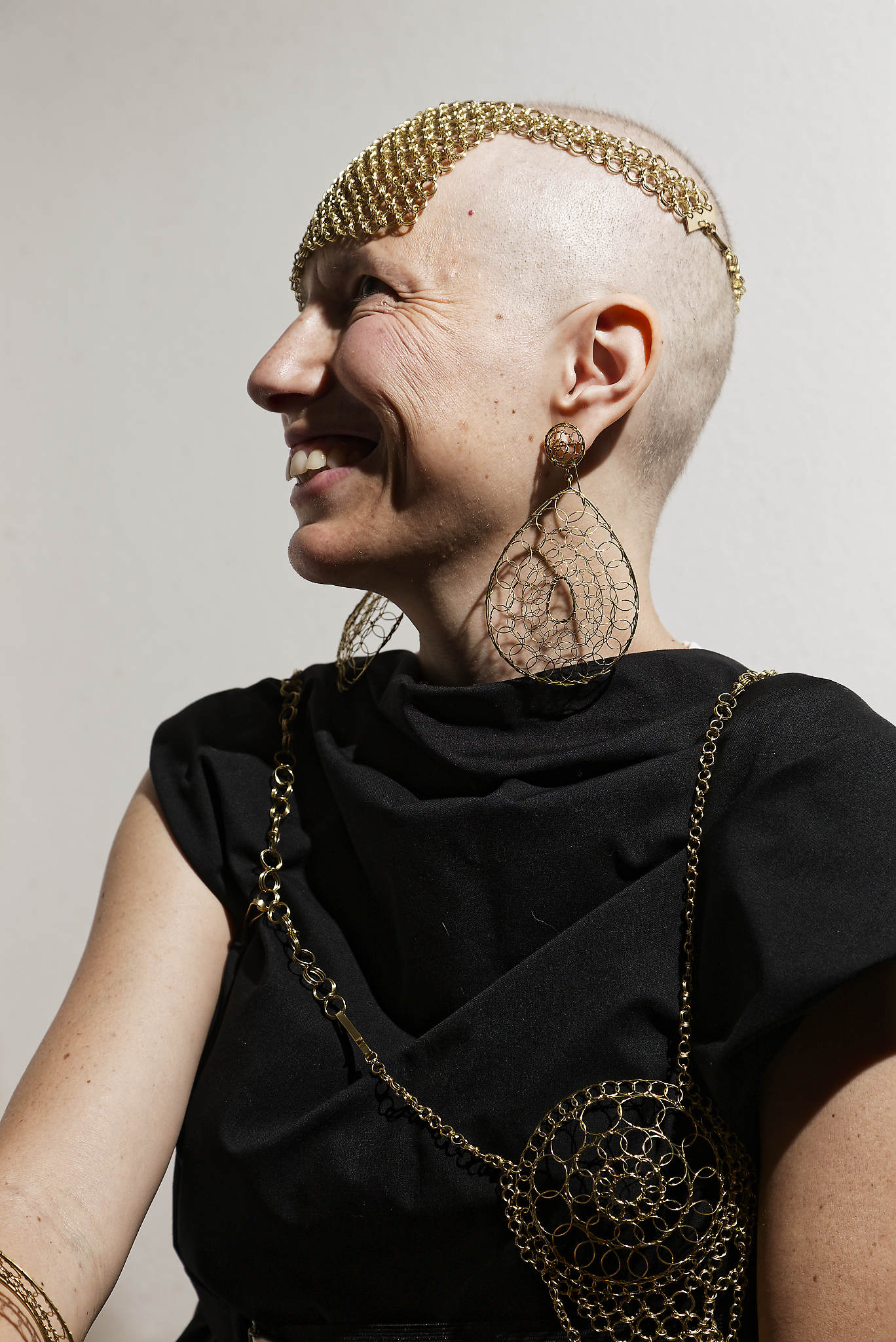
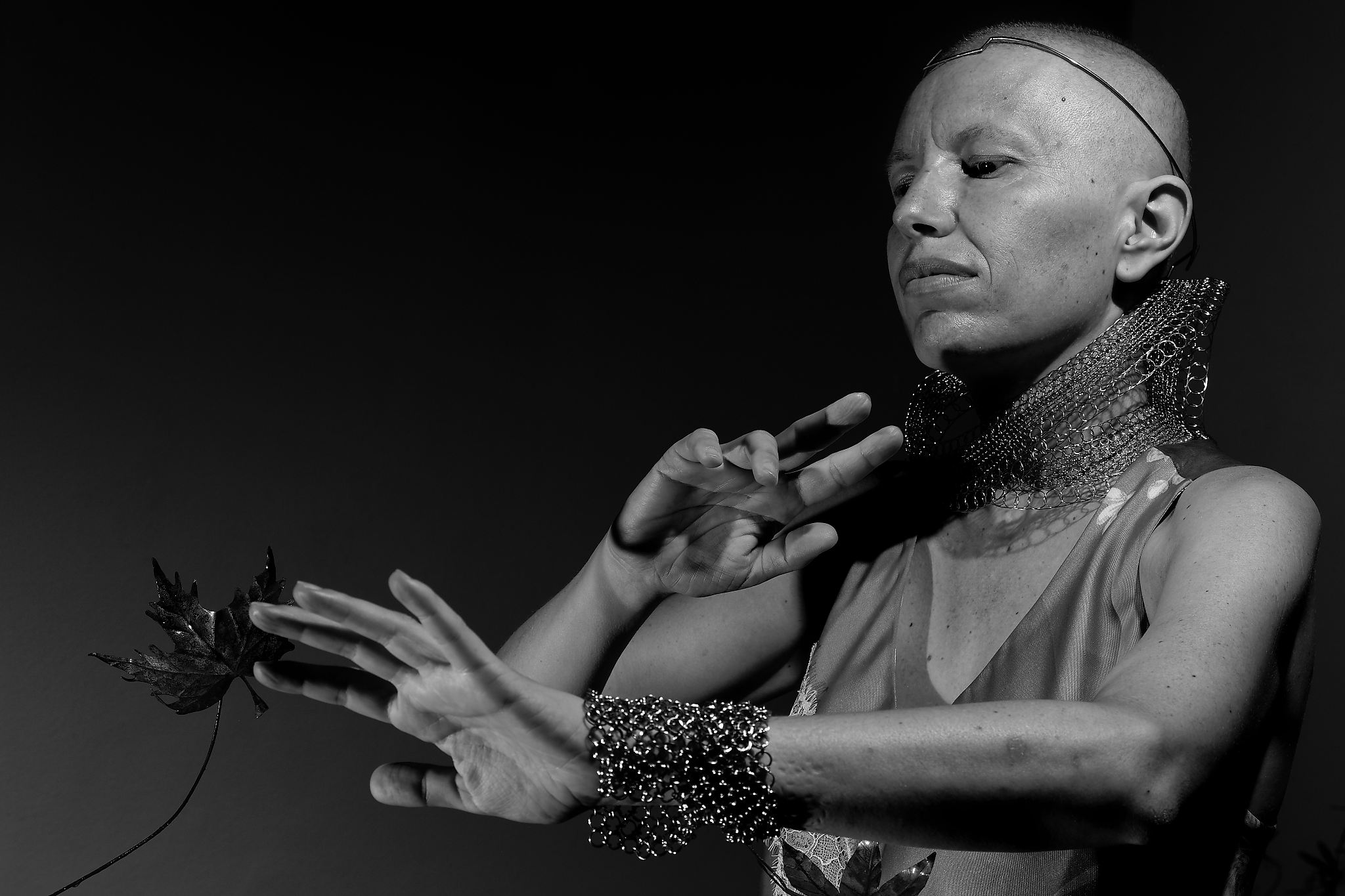
This is the starting point for “Cleopatra (m)Alata”, the travelling photography exhibition conceived by Miriam Bruni together with the photographer Roberto Cerè. In the portraits, Bruni is shown with her head shaved, adorned with jewellery, without hiding the signs of her illness. She does not seek to make cancer beautiful, nor to suggest that art can defeat it. She does something different: she reclaims the right to tell her own body’s story, before the diagnosis and treatment come to define it entirely.
“Having never thought that being diagnosed with cancer was something to be ashamed of, I simply carried on”, with a photographic exploration of herself, Bruni explains in an interview with Eunews. Her meeting with Cerè and their shared passion for art transformed that personal journey into a public project: to show a body “put to the test but still capable of dialogue, tenderness, creativity and a spirit of communion.”

The title itself is already a statement of intent. Within ‘malata’ (ill), Bruni found ‘alata’ (winged): simply removing one letter opens up a different perspective. It is not a magic formula; it does not erase the pain nor does it sugarcoat the reality of treatment. It is a way of seeking, within a word that seems to denote only a condition, the possibility of not entirely identifying with it. “Realising that within the adjective ‘ill’ lay the word ‘winged’ struck me as an excellent starting point, and a clue to build on,” she explains.
Hers is not a story of illness told in hindsight, with the reassurance of a happy ending. Bruni was under 35 when she was diagnosed with her first breast cancer, before the recommended age for routine screening. She later discovered she was a carrier of the BRCA1 genetic mutation. Today, she is undergoing chemotherapy once again and is battling cancer for the third time in twelve years.
It is an experience that lends concrete meaning to the European debate on prevention, without reducing the issue to screening alone: population-based strategies and individual surveillance programmes are not the same thing, especially when genetic factors come into play. The target set by the European plan to combat cancer is to offer screening for breast, cervical and colorectal cancer to 90 per cent of the EU population who are eligible. The differences between Member States show just how far there still is to go.
Yet, even when prevention comes too late, or the illness returns, there remains an aspect of the experience that no statistical indicator can capture: the relationship with one’s body following surgery, the emotional toll of treatment, and the changes to one’s identity. Bruni does not attempt to sum it all up in a message of courage. She does not claim to speak on behalf of all patients, nor does she offer advice that she does not feel able to give at this time.
“I don’t have the strength right now to give advice. I offer my testimony as a cancer patient, that I can do, and my poetic and photographic work,” she says. And on the physical and emotional consequences of treatment, she adds: “There would be so much – too much – to say. Perhaps that is why I have taken the quiet path of artistic portraits.”
It is precisely that silence that makes the images so eloquent. The jewellery also evokes the human warmth received during and after hospitalisation: signs of a closeness that coexists with the harsh reality of the illness. The body is not hidden, nor is it transformed into a test of courage to be displayed. It becomes a language, a way of continuing to exist in the world even when illness alters its contours. “To suffer without ceasing to offer oneself,” reads the exhibition poster. This does not mean denying the pain, nor does it mean insisting on drawing a lesson from it. It means trying to navigate through it without relinquishing one’s ability to create, to connect with others and to still recognise oneself in life.
Since 2023, when the exhibition began its journey, Bruni says she has found new inspiration in sharing her story, as if her inner resources had been given “new life”. This does not mean that the suffering has become any less burdensome. It means that it can be recounted without letting it take over everything.
While Europe seeks to bridge the gaps in access to preventative care, “Cleopatra (m)Alata” takes the discussion beyond mere statistics. It reminds us that a diagnosis does not define a life, and that a body affected by illness does not cease to be a body capable of expressing itself, creating and connecting with others. The illness remains, in all its severity. But it does not have to have the final say.
Frida Kahlo said that the most powerful art in life is to turn pain into a talisman that heals.
I know pain all too well, and not just because of cancer; that is why I cannot help but seek some meaning in it, for myself and for others. Realising that the word ‘alata’ (winged) was hidden within the adjective ‘malata’ (ill) struck me as an excellent starting point, and a clue to build on…