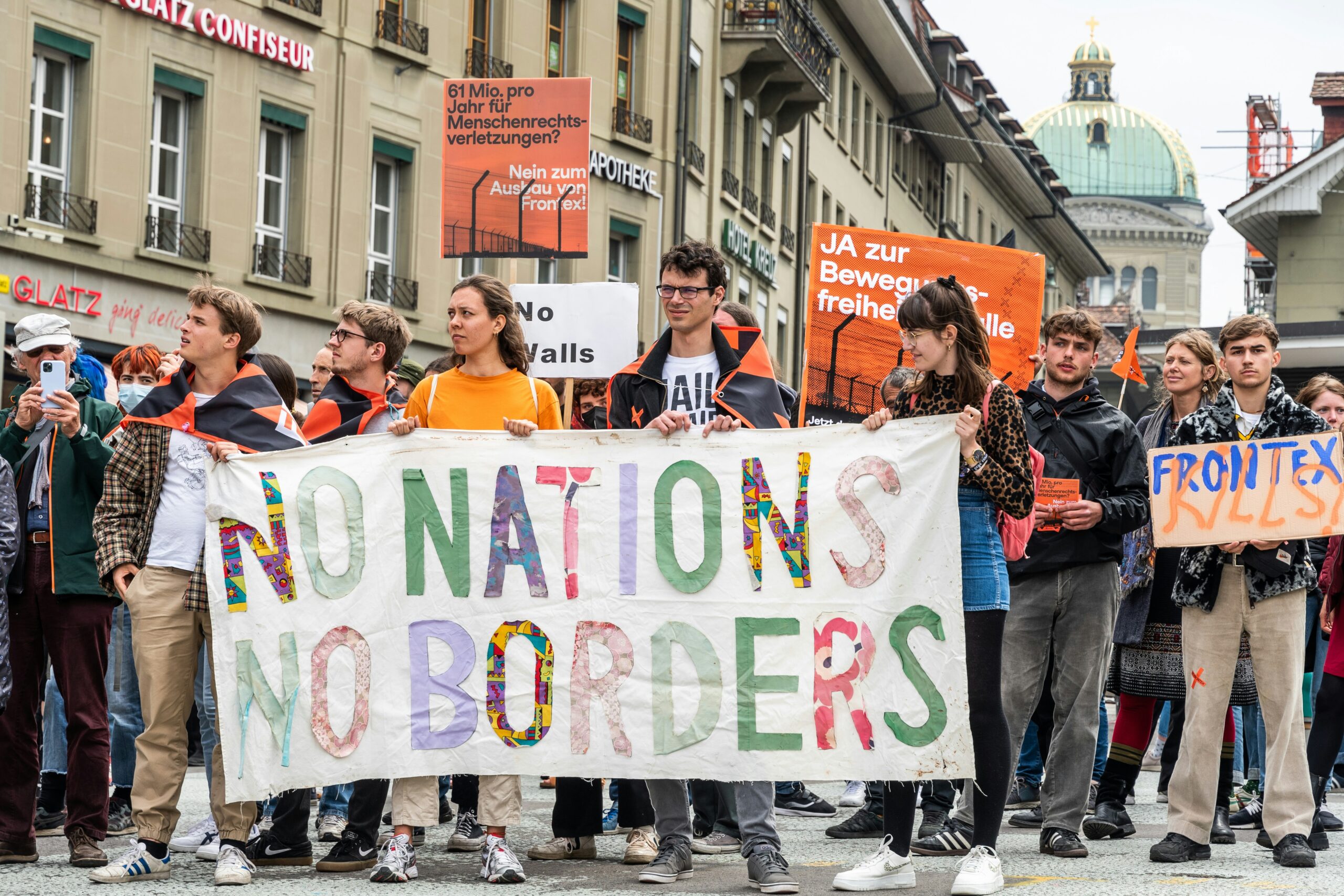
Brussels – Illegal crossings of European borders have been more than halved and return rates exceed 30 per cent. Yet this is not enough: Frontex must be given even more staff, resources, and powers to turn back migrants. The European Commission today (27 October) proposed strengthening the European Border and Coast Guard Agency, Frontex, to boost its “capacity to protect external borders” and to “transform it into the EU’s central actor for returns.” The reason? According to a statement from the EU executive, “the common external borders are being tested by a changed geopolitical and security context,” and therefore new rules are needed to strengthen the Agency’s mandate.
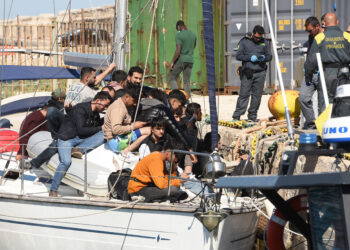
The fuse was lit in Ceuta by the events of this summer which, it seems, have alarmed the European Union, its internal market, and its 400 million inhabitants. “Events must not be allowed to turn into a crisis,” pointed out the European Commissioner for Migration, Magnus Brunner, referring to the border crossings that took place this summer in the Spanish exclave. All this despite the fact that over the last two years – as the Berlaymont Building itself confirms – illegal border crossings have more than halved and the return rate has risen, now standing at over 30 per cent. That is not enough: we must continue to turn away – and do so with even greater force – people fleeing war, hunger, persecution, and economic hardship, certainly not from places where life is easy. This is a problem that Brunner does not seem to recognise; if anything, he is concerned with the opposite, namely claiming that Frontex’s new mandate will make it easier to “decide who we want in the EU and who can leave it.”
Also today, the Berlaymont Building presented a Regulation on digitalisation of case management in the area of return, readmission and reintegration
with the aim of “reducing administrative burdens and providing a single digital interface for the entire return procedure.” To come into force, both regulations must first be approved by the European Parliament and the Council.
Frontex’s new mandate
With regard to returns, Member States remain primarily “responsible for border protection and the return of persons without the right of residence,” and today’s proposal aims to ensure that Frontex has “a comprehensive approach to assist them in fulfilling this responsibility.” The regulation sets out three priorities. Firstly, the pooling of resources and operational capabilities, which “no single Member State could sustain on its own.” Specifically, the Commission has proposed to “gradually increase Frontex’s permanent corps to 30,000 officers, creating a new ‘European Border and Return Reserve’ of 17,000 officers who will remain at the disposal of Member States and may be deployed where necessary.” Added to this is “easier access to state-of-the-art equipment and technology.”
The second is to make the Agency “stronger on returns” by setting up “a dedicated return coordination centre to gather and analyse operational information and support planning and coordination.” Frontex’s support will therefore cover “the entire spectrum of the return process, from early identification and advice on voluntary return to the conduct of return operations and the provision of reintegration assistance.”
At a press conference, Brunner stated that Frontex carried out “64,000 returns last year, involving more than 220 flights.” But “we can and must do better,” he noted. The new framework will also “enable us to support third countries with returns, both in terms of technical and operational assistance.” According to a source close to the matter, at present, “Frontex can provide technical assistance to third countries, mainly through training and capacity-building activities, on the basis of cooperation agreements.” Today’s proposal introduces the possibility of organising and carrying out returns from non-EU countries to other non-EU countries – in other words, deportations – for which “it is necessary to conclude a specific agreement with the country concerned, which respects fundamental rights and the principle of non-refoulement.”
Finally, the “effective crisis response”. This aims to ensure that the Agency is “able to help identify dangerous trends in a timely manner and to intervene rapidly in the event of an emergency or crisis.” This will take the form of “a dedicated online monitoring and response centre, with an explicit mandate for Frontex to monitor publicly accessible social media content, identify developments relevant to the management of external borders, and support action against illegal online content linked to border security risks.”
Virkunnen stated that “criminal smuggling networks are becoming increasingly professional, adapting rapidly and using new technologies and social media to coordinate illegal crossings.” For this reason, the “new online monitoring and response centre” will be able to “monitor publicly accessible social media content in order to identify developments relevant to the management of external borders and support action against illegal online content linked to border security risks.” Together, “these tools significantly improve early warning, preparedness, and crisis forecasting,” he emphasised.
The digitisation of repatriation
The Commission has also proposed a new regulation to digitise return, readmission and reintegration procedures across the EU. The aim is to modernise the management of return cases, simplify and speed up administrative procedures through digitalisation, reduce administrative burdens and improve data collection and sharing. The new rules will also strengthen Frontex’s role in developing a new EU digital architecture for Member States and will support the new Return Regulation, while respecting data protection rules and fundamental rights. Internal sources have clarified that the new initiative “does not create a new centralised database,” but is based on existing tools. Specifically, “three tools are envisaged, for three processes: a return case management system, a readmission case management system (for contacts with third countries) and a reintegration support tool.” The rationale behind the new system is that “national systems are very diverse and do not communicate with one another or with Frontex”. An EU official also hopes that the implementation of this system can be completed within four years.
As part of the current negotiations on the Multiannual Financial Framework, the proposal put forward today calls for a budget of €11.8 billion for Frontex, while it is currently allocated six billion. As to why it is necessary to double the budget, Brunner simply stated, “it is the Member States who are asking for it” and that, “despite return rates of 33 per cent, we have not achieved what we set out to do.”
So, the figures tell a story of success when it comes to repatriation, and this picture makes it difficult to understand why the European Commission insists on criminalising migrants. Brunner did not let his guard down: he simply shifted the blame onto the far right. “A single Member State cannot tackle the issue of illegal migration on its own because there was enormous pressure on the entire system, on the security systems, and this was what was fuelling the far right” and for this reason the Berlaymont Building “must regain control of the issue,” he commented. Perhaps without realising that, in doing so, the Commission ends up legitimising and mimicking the far right. In pursuit of an electorate which, as in every election, always opts for the original when faced with a choice.
English version by the Translation Service of Withub