- Europe, like you've never read before -
Wednesday, 18 November 2026
No Result
View All Result
  • en ENG
  • it ITA
Eunews
  • Politics
  • World
  • Business
  • News
  • Defence
  • Health
  • Agrifood
  • Other sections
    • Culture
    • Rights
    • Energy
    • Green Economy
    • Finance & Insurance
    • Industry & Markets
    • Media
    • Mobility & Logistics
    • Net & Tech
    • Sports
  • Eunews Newsletter
  • European 2024
    Eunews
    • Politics
    • World
    • Business
    • News
    • Defence
    • Health
    • Agrifood
    • Other sections
      • Culture
      • Rights
      • Energy
      • Green Economy
      • Finance & Insurance
      • Industry & Markets
      • Media
      • Mobility & Logistics
      • Net & Tech
      • Sports
    No Result
    View All Result
    Eunews
    No Result
    View All Result

    Home » Ambiente » EESC: “Recycling makes the EU economy less vulnerable”

    EESC: “Recycling makes the EU economy less vulnerable”

    According to an opinion adopted by the European Economic and Social Committee, avoidable losses in value resulting from the linear use of materials amount to €25,400 billion worldwide each year, equivalent to almost a third of global GDP

    Iolanda Cuomo by Iolanda Cuomo
    28 October 2026
    in Ambiente, Business
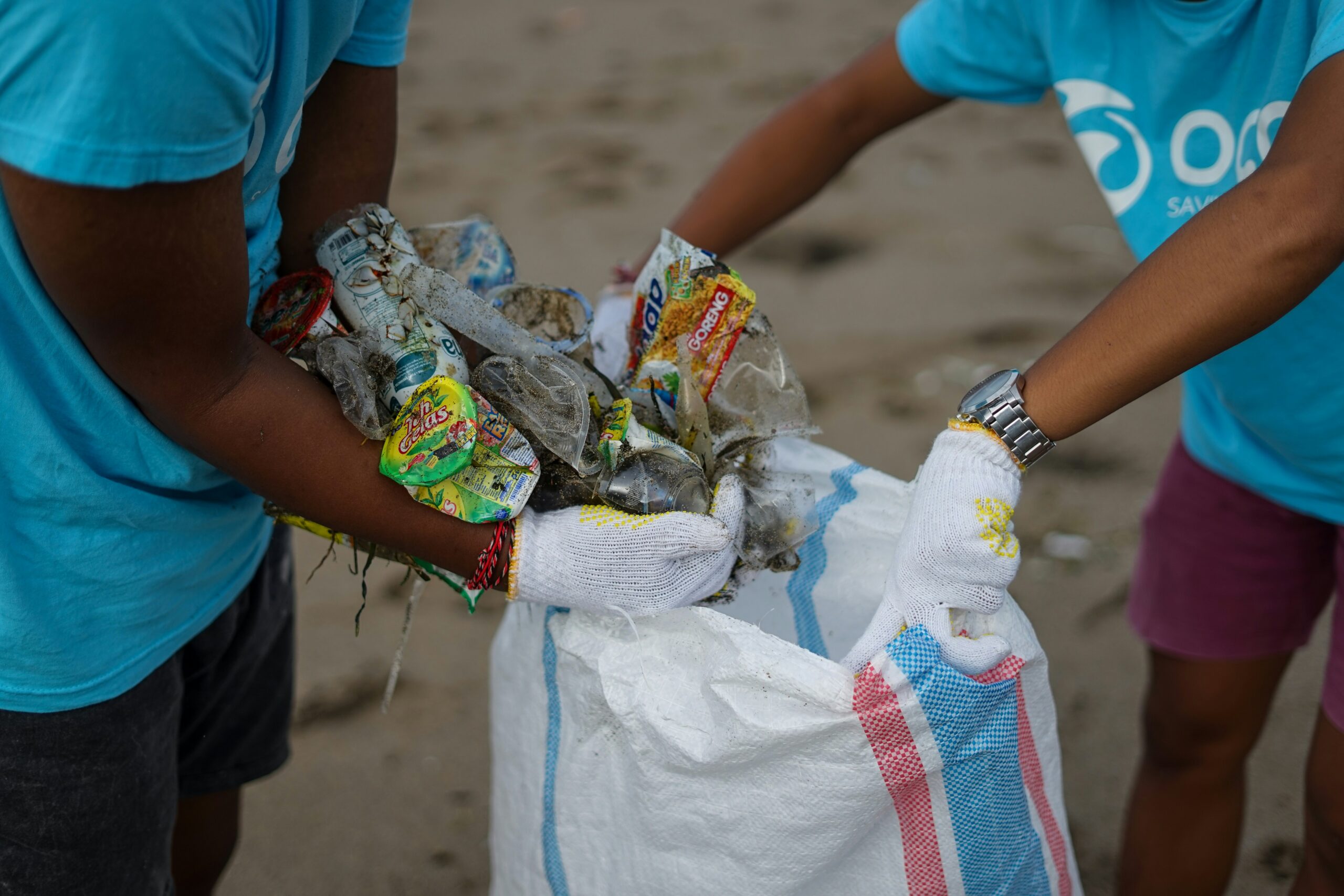
    Riciclaggio. Crediti: OCG Saving the Ocean via Unsplash

    Riciclaggio. Crediti: OCG Saving the Ocean via Unsplash

    Brussels – The circular economy is not just about helping the planet; it can also become a driving force for European competitiveness. This was highlighted by the European Economic and Social Committee (EESC) in an opinion drafted during the October plenary session. Drafted by the rapporteur, Mihaela Adelina Dabu, and the co-rapporteur, Srita Heide, the text argues that “an economic model based on recycling, reuse, repair, and the efficient use of resources can reduce the EU’s dependence on external suppliers, strengthen industrial resilience and make the European economy less vulnerable to disruptions in global supply chains”. To achieve such a transformation, “a workforce equipped with the skills needed to develop and implement circular practices across different sectors” is required, the EESC warned.

    According to a report on resource use and the economic costs of waste carried out by the non-profit organisation Circle Economy and Deloitte, raw materials account for a significant proportion of European industrial costs, “leaving businesses particularly vulnerable to the inefficiencies of the traditional model based on extraction, production, and disposal.” The research also highlights that “avoidable value losses linked to the linear use of materials amount to 25,400 billion euros per year worldwide, equivalent to almost a third of global GDP. ”The Committee therefore noted that “these losses represent a significant economic value that could potentially be preserved or recovered through more efficient use of resources and circular practices, with considerable benefits for the economy”.


    With regard to employment, the opinion states that “the circular economy also represents an important source of employment, with around 4.3 million people already employed in related sectors across the Union.” To capitalise on these opportunities, the EESC called in its opinion for the principles and skills of the circular economy to be integrated at all levels of education, from schools through vocational training to universities. The Committee has therefore urged the European Commission and the Member States to “reduce bureaucratic barriers to training by providing businesses with modular, ready-to-use training programmes.” To facilitate participation, particularly by smaller businesses, the Committee proposed the establishment of “national voucher schemes to fund continuing training,” calling for “skills related to the circular economy be integrated into future EU funding programmes, in particular the European Social Fund Plus and the European Competitiveness Fund.”


    In this regard, Dabu stated that “skills in the circular economy can become a driver of competitiveness if training is made accessible through ready-to-use educational programmes, recognised and transferable qualifications, and straightforward funding, such as vouchers,” he added. Similarly, Heide stated that “building a circular economy means not only transforming our industries, but also providing the people driving this transformation with the necessary tools.”


    English version by the Translation Service of Withub
    Tags: circular economyeescriciclaggio rifiuti

    Related Posts

    SOLAR FRONTIERS CENTER

ENI MIT 

MASSACHUSETTS INSTITUTE OF TECHNOLOGY

RICERCA MULTI DISCIPLINARE NELLE TECNOLOGIE SOLARI DI PROSSIMA GENERAZIONE NANOTECH MATERIALI AVANZATI

LABORATORIO

CELLA HELE SHOW FENOMENO VISCOUS FINGERING

RICERCATORI RICERCATORE
    Industry & Markets

    EU aims to bridge research–industry gap with ‘advanced materials’

    18 November 2026
    La Commissaria per il Mediterraneo, Dubravka Šuica, e il ministro degli Esteri siriano, Assaad Al-Shaibani. Crediti: Commissione europea
    Business

    Šuica in Damascus: “Rebuilding the country and attracting new investment – Syria is part of the Mediterranean Pact”

    17 November 2026
    Medicinali. Crediti: Roberto
    Health

    The Commission has authorised Daraxonrasib, a treatment for pancreatic cancer

    17 November 2026
    Caccia. Crediti: 
BĀBI via Unsplash
    Ambiente

    New EU rules to restrict the use and sale of lead-containing shotgun pellets

    17 November 2026
    L'intervento del commissario europeo ai Trasporti, Apostolos Tztzikostas. Source: Eunews
    Mobility & Logistics

    For Tzitzikostas and Fitto, road safety is a priority, and we need to work together towards zero road deaths by 2050

    16 November 2026
    La Commissione UE approva l'acquisizione di Commerzbank da Unicredit: "Aiuta a superare la frammentazione nazionale"
    Business

    EU Commission approves Unicredit’s acquisition of Commerzbank: “It can help overcome national fragmentation”

    16 November 2026
    map visualization
    Why greater interdisciplinary cooperation is essential for the green transition: brainstorming around COP31 from Antalya. Prof. David Chiaramonti at COP31. Source: Chiaramonti

    Why greater interdisciplinary cooperation is essential for the green transition: brainstorming around COP31 from Antalya

    by David Chiaramonti *
    18 November 2026

    There is an urgent need to create multidisciplinary authoritative groups, that can support the policymakers with transparent, evidence-based, informed and...

    Dal cambiamento climatico più batteri resistenti gli antibiotici e rischi per la salute

    Climate change fuels antibiotic-resistant bacteria and health risks

    by Emanuele Bonini emanuelebonini
    18 November 2026

    The European Environment Agency sounds a warning regarding surface waters: “AMR is a major global public health threat, with a...

    SOLAR FRONTIERS CENTER

ENI MIT 

MASSACHUSETTS INSTITUTE OF TECHNOLOGY

RICERCA MULTI DISCIPLINARE NELLE TECNOLOGIE SOLARI DI PROSSIMA GENERAZIONE NANOTECH MATERIALI AVANZATI

LABORATORIO

CELLA HELE SHOW FENOMENO VISCOUS FINGERING

RICERCATORI RICERCATORE

    EU aims to bridge research–industry gap with ‘advanced materials’

    by Annachiara Magenta annacmag
    18 November 2026

    The initiative sets out three benchmark targets to be achieved by 2035: to increase European investment in research and innovation...

    Movimento 5 stelle

    Five Star Movement’s EU delegation listed in Myrotvorets Centre’s ‘enemies of Ukraine’ database

    by Annachiara Magenta annacmag
    18 November 2026

    Brussels –  The entire Five Star Movement delegation in the European Parliament has been “listed” by the Myrotvorets Centre, a...

    • Director’s Point of View
    • Opinions
    • About us
    • Contacts
    • Privacy Policy
    • Cookie policy

    Eunews is a registered newspaper
    Press Register of the Court of Turin n° 27

    Copyright © 2025 - WITHUB S.p.a., Via Savona 127/B, 20144 Milano
    VAT number: 10067080969 - ROC registration number n.30628
    Fully paid-up share capital 50.000,00€


    No Result
    View All Result
    • en ENG
    • it ITA
    • Politics
    • Newsletter
    • World politics
    • Business
    • General News
    • Defence & Security
    • Health
    • Agrifood
    • Altre sezioni
      • Culture
      • Rights
      • Energy
      • Green Economy
      • Gallery
      • Finance & Insurance
      • Industry & Markets
      • Media
      • Mobility & Logistics
      • Net & Tech
      • News
      • Opinions
      • Sports
    • Director’s Point of View
    • Draghi Report
    • Eunews Newsletter

    Attention