Brussels – Holding the World Weightlifting Championships in Moscow in 2030 and readmitting the Federation to international ice hockey competitions? These are decisions that must be “strongly condemned at a time when Russia’s war of aggression against Ukraine is continuing”: these are the words of the Chair of the Committee on Culture, Science, Education and the Media of the Parliamentary Assembly of the Council of Europe (PACE), Mogens Jensen.
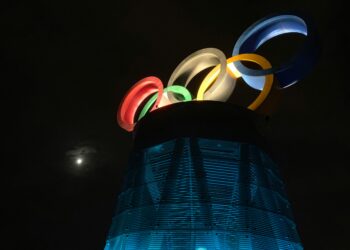
On 25 October, the International Weightlifting Federation (IWF) published a press release in which it revealed the venues for the World Championships in the coming years, with Moscow having been chosen for 2030. A few days later, on 30 October, the Court of Arbitration for Sport (CAS) issued a ruling allowing Russian national teams to return to international ice hockey competitions. These two developments follow last July’s decision by the Executive Board of the International Olympic Committee (IOC) to provisionally lift the suspension of the Russian Olympic Committee (ROC) from the Olympic Games, thereby allowing Russian athletes to take part in the qualifiers for the 2028 Games in Los Angeles. Jensen condemned the two recent events, stating that “they raise serious questions about the accountability of international sporting bodies and their commitment to the values of sport.”
According to the president, “sport cannot be considered politically neutral when it is exploited by governments to project power, gain international legitimacy, and normalise aggression.” Regarding the matter, Jensen explained that he fears that “by awarding an event of this magnitude to the Moscow government, while it continues its war against Ukraine, risks turning international sport into a tool of political propaganda and sends an unacceptable message to Ukraine and the international community.”
Last year, in Resolution 2608, entitled “The Olympic Movement and peacekeeping: is sport neutrality serving sport values?”, PACE had already made it clear that “the autonomy and neutrality of sport cannot be used as an excuse for silence or inaction in the face of serious violations of human rights and international law.” This “does not mean that individual athletes should automatically be held responsible for the actions of their governments,” Jensen pointed out. However, this principle must not “be exploited to justify the unconditional return of the Russian national teams or the awarding of prestigious international competitions to Russia, while its aggression continues,” he noted. It is therefore up to the “international sports federations” to “take consistent and transparent action, ensuring that decisions on participation in and the organisation of major events respect human rights and the fundamental values of sport,” he concluded.
English version by the Translation Service of Withub