Rimini – Reconciling the ecological transition with the revitalisation of European industry: this is one of the crucial challenges for the future of the European Union, and lies at the heart of Brussels’ policies and the initiatives being implemented at the national and local levels. While the European Parliament is pushing for a better balance between environmental protection and industrial competitiveness, the European Commission is working on a package of measures to support this dual transition. Among the most eagerly awaited measures is the Circular Economy Act, which is intended to strengthen the role of the circular economy in European industrial strategy.
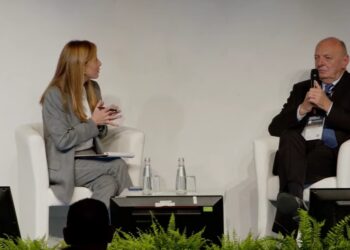
This was discussed at the event “Sustainability in policies and figures” organised by SEL – Società Energetica Lucana and the Basilicata Region as part of Ecomondo in Rimini, the international trade fair dedicated to the green and circular economy sectors. The Commission’s proposal is due to be adopted on 2 December and “forms part”, as explained by Stefano Soro, Head of Unit at DG GROW at the European Commission, “of a process that views sustainability as a multidimensional concept: not only an environmental and climate dimension, but also economic and financial sustainability.”
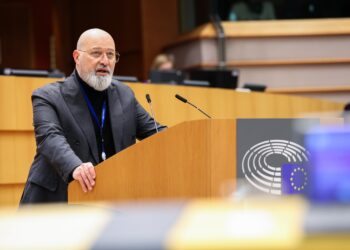
This view was also reinforced by the words of Carlo Corazza, Director of the European Parliament’s Office in Italy: “The energy transition and sustainability cannot be separated from the concept of security,” he said, “we must start from a strong industrial base capable of innovating and achieving the Green Deal.”
The conference established a common thread of dialogue between different regions. Between Europe – where the Circular Economy Act is currently under discussion, which is intended to help industry create more raw materials from recycling and encourage an increase in demand – and the responses coming from the regions. In particular, from a region with a unique energy profile such as Basilicata: “I believe that the circular economy sector is not only important for environmental protection, but above all for economic development,” said Laura Mongiello, Councillor for the Environment and Energy Transition.
The Basilicata region, for its part, has recently updated its regional waste management plan. “We have taken specific action to prevent waste generation,” explained Salvatore Margiotta, Head of the Circular Economy, Waste and Remediation Unit at the Basilicata Region’s Directorate-General for the Environment, “as well as encouraging recovery in terms of both materials and energy, by promoting the installation of waste recovery facilities. And we have worked towards the gradual reduction of waste sent to landfill.”
It is precisely recycled materials that form a common thread between the priorities highlighted by the local community (“It is important to breathe new life into secondary raw materials,” said Councillor Mongiello during the conference) and the measures envisaged by the EU.
With regard to secondary raw materials, Stefano Soro highlighted three key developments under the Circular Economy Act. “Firstly, we want to capitalise on the scale of the internal market,” he explained. In other words: it is sometimes easier to export secondary raw materials outside Europe than to circulate them within the EU. “Secondly,” Soro continued, “we want to help create a supply of secondary raw materials by facilitating an increase in sorted waste collection and, as far as possible, utilising public procurement.” As a third objective, “we want to try to reduce our dependence on imports of critical raw materials by recycling them locally. This has an impact on our dependencies but is also a potential source of high value-added employment,” concluded Soro.
Also speaking at the conference were Marco Frey, chair of the Symbola Foundation’s scientific committee; Alessandro Rinaldi, deputy director-general of the Tagliacarne Institute; Michela Muscettola from the research department at ASVIS; Antonio Angelino, Head of Sustainability and Ex-ante Impact Assessment at CDP; and Isabella Manfredi, President of Sustainability Makers. The event was concluded by Carmen Coviello, an adviser to the Directorate-General for the Environment, Energy and Land Protection of the Basilicata Region, and Piernicola Pisani, Director-General of SEL (Società Energetica Lucana).
* Article produced in collaboration with GEA Agency
English version by the Translation Service of Withub