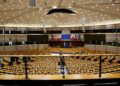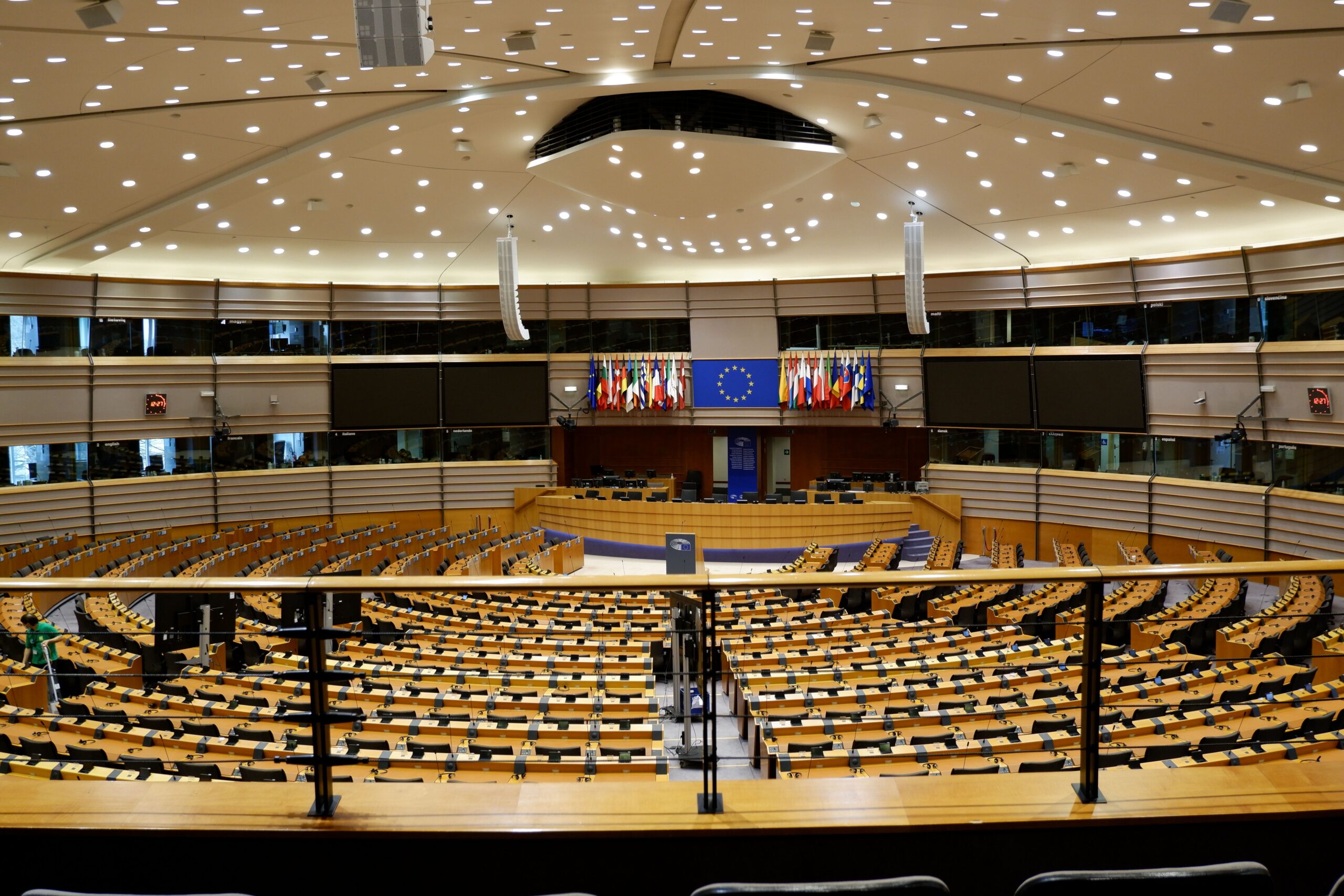
Brussels – The European People’s Party (EPP) is heading into the vote on the report on the European Plan against Cancer (BECA) without a clear and agreed internal political line. The debate in the European Parliament’s plenary session confirmed the divisions had already emerged in the preceding weeks and, above all, the distance from the approach supported by the EPP on the Strategy for cardiovascular disease (CVD). The text, approved by the Committee on Public Health (SANT) on 28 September, proposes more effective preventive measures on diet, alcohol, and tobacco.
The comparison between the two dossiers is significant. On the CVD, the EPP had advocated a more balanced approach, based on distinguishing between levels of risk and the proportionality of measures. On the BECA, however, the group ended up supporting a more restrictive text, without managing to allay the reservations of several national delegations, in particular those from Italy, Spain, Romania, Sweden, Portugal, and the Czech Republic.
As evidence of the internal rifts within the EPP, the Spanish MEP Elena Nevado del Campo, supported by her delegation and those from Italy, Greece, Romania, Poland, France, and Cyprus, tabled an amendment to the text calling for the revision of the Tobacco Products Directive to be linked to an independent scientific assessment and socio-economic impact assessment in Europe.
According to European sources consulted by Eunews, the compromise appears to have been driven more by political considerations than by the substance of the measure. Underlying this is the need for the People’s Party leadership to maintain the support of the Socialists and Democrats (S&D) and Renew Europe, not least in view of the race for the presidency of the European Parliament and the reappointment of Roberta Metsola as President of the European Parliament for the next half of the parliamentary term. Bartosz Arłukowicz’s personal political ambitions as a potential chair of the SANT Committee are also said to have played a part.
These concerns were expressed openly. “We would have preferred the more balanced approach reflected in the CVD report. Some provisions impose disproportionate burdens and undermine the overall balance of the text,” said Tomáš Zdechovský, a Czech MEP from the EPP. “The current BECA text reflects too many of the left’s priorities and too little of the balance that the EPP should be defending.” Zdechovský acknowledged “clear differences within the EPP,” with several delegations favouring a more balanced approach, while reiterating that “political compromises have their limits.”
Arłukowicz’s speech took a completely different tone, as he strongly defended the need for ambitious measures: “We have been working on this report for months. We are bowing down to those lobbies. We must protect people’s lives.”
Alessandra Moretti (S&D) from Italy also called on the European Parliament not to back down on prevention: “The text emerging from the committee is balanced and reflects the Parliament’s established positions.” “I am very concerned by the attempts by right-wing groups to weaken prevention measures,” she added, calling on MEPs to reject the amendments on tobacco and alcohol: “Do not put economic interests or powerful lobbies before health.”
Pietro Fiocchi (ECR), on the other hand, noted that the document “should have been more incisive” and that “more effort could have been made to arrive at fairer measures.” For Tilly Metz (Greens), the report must serve as a “wake-up call” and serve as a reminder that “economic interests must never take precedence over our health.”
Jessica Polfjärd (EPP) highlighted inequalities in access to healthcare: “Where you live should not determine whether you live or die.” Hence the call to invest in research and cooperation, while emphasising Europe’s responsibility towards patients in all Member States.
The rapporteur, Vlad Vasile-Voiculescu (Renew), defended the central importance of the measure, pointing out that around 40 per cent of cancers are preventable. “Europe treats too much and prevents too little,” he had told Eunews, describing prevention as “the most effective anti-cancer policy we have.”
English version by the Translation Service of Withub