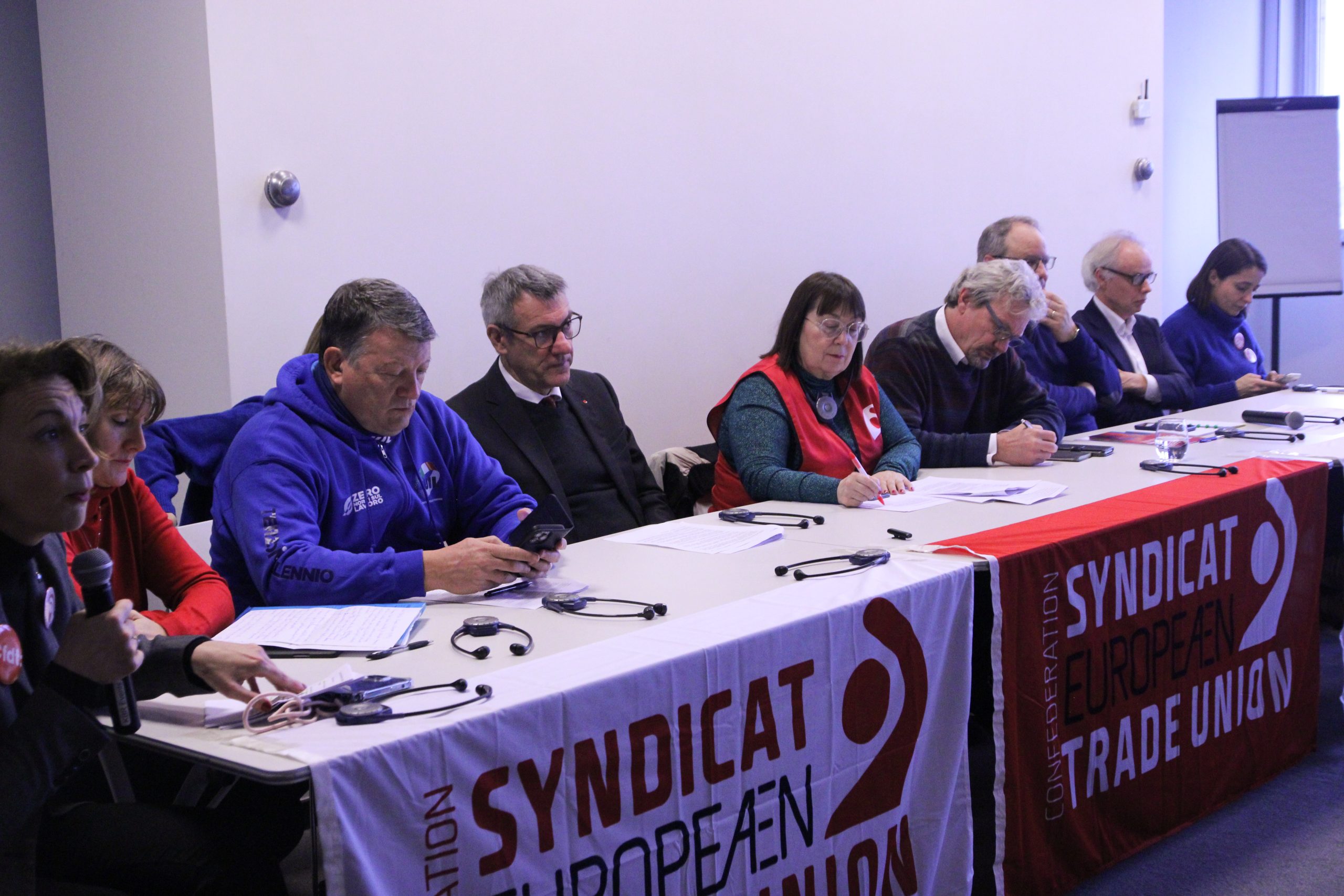
Brussels – The European Trade Union Confederation (ETUC) is raising its voice on the tight negotiations to reform economic governance rules. Also at the demonstration called today in the EU capital were the secretaries of CGIL and UIL, Maurizio Landini and Pierpaolo Bombardieri, who were at the forefront with their Belgian and French colleagues to say no to the return of austerity on the continent.
The moment is decisive: an extraordinary meeting of the economy ministers of the 27 is scheduled before the Christmas break, between December 18 and 21, to break the deadlock and find agreement on the figures. On a parallel track proceeds the work of the Euro Chamber, which is expected to adopt its position during the January plenary to allow interinstitutional negotiations to begin and give birth to the final reform.
In a letter addressed to the members of the European Council, the 93 national labor organizations meeting in the
Ces have issued a “clear call to governments for a fair deal for workers ahead of final negotiations on reforming economic governance rules.” In the new version
of the Stability Pact, which was suspended in the wake of the pandemic and frozen with the war in Ukraine, the binding parameters on deficit and debt would remain: ratio of annual deficit spending (i.e., higher than tax revenues) to Gross Domestic Product (GDP) of 3 percent and ratio of public debt to GDP of 60 percent. But timelines for achieving them would be reshaped taking into account the specificities of countries, through flexible multi-year plans established by the European Commission with individual member states.
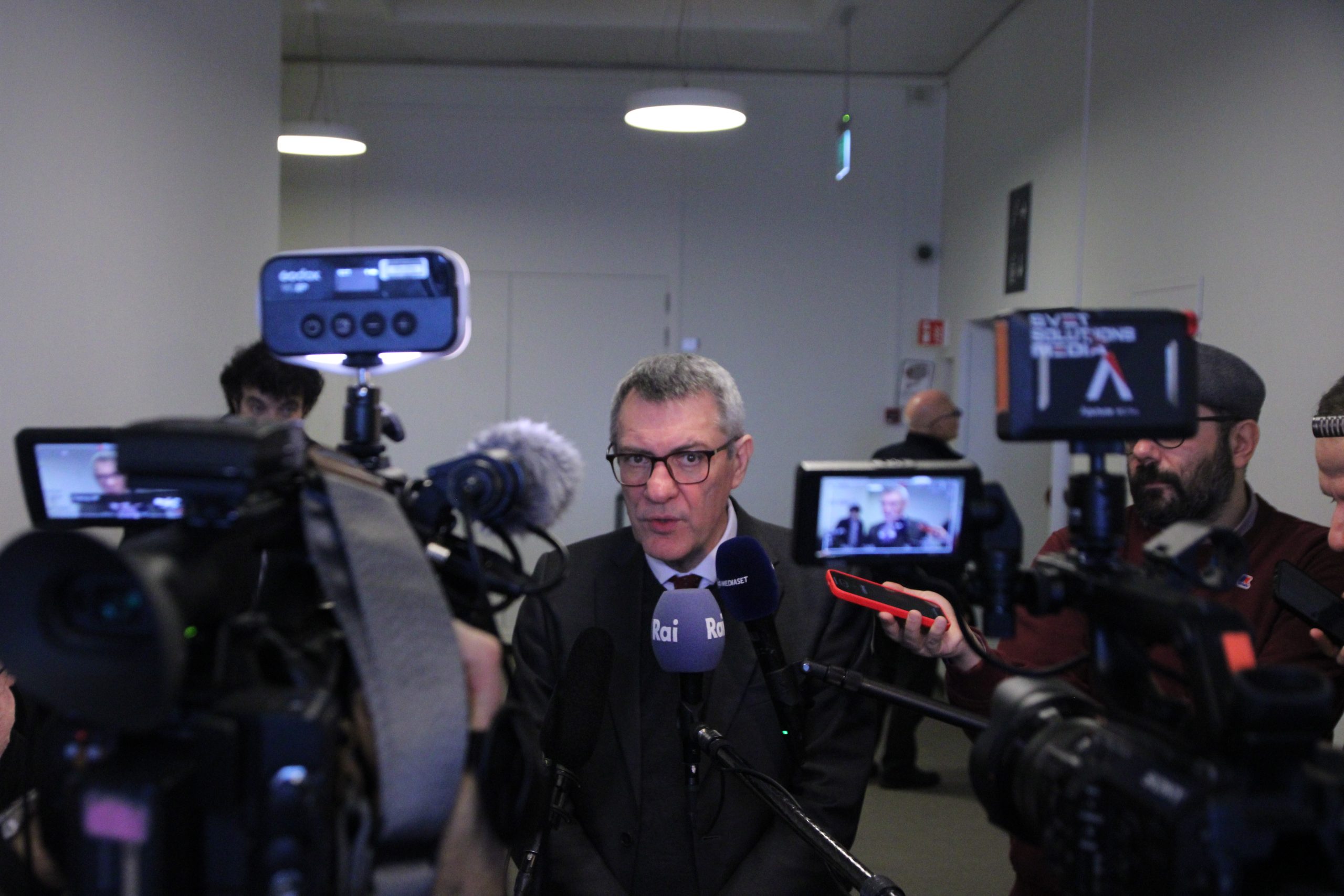
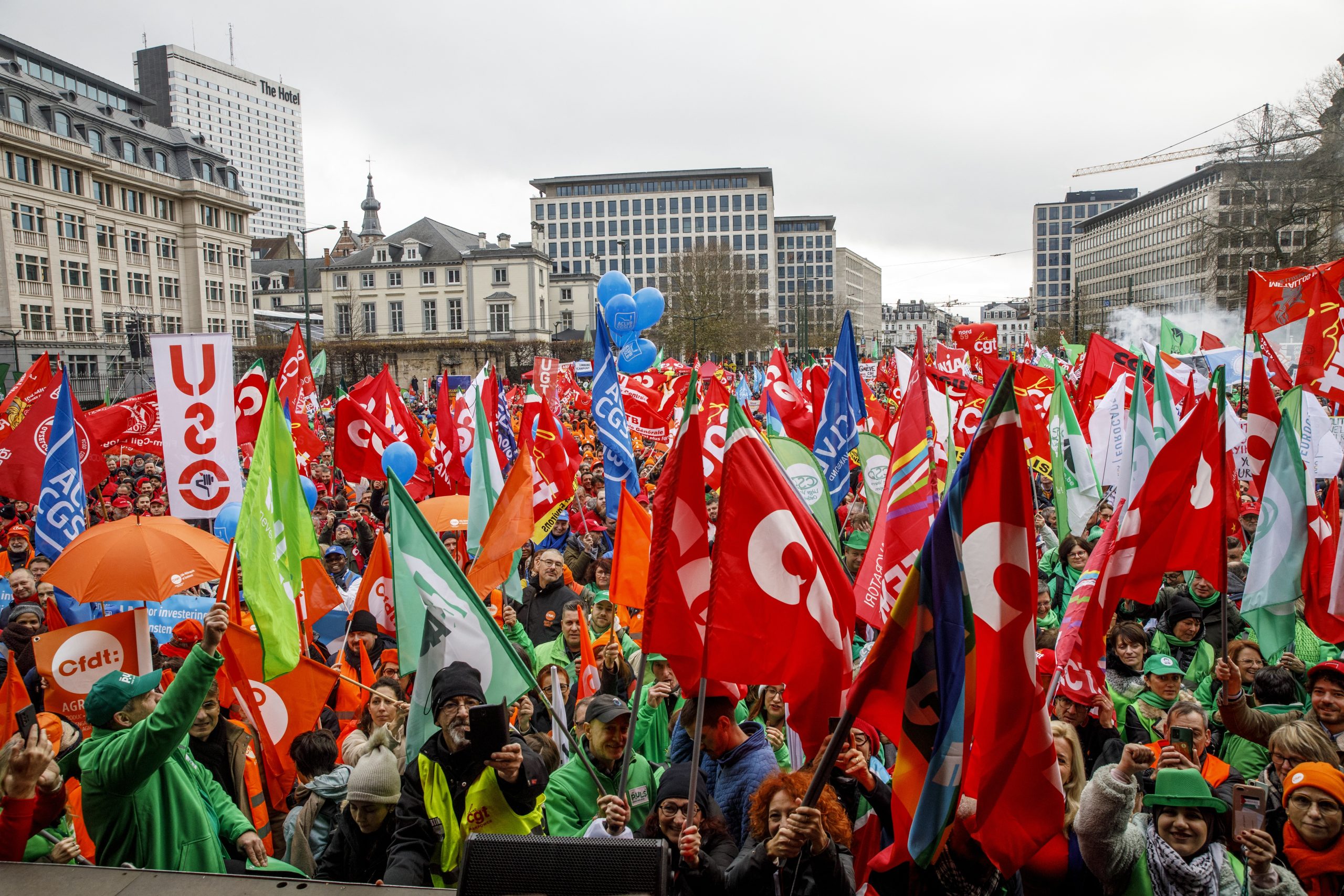
For the 10,000 workers-5,000 according to Belgian police-who marched through downtown Brussels today, a return to the fiscal constraints of the Stability Pact is a wrong choice. “We need a Pact for growth, and not one that, while taking into account the deficits of individual countries, does not give the possibility to address the great challenges that Europe has,” Bombardieri further said. The dual climate and digital transition, which “will not be such if it does not maintain a social aspect and proximity to workers.” And which cannot be financed on the backs of European citizens by cutting back on public services, contracting wages or reducing pensions.
In their letter to the EU heads of state and government, who will meet on Thursday and Friday for the Consiglio europeo, the 45 million workers represented by the Ces call for an extension of another year on EU tax rules so as to “give themselves the appropriate time to achieve sustainable reform that meets the needs of European citizens.”
English version by the Translation Service of Withub



![[foto: Alicia Fagerving/Wikimedia Commons]](https://www.eunews.it/wp-content/uploads/2026/06/EU_and_Bulgarian_flags-350x250.jpg)