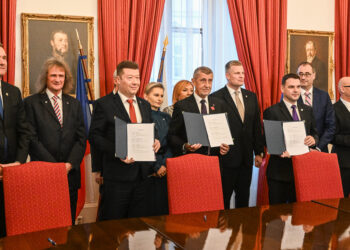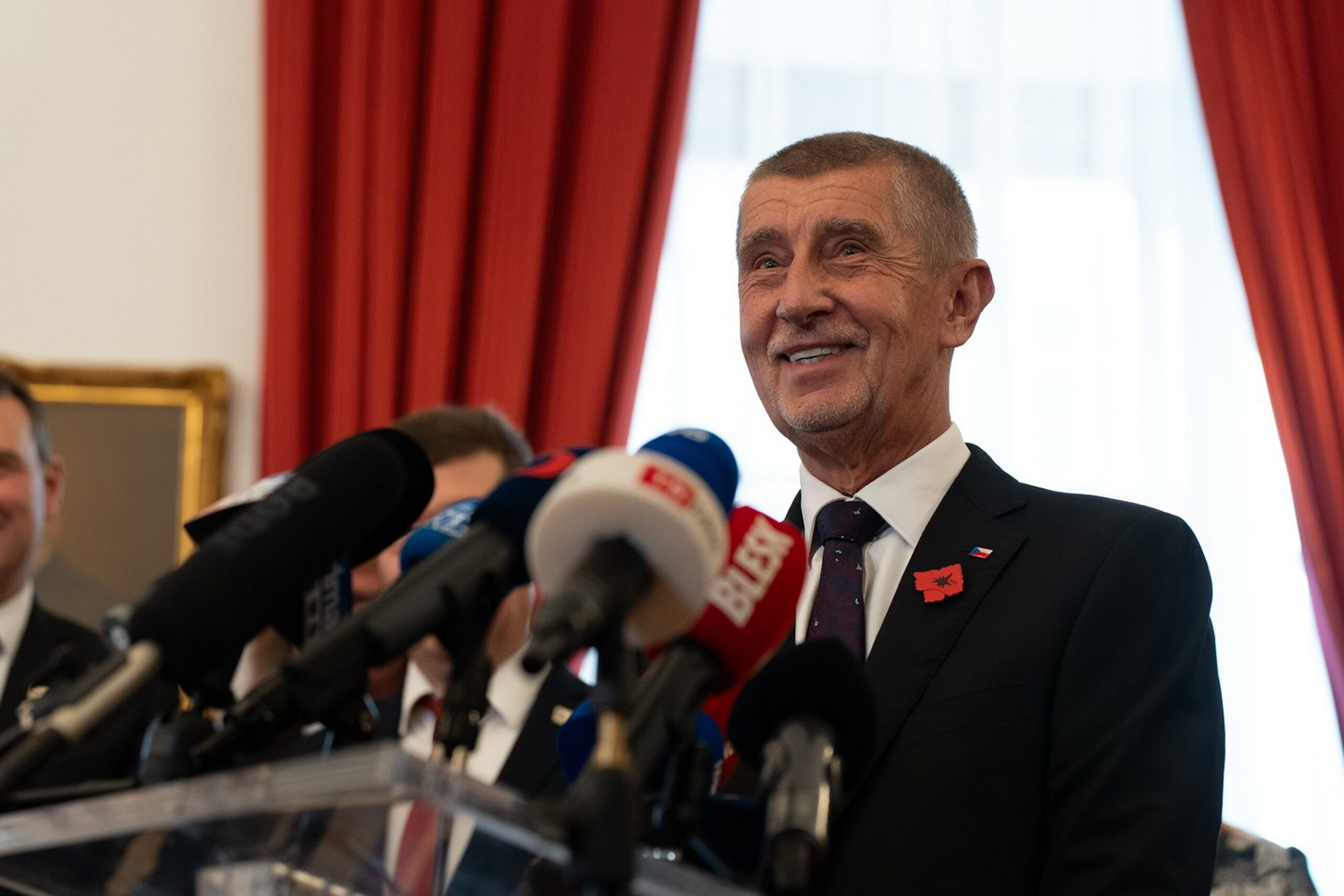

Brussels -As of today, 5 December, Andrej Babiš is no longer a multi-billionaire entrepreneur but only a politician. Or at least, that is what he has promised. The future Czech prime minister has announced that he will dispose of his stakes in his multinational company, Agrofert. “I have decided to irrevocably renounce the Agrofert company, with which I will no longer have anything to do. I will never again be its owner. I will no longer have any economic relationship, and I will no longer have any contact,” promised Babiš, who founded Agrofert and holds 100 percent of its shares. In Prague, some newspapers are already proclaiming him as a “hero.” Others, on the other hand, still harbour some suspicions about the possible conflict of interest.
I am fulfilling the President of the Republic’s condition. pic.twitter.com/9vzOQuqadf
– Andrej Babiš (@AndrejBabis) December 4, 2025#
The Victory of Babiš
Andrej Babiš has always been a controversial figure on the European political scene. Compared by some to Donald Trump or Silvio Berlusconi, he won the Czech parliamentary elections for the second time. His populist Action of the Disgruntled Citizen (ANO) movement obtained 34 percent of the vote, winning 80 seats. After the consultations, ANO reached a government agreement with two other Eurosceptic and right-wing parties, including Europe of Sovereign Nations (SPD) and the Motoristé sobě (Motorists for themselves). Until today, however, the president of the Republic, the pro-European Petr Pavel, has been stalling on the appointment of the prime minister, showing reservations about the risk of conflict of interest.
But last night came the announcement that turned the tables. “I appreciate the clear and understandable way in which Andrej Babiš lived up to our agreement and publicly announced the way he has resolved the conflict of interest,” Pavel said, adding that the call to the Castle (the president of the Republic lives in the Prague Castle) will come on Tuesday, 9 December.
I appreciate the clear and understandable way in which Andrej Babiš has lived up to our agreement and publicly announced the way in which he has resolved his conflict of interest. I have therefore decided to appoint him as Prime Minister on Tuesday 9 December at 9am. In doing so, I respect the results of the elections to the Chamber of Deputies…
– Petr Pavel (@prezidentpavel) December 4, 2025
The Trust Fund
The mechanism that broke the deadlock is called a blind trust, i.e., entrusting the management of assets to an independent trust fund. By doing so, the company’s operations changed hands without Babiš having any decision-making power. The shares will only return to the Babiš family after the death of the patriarch, Andrej. The mechanism is nothing new: there are notable precedents of politicians being forced to place their assets in trusts.
One of the most similar cases was that of Jimmy Carter, who, in 1976, disposed of the family farm to become president of the United States. The British prime ministers David Cameron and Tony Blair did the same. In Italy, on the other hand, the emblematic case of Silvio Berlusconi had quite different outcomes. It is no coincidence, in fact, that Andrej Babiš was nicknamed by Foreign Policy “Babisconi” during his first term of office from 2017 to 2021.
The Commission’s audit
At the time, he had entrusted the Agrofert shares to two trusts, but they were not an actual “blind trust.” The European Commission and the Czech supervisory authorities expressed concern about a possible conflict of interest. The European body then conducted an audit to monitor the situation. The conclusions reached in 2021 were that Babiš continued to control the business partially and the disbursement of subsidies, despite having invested his assets in trusts. The perplexities remain the same even four years later. The economic newspaper of the Czech Republic, Hospodářské noviny, wrote: “It is rather amusing to say that this time the conflict of interest of the future prime minister has in fact disappeared.”
As the Czech daily Dnes later pointed out, “even though the company is no longer under his management, it can be argued that, in the case of such a large conglomerate operating in such a clearly defined market segment, the prime minister will always know which decision will benefit the company.”
English version by the Translation Service of Withub