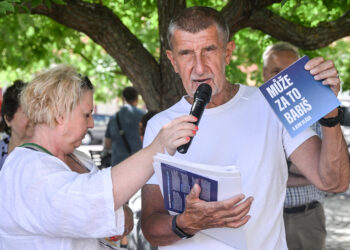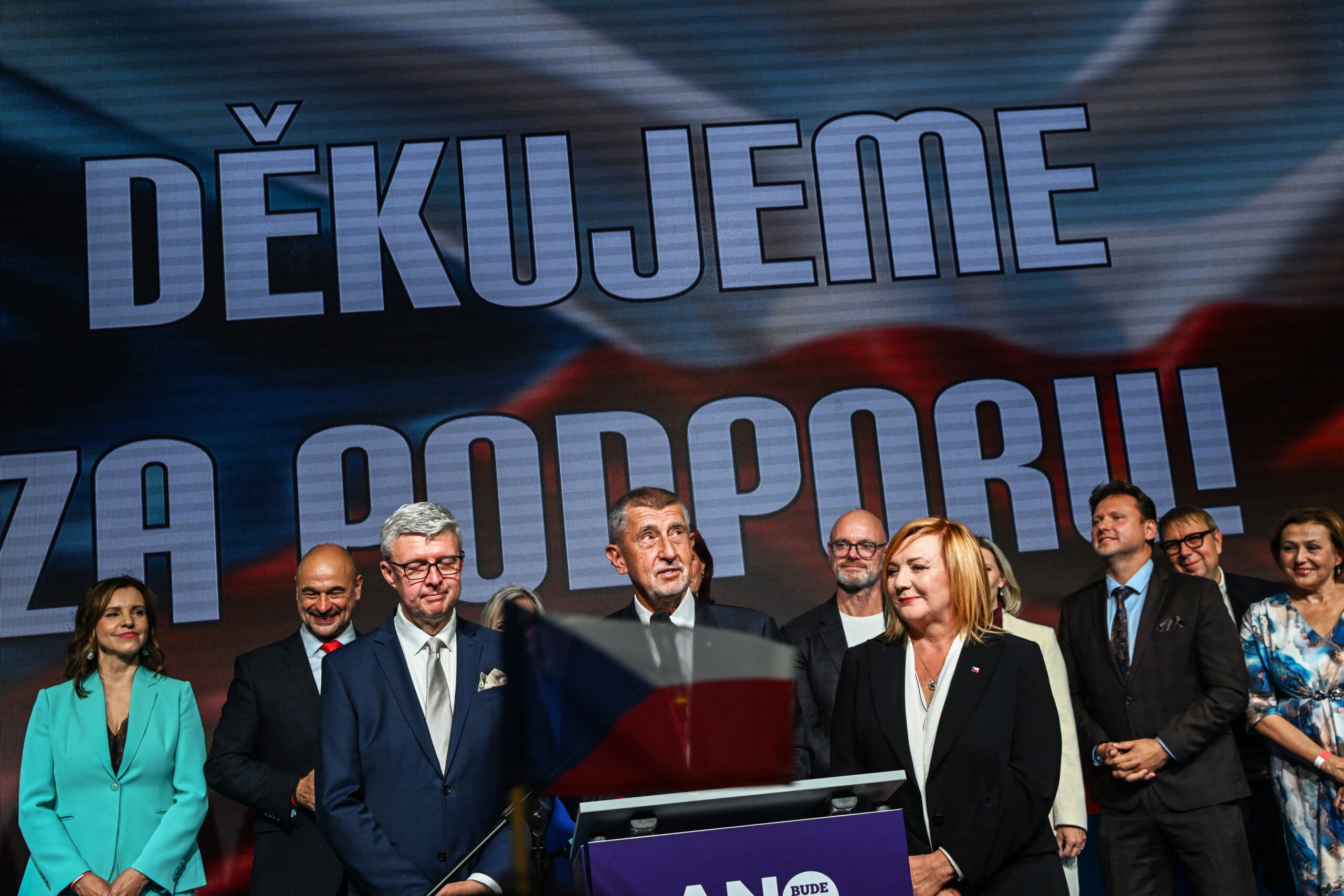
Brussels – Things come in threes: along with Hungary and Slovakia, there is now a third member country ready to erode the EU’s support for Ukraine. It is the Czech Republic, which at legislative elections on Thursday and Friday (October 2-3) decided to put itself into the hands of the far-right populist Andrej Babiš. His ANO party won 34.5 percent of the vote: to govern, Babiš could form a minority executive with the external support of Freedom and Direct Democracy (SPD) and the Automobileists, two even more radical formations.
The centre-right coalition of the outgoing Prime Minister, Petr Fiala, received 23.4 percent of the vote. In the moderate camp, the mayors’ coalition, STAN, obtained 11.2 percent and the Pirate Party 9 percent. More than two out of three eligible voters went to the polls; the 69 percent turnout is a record since the beginning of the third millennium. President Petr Pavel has begun consultations for the formation of the government, which will likely mark Babiš’s return to power.
The Czech politician and agricultural entrepreneur, whose Agrofert is accused of a 2 million euro fraud to the detriment of the EU, which allegedly involved receiving subsidies for medium-sized companies, was already the Prime Minister from 2017 to 2021. He did even better this time, securing 80 seats out of the total 200 in the Prague Parliament compared to 78 in 2017. To govern, he will therefore need the support of other parties. His Action of Dissatisfied Citizens (ANO) naturally looks to the right. Still, it is not a foregone conclusion that potential allies are compatible with the conditions set by the head of state for assuming the country’s leadership.
In essence, no party in government should question the Czech Republic’s membership of NATO and the EU. The SPD and the Automobilists are openly hostile to Brussels and the Atlantic Alliance (the SPD has long been calling for a referendum to leave the two organizations). That is why Babiš is reportedly considering circumventing the condition set by Pavel by merely cashing in on the external support of the two Eurosceptic parties, which would still guarantee him 103 seats out of 200 in parliament.
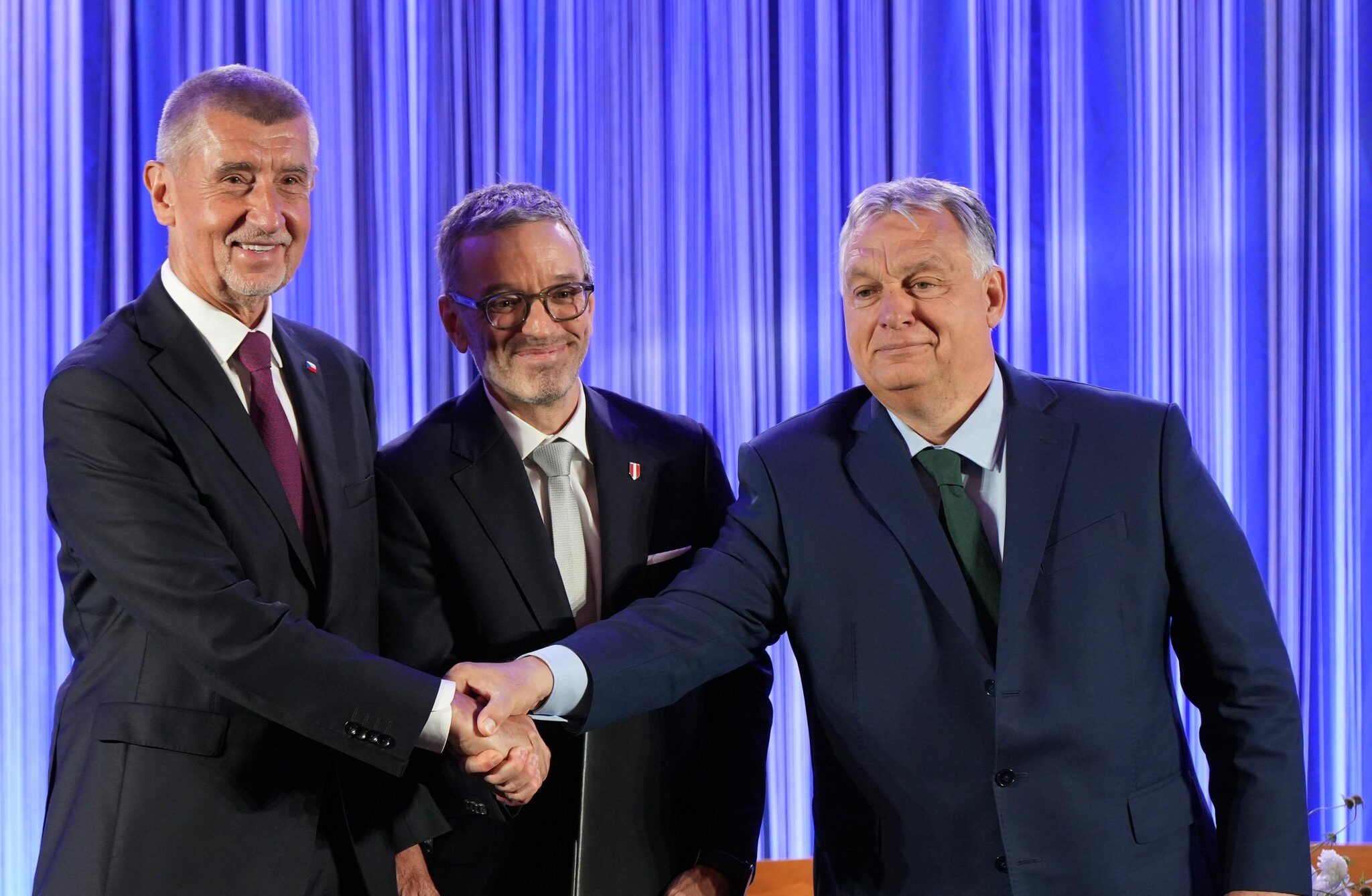
Babiš himself, after the mathematical certainty of victory, raised his hands, stating that “we are clearly pro-Europe and pro-NATO.” He was conciliatory on Ukraine, departing from the intransigent line of Viktor Orbán, with whom he shares political affinities and membership in the European group Patriots for Europe. “Ukraine is not ready for the EU. First of all, the war must end,” Babiš said, wisely choosing not to raise the tone.
In any case, unless the negotiations somehow fall through, the sovereignist political family of the Patriots will have a second leader at the European Council table, alongside Orbán. With Slovakian Robert Fico, there will be three heads of state or government able to use their veto to obstruct the bloc’s support for Ukraine.
Neither the President of the Council of 27, Antonio Costa, nor the President of the European Commission, Ursula von der Leyen, publicly congratulated Babiš. Instead, Kirill Aleksandrovič Dmitriev, oligarch and advisor to Vladimir Putin, did: “Europe is waking up: no more uncontrolled immigration, war fever, censorship, and economic decline. The right choice prevails throughout Europe,” he exulted in a post on X. Budapest’s Foreign Minister, Péter Szijjártó, has predicted a return of the Visegrad Group, the conservative Central European front consisting of Poland, Hungary, the Czech Republic, and Slovakia.
English version by the Translation Service of Withub