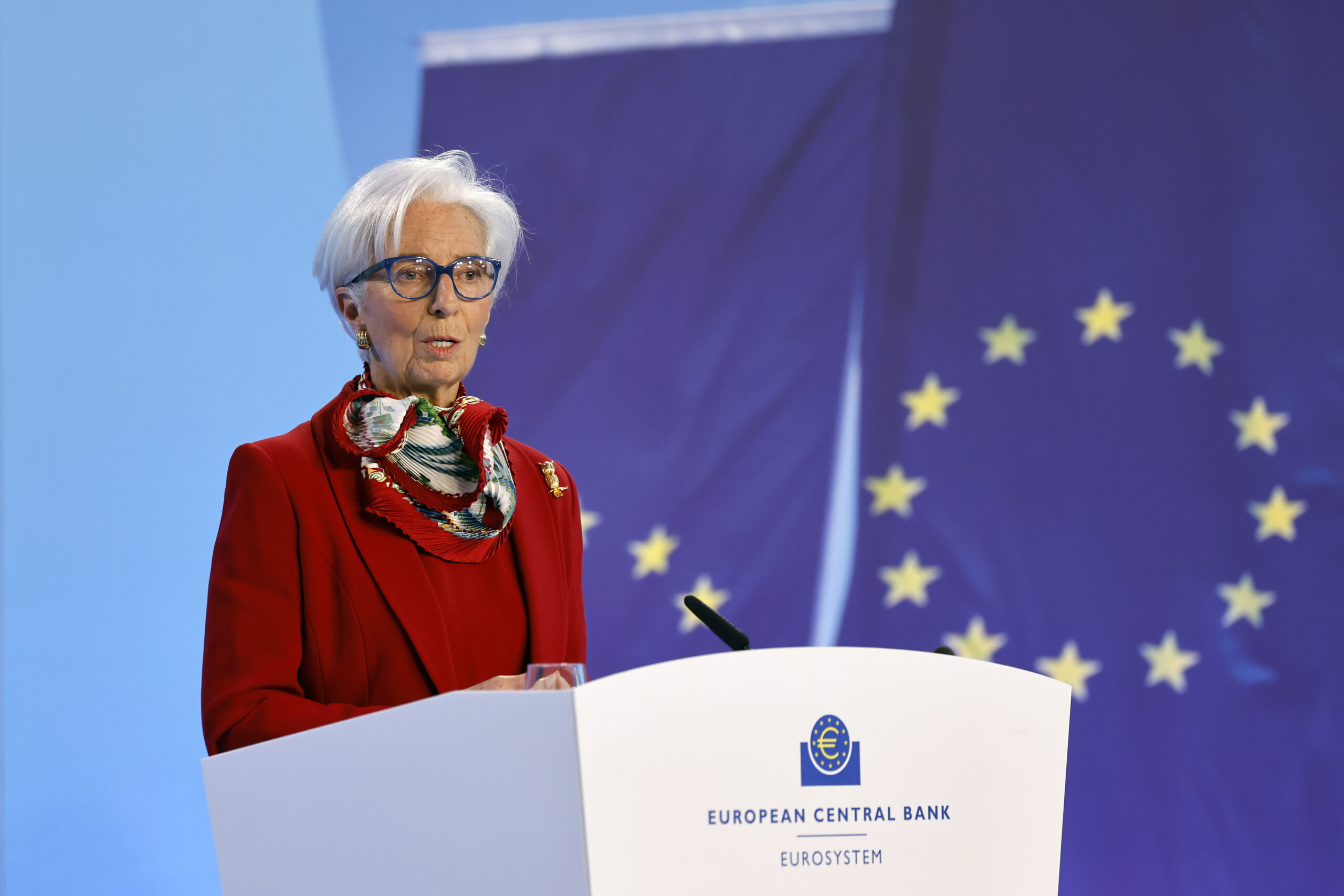
Brussels – Overall, there are no conditions for easing monetary policy and further reducing interest rates, which the European Central Bank’s executive committee is leaving unchanged. The decision, explains ECB President Christine Lagarde at the end of the meeting, is due to the “mixed” nature of the overall context. On the one hand, inflation is expected to stabilise at the 2 per cent target in the medium term, and the economy continues to show “good resilience in a difficult global environment.” On the other hand, “the outlook remains uncertain, mainly due to the unpredictability of trade policies and ongoing geopolitical tensions worldwide.”
As it did at its last meeting in 2025, the ECB Governing Council opted for prudence and caution at its first meeting in 2026. The interest rate on deposits with the central bank therefore remains at 2 per cent, the rate on main refinancing operations remains at 2.15 per cent, and the rate on marginal refinancing operations is confirmed at 2.40 per cent. The pause started in July, therefore, continues until the data suggest otherwise. Because, as Lagarde reminds us once again, the ECB will continue to rely on the information available, and this will be the deciding factor.
Lagarde wants to make clear that “we cannot be prisoners of a single indicator,” specifically inflation. Developments here are positive, but there are many factors to consider. For example, she lists, “further friction in international trade could disrupt supply chains, reduce exports, and weaken consumption and investment.” Furthermore, “geopolitical tensions, in particular Russia’s unjustified war against Ukraine, remain a major source of uncertainty,”
Notwithstanding these explanations, however, there is a call to avoid alarmism. The ECB President clarifies and reassures: “The economy continues to show good resilience in a difficult global environment.” For this to remain possible, however, Member State governments must proceed toward “sustainable public finances, strategic investments, and growth-oriented structural reforms.” These are the tasks that need to be done to protect all national economies and the eurozone as a whole.
Trusting von der Leyen and Draghi
The real political message Lagarde is sending to politicians is to have a pro-euro momentum rather than give in to euro-critical impulses. “New trade agreements could push growth beyond forecasts,” says the head of the Eurotower, in what is clear and unequivocal support for the European Commission’s relentless pursuit of new agreements, such as those with with Mercosur and India, which have been criticised but are more strategic than ever at a time when “the euro area continues to face a volatile global political environment, where the rule of law is no longer respected.”



![[Copyright: European Union]](https://www.eunews.it/wp-content/uploads/2026/10/euco-261015-120x86.png)