
Brussels – “We do not hate Ukraine. The problem is that the Ukrainian state hates Hungary and has been pursuing an anti-Hungarian policy for ten years, behaving in a very hostile manner towards us.” Budapest, in the eye of the storm in Brussels for having once againblocked the sanctions against Russia and the €90 billion maxi-loan to Kyiv, is fighting back. The accusation levelled by Péter Szijjártó, the Hungarian foreign minister, is serious and peremptory, revealing the fundamental incompatibility between the European position and that of Viktor Orbán’s government regarding support for Ukraine.
On the eve of the fourth anniversary of the Russian invasion, EU foreign ministers, meeting today (23 February) in Brussels, hoped to give the green light to two measures that are as symbolic as they are fundamental to bolstering Ukrainian resistance: The twentieth package of sanctions against Russia, presented by the European Commission on 6 February and providing for a decisive crackdown on the circumvention of European sanctions, and the loan for the two-year period 2026–2027, already agreed by EU heads of state and government in December, to be financed by borrowing on the markets and covered by the EU budget.
Instead, the interruption of Russian oil supplies to Hungary via Ukraine blew everything up, revealing once again the fragility of European unity. Until Kyiv reactivates the Druzhba pipeline, Budapest will not change its position. The pipeline, which transports Russian crude oil to Hungary and Slovakia (which have enjoyed an exemption from the EU embargo since 2022), was damaged by Russian bombing. But Szijjártó’s interpretation is different: “There is no physical nor technical reason why the Ukrainian state has decided not to restart oil supplies to Hungary. It is a political decision,” he said. He added, “Russia has destroyed a lot of infrastructure, but this is not true; the pipeline has not been hit by any Russian attack.”
This is the reason behind Hungary’s U-turn: “This jeopardises our energy security. So, if the Ukrainians decide to restart oil supplies, we can reconsider the situation,” is the condition set by Orban’s government. But Szijjártó’s accusation against Kyiv goes further: “Ask the Ukrainians why they have cut off oil supplies to Hungary, why they are jeopardising Hungary’s energy security, why they are not respecting the rights of the Hungarian national community, why?” he replied to journalists who persistently asked him why he said “no” to sanctions against Moscow.
However, when even the facts do not align, it becomes very difficult to reach a compromise. For the European Commission, as spokesperson Anna-Kaisa Itkonen reiterated today, “Russia destroyed the Druzhba pipeline“ and “Ukraine has committed to repairing the pipeline, and the decision on the timing is up to them.” From Brussels’ point of view, Budapest’s position is a complete about-turn, particularly on the loan to Ukraine, where “there was a political agreement by all heads of state and government, including Hungary, which is now threatening to block it.” An agreement which, Itkonen pointed out, stipulates that Hungary, Slovakia, and the Czech Republic will not participate financially. “This condition has been met, and we therefore expect all leaders to honour their commitments, and failure to do so would clearly constitute a breach of loyal cooperation,” the Commission concluded.
English version by the Translation Service of Withub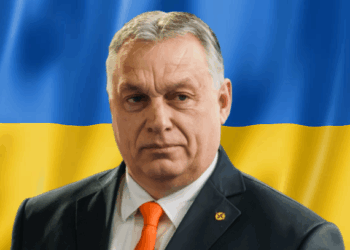


![Da sinistra: il presidente del Consiglio europeo, Antonio Costa; il presidente dell'Ucraina, Volodymir Zelensky: la presidente della Commissione europea, Ursula von der Leyen [Bruxelles, 18 giugno 2024. Foto: European Council]](https://www.eunews.it/wp-content/uploads/2026/06/euco_ua260618-120x86.jpg)
![[foto: Saverio De Giglio/imagoeconomica]](https://www.eunews.it/wp-content/uploads/2026/10/cpt-120x86.png)