Brussels – The European Commission proposes the temporary suspension of Most Favoured Nation (MFN) customs tariffs on imports of nitrogen fertilisers and raw materials necessary for their production, such as ammonia and urea. The aim is to ease the burden on European farmers and reduce the Union’s dependence on Russia and Belarus. The suspension will apply to all third countries except Russia and Belarus. Brussels estimates that this move will save around €60 million in import tariffs. The Minister of Agriculture, Food Sovereignty and Forestry, Francesco Lollobrigida, immediately commented, claiming the suspension proposed by the Berlaymont Building was “a result of Italy and the government led by Giorgia Meloni.” The minister also pointed out that, on the one hand, this is “a concrete measure to support the competitiveness of businesses and, according to Brussels’ estimates, savings of around €60 million” and, on the other, “good news, in line with Italian requests, which will help reduce the European Union’s dependence on Moscow and Minsk and strengthen the competitiveness of the European agricultural sector.”
The measure was one of Italy’s requests—a request also linked to Rome’s approval of the trade agreement between the EU and Mercosur. On 7 January, Lollobrigida had sent a letter to the European Commissioner for Agriculture and Rural Development, Christophe Hansen, asking for the suspension of the Carbon Border Adjustment Mechanism (CBAM) for fertilisers and a zero import duty on fertilisers from third countries. “With the mechanism coming into force on 1 January,” the minister warned, “the agricultural sector risks a significant increase in costs. The alarming market situation suggests that a suspension clause should be activated as soon as possible,” he wrote. “In the immediate term, however, I would consider it appropriate to adopt a parallel measure to benefit our farmers by eliminating import tariffs on fertilisers from third countries. This measure should come into force quickly and be in line with the costs of the CBAM,” he clarified. The European Commission committed to consider a temporary tariff waiver at the ministerial meeting on 7 January, with Commissioners Hansen, Maroš Šefčovič (Trade) and Olivér Várhelyi (Health and Animal Welfare). “Keeping fertilisers affordable is crucial for farmers’ incomes and European food security,” said Trade and Economic Security Commissioner Šefčovič on that occasion. “Although prices have stabilised, they remain around 60 per cent higher than in 2020. This is an unsustainable situation,” he said.
The proposal, therefore, aims to “strengthen the EU agri-food sector by reducing costs for farmers and the fertiliser industry through an estimated saving of €60 million in import tariffs,” the Commission said in a statement. “It will also facilitate the reduction of the EU’s dependence on Russia and Belarus and support the diversification of supply, where imports are still necessary for the EU’s agricultural sector and fertiliser industry.” The proposed measure is tailored to the needs of the EU market through the establishment of a quota system. Imports exceeding these quotas will be subject to standard MFN (most-favoured-nation) tariffs.
Back in December 2025, the EU Commission had already intervened on fertilisers within the CBAM, introducing an exception to the calculation rules to mitigate their impact. Fertilisers are currently the only sector to benefit from this derogation, with a margin of 1 per cent instead of the 10 per cent envisaged for other sectors, which is set to rise gradually to 30 per cent.
English version by the Translation Service of Withub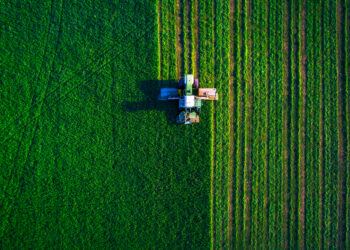


![Da sinistra: il presidente del Consiglio europeo, Antonio Costa; il presidente dell'Ucraina, Volodymir Zelensky: la presidente della Commissione europea, Ursula von der Leyen [Bruxelles, 18 giugno 2024. Foto: European Council]](https://www.eunews.it/wp-content/uploads/2026/06/euco_ua260618-120x86.jpg)
![[foto: Saverio De Giglio/imagoeconomica]](https://www.eunews.it/wp-content/uploads/2026/10/cpt-120x86.png)