





Brussels – There is too much uncertainty, driven and exacerbated by a conflict in the Middle East which, in the wake of the resulting high energy prices, risks calling everything into question, where everything means growth, competitiveness, the stability of the euro, political and geostrategic weight: the European Union and its single currency have a lot to lose, and the President of the Eurogroup, Kyriakos Pierrakakis, conveys a sense of urgency to European Council President Antonio Costa ahead of next week’s Eurosummit (19 and 20 March).
In the traditional letter preceding the meeting of the heads of state and government of the EU countries that have adopted the euro, the emphasis is first and foremost on the risks to the economy: “The fundamentals of the euro area economy remain solid.” However, Pierrakakis warns, “recent developments in the Middle East have already led to unprecedented volatility in energy markets, creating material risks to the outlook” for growth and economic performance.
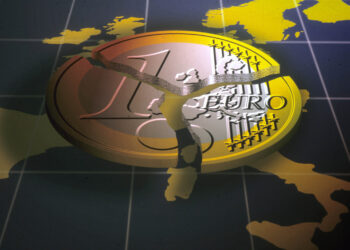
The invitation to leaders is therefore to act accordingly, aware of the risks already expressed by Costa himself, as are governments concerned about what is happening, what may happen and what can be done to contain it. But the president of the Eurogroup adds another element of concern: that of the stability of the single currency. “The ongoing changes in the international monetary and financial landscape,
increasing geopolitical competition and trade tensions underline the fact that euro’s international role
cannot be taken for granted,” he warns. The EU currency must therefore be put back on track, making it strong, secure and reliable.
This implies a process of reform, which Pierrakakis is once again calling for. Because, he writes, “beyond these short-term risks, well-known structural challenges—including weak productivity
growth, ageing populations and mounting fiscal pressures—continue to weigh on Europe’s growth
potential.” European competitiveness, therefore, depends on strengthening its foundations, and the stability of the single currency depends on the support that internal reforms can and must provide.
“In an increasingly uncertain global environment, our commitment to sound policies and deeper economic integration remains essential,” concludes the President of the Eurogroup, assessing the current situation. This is a call to keep public finances under control and to proceed swiftly with the completion of the savings and investment union project.
English version by the Translation Service of Withub
![Il ministro dell'Economia, Giancarlo Giorgetti (destra), con il commissario per l'Econonia, Valdis Dombrovskis [Bruxelles, 9 marzo 2026. Foto: European Council]](https://www.eunews.it/wp-content/uploads/2026/03/giorgetti-dombrovskis-350x250.jpg)



![[Berlino, 10 settembre 2026. Foto: Lorena Deidda/ECB. Copyright: (c) 2026 European Central Bank www.ecb.europa.eu]](https://www.eunews.it/wp-content/uploads/2026/09/lagarde-vucic-260910-120x86.jpg)
