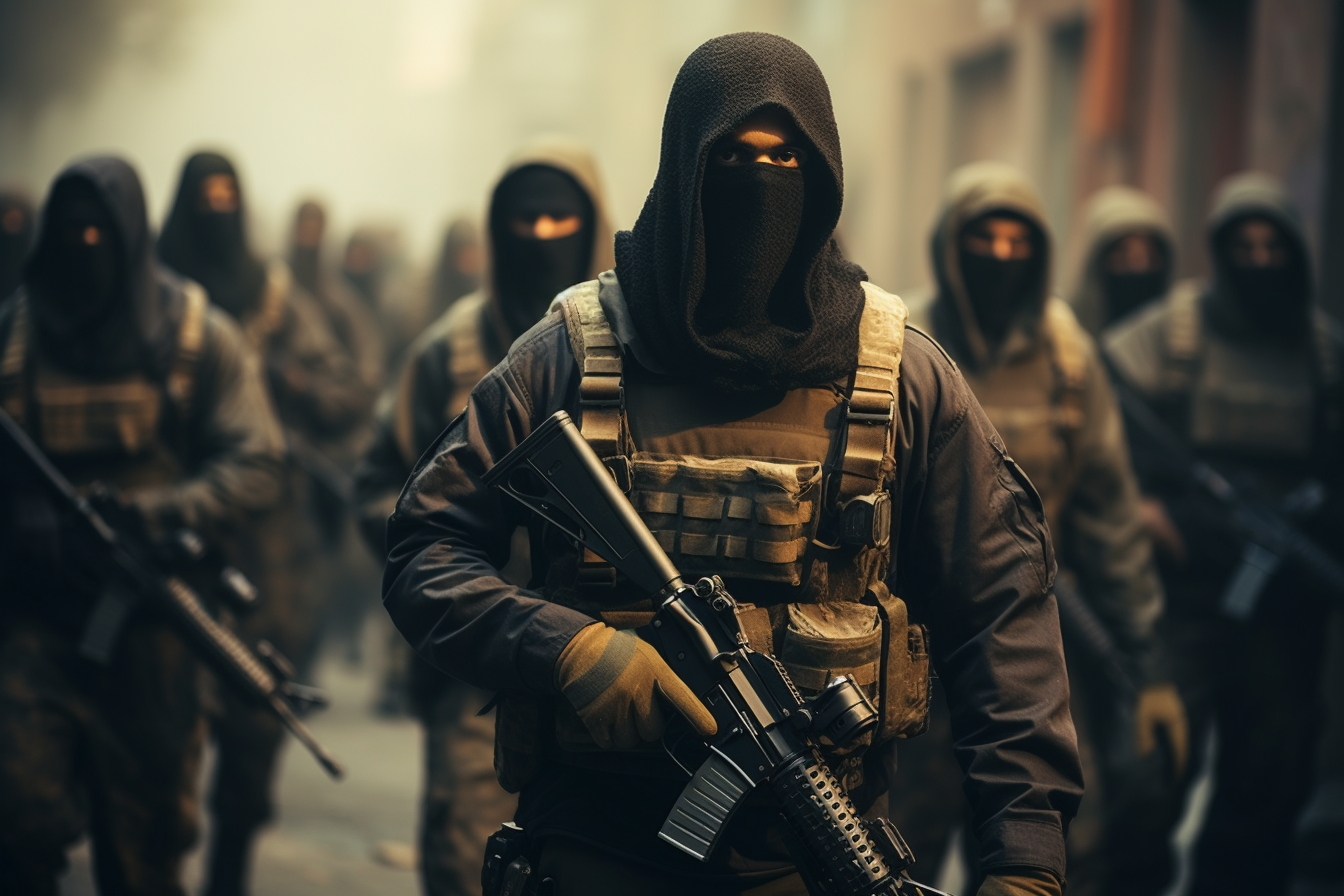
Brussels – With the Middle East in turmoil and attention focused on the conflicts in Lebanon and Iran, there is a risk of letting our guard down regarding the reorganisation of Daesh. “Given what is happening, we must keep a close eye on the terrorist threat“, argues a senior European official, referring to the challenges lurking within a situation described as “fluid” but considered too chaotic. Foreign ministers will meet in Luxembourg next week (Tuesday, 21 April) to discuss, among other things, the Middle East and terrorist risks.
The Middle East includes Hezbollah, an organisation designated as a terrorist group by the EU, which operates in Lebanon, and Iran, considered one of the main financiers of terrorism. “But the Middle East is also Syria,” argues the same senior European official, wishing to point out that focusing on certain areas at this moment is leaving others exposed. Fears linked to regime change, following the fall of Bashar al-Assad, are therefore resurfacing, and the foreign ministers of the 27 Member States will begin a new discussion on how to manage the situation.
https://www.eunews.it/en/2024/12/18/von-der-leyen-syrias-future-fraught-with-risks-more-contact-with-hts/
The debate on the Middle East will be enriched by the presence of the Lebanese Prime Minister, Nawaf Salam, with whom an informal discussion will take place. The topic will be the truce with Israel, but the Lebanese Prime Minister is expected to provide an update on the situation for assessment purposes. The EU, however, remains ready to support the country.
Meanwhile, with regard to Tel Aviv, “many ministers—almost all of them—are in favour of moving forward” on sanctions against extremist Israeli settlers, which have so far been blocked by Hungary, “and if an opportunity were to arise, I expect they would be keen to seize it,” the senior official explains. Furthermore, regarding the possible suspension of the Association Agreement, “the EU has been quite clear in its statement against the death penalty” as well as “on settlement activity in the West Bank,” and “naturally the EU’s long-standing position on the situation in Gaza remains very clear,” the EU source adds. So, “the measures are on the table. But we will have to see where the discussion goes on Tuesday,” he notes.
The first item on the agenda, however, is Ukraine. The EU’s High Representative for Foreign Affairs and Security Policy, Kaja Kallas, “intends to step up pressure on Russia in every respect,” according to well-informed sources in Brussels. This commitment involves further tightening restrictions on the fleet of ghost ships and considering new measures to prevent the Kremlin from profiting from the war in Iran. Thus, the twentieth package of sanctions is on the table, on which the vote of former Hungarian Prime Minister Viktor Orbán weighed heavily. “The EU High Representative, Kaja Kallas, and many ministers would have preferred it to have been approved many weeks ago,” the EU source states. “If there is an opportunity, and I hope there is, I am sure she and the ministers will be ready to seize it as quickly as possible,” he adds. For Ukraine, alongside the three pillars of the European agenda for Kyiv—military support, civilian support, and industrial cooperation—Kallas intends to propose a fourth, entirely new pillar on defence system reforms. This pillar includes EU support for landmine clearance, next-generation anti-drone defence, and the reintegration of veterans into the labour market.
English version by the Translation Service of Withub

![Mappa politica del Medio Oriente [foto: Wikimedia Commons]](https://www.eunews.it/wp-content/uploads/2024/08/Map_of_Middle_East-350x250.png)

![Da sinistra: il presidente del Consiglio europeo, Antonio Costa; il presidente dell'Ucraina, Volodymir Zelensky: la presidente della Commissione europea, Ursula von der Leyen [Bruxelles, 18 giugno 2024. Foto: European Council]](https://www.eunews.it/wp-content/uploads/2026/06/euco_ua260618-120x86.jpg)
![[foto: Saverio De Giglio/imagoeconomica]](https://www.eunews.it/wp-content/uploads/2026/10/cpt-120x86.png)