Brussels – Agriculture, fisheries and aquaculture, land transport, and intra-EU maritime transport: for operators in these sectors, Member States will be able to provide support of up to 70 per cent of the additional energy costs caused by the war in Iran and the closure of the Strait of Hormuz: this is the European Commission’s proposed action regarding state aid for the European economy and operators. The aim is to provide security for those who are paying high prices for fertilisers and fuel, and the EU executive is doing so through the Middle East Crisis Temporary State Aid Framework (METSAF).
The proposal is open to all Member States wishing to submit proposals for solutions that the European Commission will negotiate individually, on a case-by-case basis, in a bid to provide as much protection as possible for households and, even more so, for businesses. The Commission’s proposal is intended to be limited to 2026, with a deadline of 31 December of this year. For those seeking an extension, the option is available, but they will have to provide Brussels with all the necessary explanations and justifications.
No targeted aid will be provided to individual businesses. Instead, governments will have to set up national schemes for each sector and, once Brussels has given the go-ahead, support will then be provided to businesses within the approved scheme, with each business eligible to receive up to 50,000 euros. The price increase for which public support is to be guaranteed will be determined by each Member State by assessing the difference between the reference market price and an applicable historical reference price. The total additional costs will therefore be calculated on the basis of the beneficiary’s current or most recent consumption prior to the crisis.
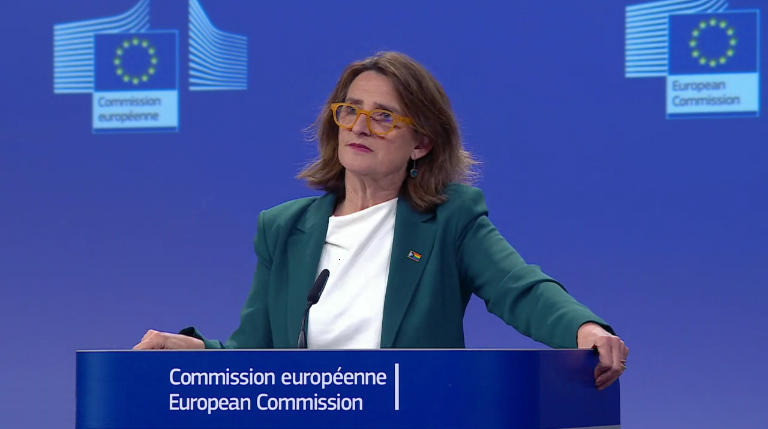
“When it comes to helping households and businesses, it is important to have common rules“, the Executive Vice-President for a Clean, Fair and Competitive Transition, Teresa Ribera, said. The Commission’s initiative, therefore, responds to the need to address high energy prices without Member States acting in a disorganised manner, thereby risking a breach of common budgetary rules. “We have opted for a balanced approach so as not to eliminate Member States’ spending margins,” the Executive Vice-President of the European Commission added. The decision is also explained by the fact that “we have seen a rise in prices and do not know how long it will last,” and this also explains the cautious, prudent approach to avoid negatively impacting competition.
The political advice for everyone is to press ahead with the sustainability agenda. “The energy transition remains the most effective strategy for Europe’s autonomy, growth, and resilience,” the Executive Vice-President of the European Commission added. So the message is: forge ahead with green reforms without hesitation because “I don’t believe the Green Deal belongs to the socialists or the conservatives,” she noted, reiterating that the twin transition is for everyone.
English version by the Translation Service of Withub