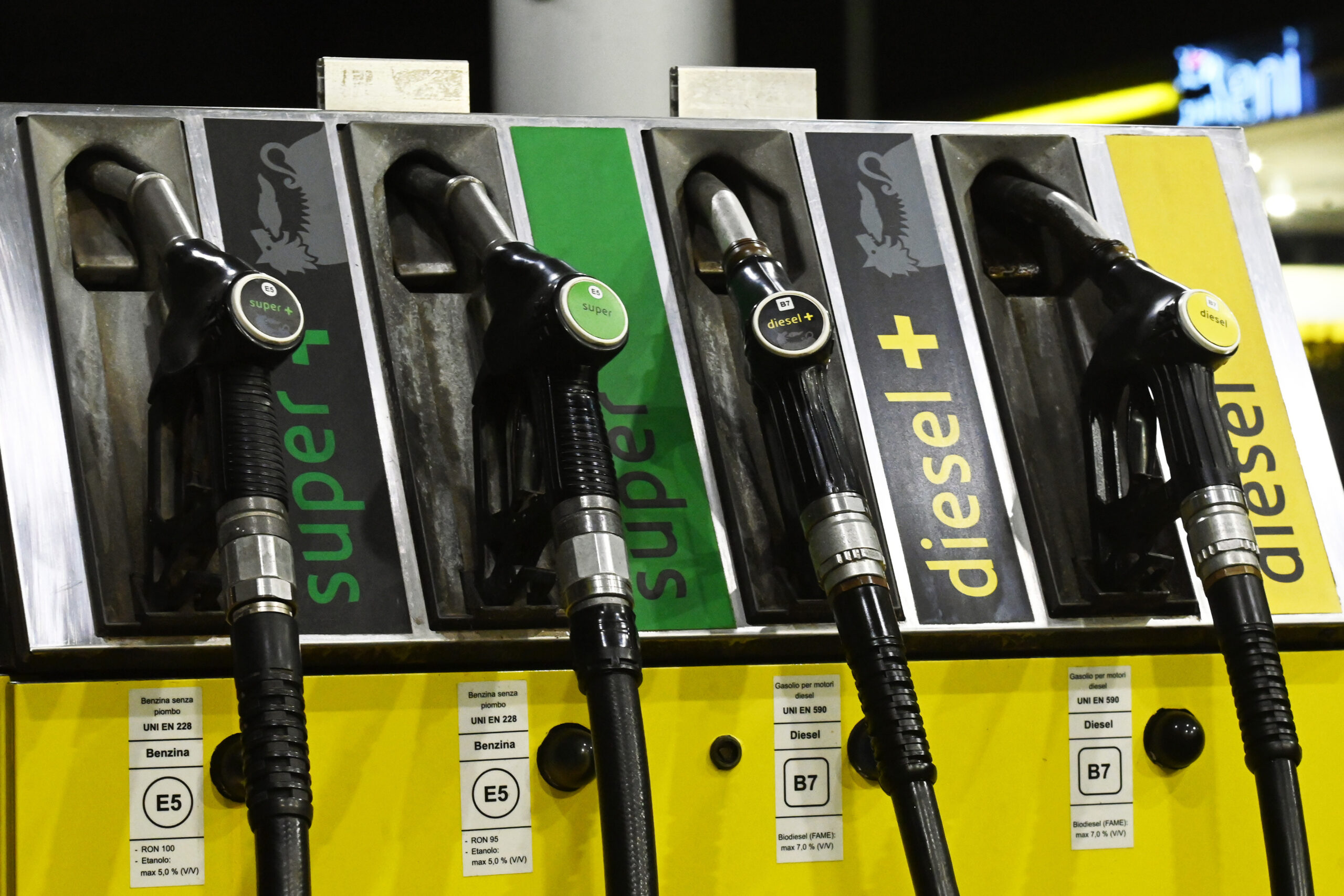
Brussels – The European Union has so far managed to stay out—militarily speaking—of the new conflict in the Middle East triggered by the Israeli-US attack on Iran, but economically speaking, the Old Continent is already paying a heavy price: that of high energy costs. EU data on petrol and diesel prices in Europe clearly demonstrate the impact of the closure of the Strait of Hormuz through which around 20 per cent of the world’s oil and liquefied natural gas (LNG) passes. According to the latest available EU figures, between 6 January and 16 March, the average price of petrol across the EU rose by 15 per cent, rising from €1.604 to €1.838 per litre. The cost of diesel rose even more significantly, climbing from €1.544 to €1.949, with an average increase of 26.2 per cent across the EU.
<div class=”flourish-embed flourish-chart” data-src=”visualisation/28136600″><script src=”https://public.flourish.studio/resources/embed.js“></script><noscript><img src=”https://public.flourish.studio/visualisation/28136600/thumbnail” width=”100%” alt=”visualization” /></noscript></div>
Although the trend is towards widespread price rises across almost all 27 Member States, the situation varies considerably from country to country. Starting with petrol, in mid-March, the highest prices were found at petrol stations in the Netherlands (€2.262 per litre), Denmark (€2.179), Germany (€2.085), Finland (€1.959), and Greece (€1.924). At the bottom of the table, however, were Bulgaria (€1.331 per litre), Malta (€1.34), Cyprus (€1.424), Slovenia (€1.443), and Slovakia (€1.524). The rankings change significantly, however, when looking at the more telling figure: the percentage increase. In this case, the largest increases were recorded in Sweden (+20.38 per cent), Spain (+18.85 per cent), Austria (+18.57 per cent), Romania (+17.49 per cent), and Luxembourg (+17.30 per cent). Meanwhile, the countries that coped best with the energy shock were Cyprus (6.99 per cent), Hungary (6.88 per cent), Ireland (6.50 per cent), Slovakia (5.10 per cent), and Slovenia (2.34 per cent). Added to these is Malta, which saw no change. As for Italy, the country ranks ninth in the price rankings in absolute terms (the price of petrol rose from €1.655 per litre in January 2026 to €1.819 in March 2026), but eighteenth in terms of percentage increase (+9.91 per cent).
It is on diesel that Italy is suffering the most. Among the 27 EU member states, it ranks fifth for the highest pump prices, with the price rising from €1.644 per litre at the start of 2026 to €2.033 a week ago. Italy is surpassed only by the Netherlands (€2.264 per litre), Denmark (€2.208), Germany (€2.146), and Finland (€2.108). Paying the least, however, are motorists in Malta (€1.21), followed by those in Bulgaria (€1.437), Slovenia (€1.484), Slovakia (€1.528), and Cyprus (€1.589). As with petrol, there was no change in price in Malta. Moderate price rises—at least compared to the EU average—were recorded in Slovenia (+3.49 per cent), Slovakia (+9.06 per cent), Hungary (+11.43 per cent), Ireland (+12.22 per cent), and Cyprus (+13.42 per cent). Meanwhile, the five countries where prices rose the most were Sweden (a surge of 35.15 per cent), Spain (+32.64 per cent), Estonia (+31.09 per cent), Austria (+30.70 per cent), and the Czech Republic (+29.64 per cent). Italy ranks seventeenth, with an increase of 23.66 per cent.
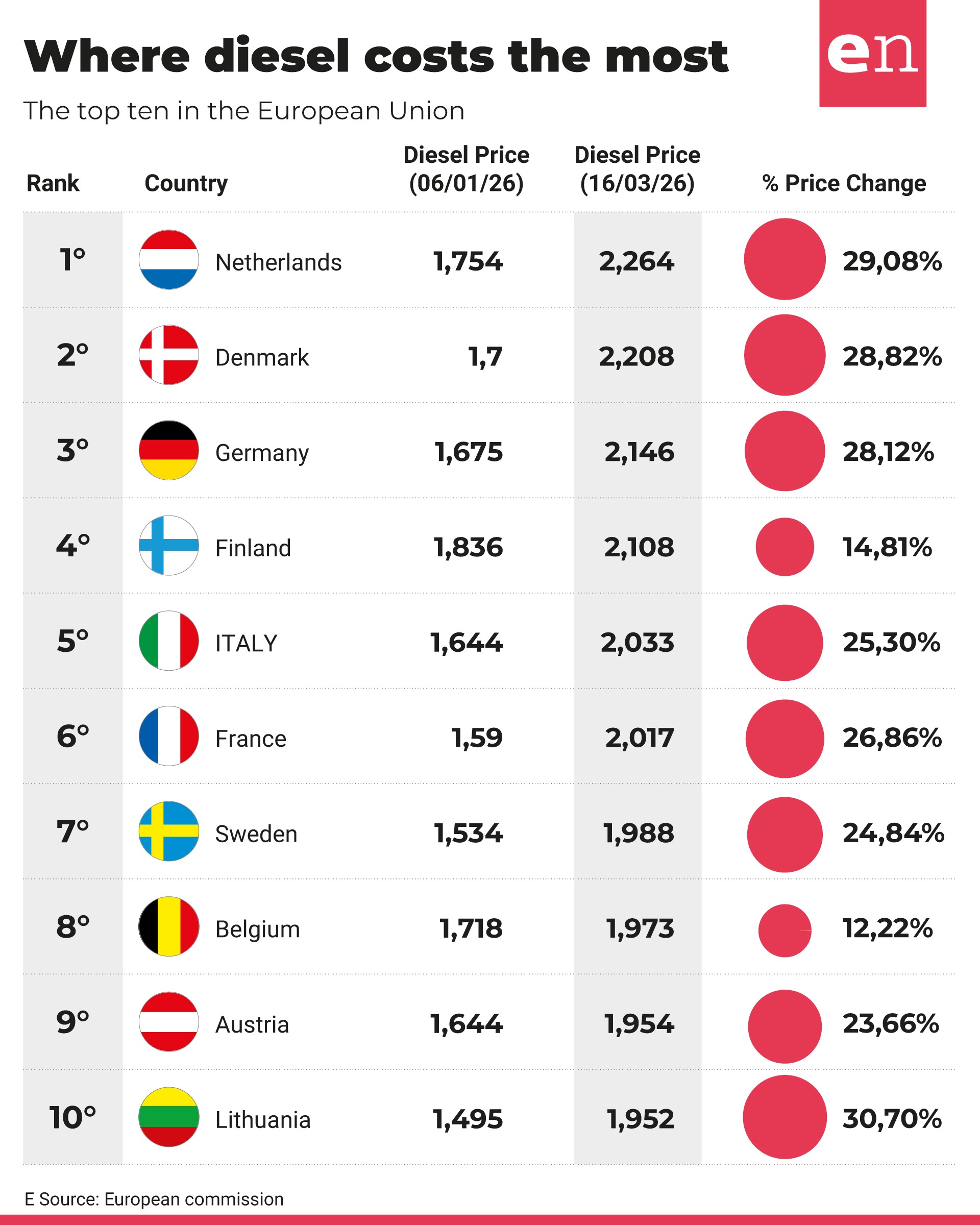
In light of these figures, it seems more than just a coincidence that three of the hardest-hit EU countries (Germany, Italy and the Netherlands) have decided to sign an official statement with France, Japan, and the United Kingdom in which they have set out in writing their willingness “to contribute to the efforts required to ensure the safety of navigation in the Strait of Hormuz.”
English version by the Translation Service of Withub


![Da sinistra: il presidente del Consiglio europeo, Antonio Costa; il presidente dell'Ucraina, Volodymir Zelensky: la presidente della Commissione europea, Ursula von der Leyen [Bruxelles, 18 giugno 2024. Foto: European Council]](https://www.eunews.it/wp-content/uploads/2026/06/euco_ua260618-120x86.jpg)
![[foto: Saverio De Giglio/imagoeconomica]](https://www.eunews.it/wp-content/uploads/2026/10/cpt-120x86.png)