



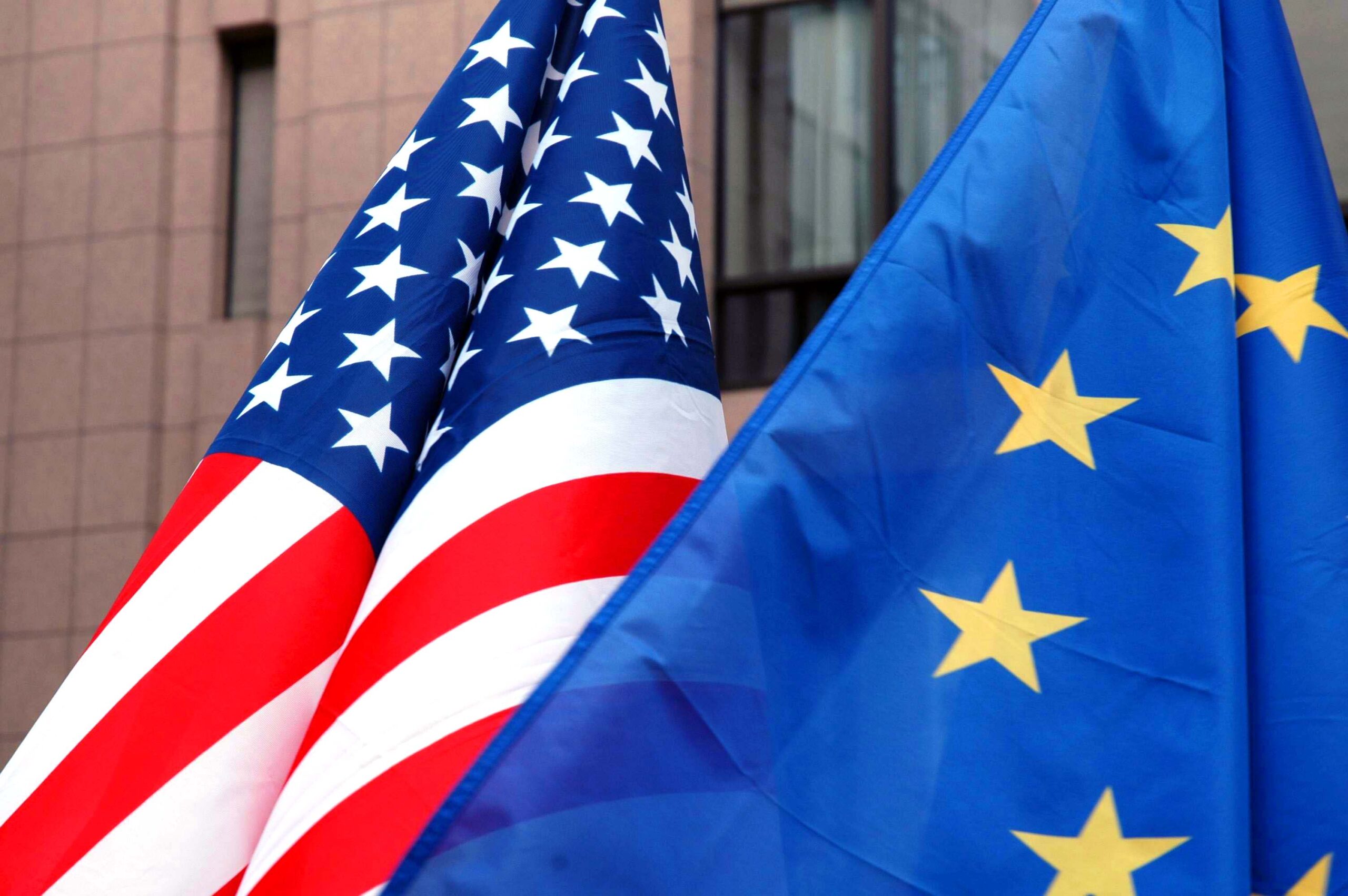

Brussels – The withdrawal of US troops from Germany is not a security issue, but rather a matter that undermines trust in transatlantic relations. US President Donald Trump’s announcement of his intention to withdraw 5,000 US troops from Germany due to disagreements with German Chancellor Friedrich Merz has become a topic of discussion among European Union foreign ministers gathered in Brussels for the Foreign Affairs Council meeting. Latvia sees it as a “bluff,” yet another of Trump’s whims: “Military relations between the European Union and the United States are much stronger than they appear: the US depends on its European allies for much of what it does,” argues Foreign Minister Baiba Braze, who nevertheless does not hold back on her criticism of the White House: “Instead of withdrawing, we must strengthen” defence lines and relations.
“Allies support one another,” said Romania’s Foreign Minister, Oana-Silvia Toiu, in a comment that is both a criticism of the United States’ behaviour and an affirmation of the European discontent with the current US administration. Margus Tsahkna, Estonia’s Foreign Minister, tries instead to play down the situation: “We already have US troops in Estonia, the Baltic states, and Poland, so if the US is deciding to bring more troops to our region, that’s a good thing.” Finnish Foreign Minister, Elina Voltonen, is also not making a fuss, convinced that “five thousand US soldiers make no difference” in terms of overall defence. “If there were a wider withdrawal, then it would be different, but that is not the case.”
Not even the EU High Representative for Foreign Affairs and Security Policy, Kaja Kallas, seems to pay much attention to the US President’s announcement regarding US troops on European soil. “Troop deployments and movements are a constant occurrence in Europe, so this is nothing new,” she stated on the sidelines of the Foreign Affairs Council meeting. “I believe it is important that US troops remain in Europe because they protect American interests in Europe, as well as European interests.” That said, she adds, “there is still time to assess the practical implications” of US decisions.
English version by the Translation Service of Withub





![[Berlino, 10 settembre 2026. Foto: Lorena Deidda/ECB. Copyright: (c) 2026 European Central Bank www.ecb.europa.eu]](https://www.eunews.it/wp-content/uploads/2026/09/lagarde-vucic-260910-120x86.jpg)
