



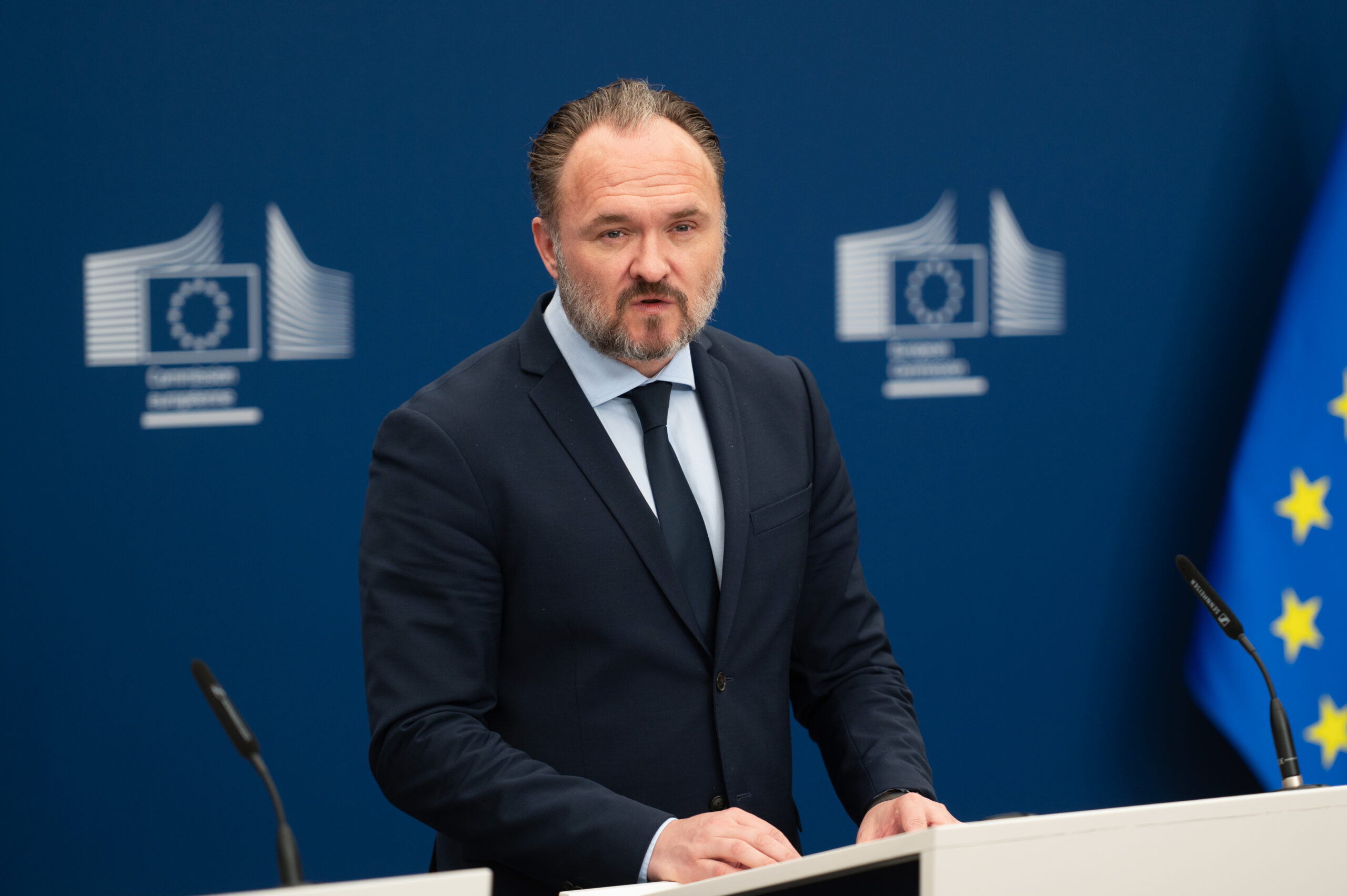

Brussels – On the housing crisis, the European Commission has announced that it is moving to legislative action and aims to present a proposal to tackle the problem caused by the proliferation of short-term rentals in European cities. This is because affordable and sustainable housing “is the main social concern for citizens in most European Union countries.” This was reported by the Commissioner for Energy and Housing, Dan Jørgensen, in Nicosia at a press conference alongside Constantinos Ioannou, Minister of the Interior of Cyprus—the country currently holding the EU Council presidency—on the sidelines of the informal meeting of ministers responsible for housing. There is talk of “concrete” initiatives, such as “investment in construction and the private sector,” but the Commissioner stresses that “Brussels alone will not be able to resolve this crisis: we must all mobilise at every level of governance and work together to make a real difference for our citizens.”
The figures on the housing crisis are nothing new: since 2013, house prices in the EU have risen by over 60 per cent, while average rents have risen by around 20 per cent, with figures in urban areas rising even further. Against this dramatic backdrop, Commissioner Jorgensen is particularly concerned about short-term rentals. The figures reveal that between 2018 and 2024, they have almost doubled, and in some neighbourhoods and tourist hotspots, short-term rentals can account for “up to 20 per cent of the housing stock,” bolstering dedicated platforms but “excluding the local population from the housing market and driving up prices in certain areas.”
Hence, the need to introduce a law on affordable housing, legislation that would provide local public authorities with “a range of possible tools to limit the negative effects of short-term rentals in areas experiencing housing stress, and which will set out measures enabling public authorities to promote affordable housing in these areas.” This proposed legislation is on the table at the Berlaymont, but the Commissioner has not given a timeline for its release. “Short-term rentals are in themselves a good idea and in some places are even beneficial for people’s incomes and for tourism, but many places are suffering from an excessive number of short-term rentals that are driving up housing prices and pushing ordinary people out of their homes. We are preparing a legislative proposal to address these issues,” the Commissioner noted.
To bring about a real change of pace, it is necessary to start with investment.
Taking the European Plan for Affordable Housing—which serves as the European Commission’s “compass”—as a starting point, Jørgensen admits that he is working on a “Pan-European investment platform to ensure we have the appropriate financial instruments to support social and affordable housing.” The amount to be mobilised is €10 billion from the EU budget, while partner financial institutions, including the European Investment Bank (EIB) and the European Bank for Reconstruction and Development (EBRD), have committed to mobilising €375 billion by 2029. A housing simplification package is also in the pipeline, aimed at “helping to increase our supply” and “streamlining bureaucracy,” which all too often slows down the process. However, “simplification does not mean deregulation,” specifies Cypriot Minister Ioannou, finally echoing the Commissioner’s call to join the Alliance of European Cities on Housing.
“I want housing experts from Member States, regions, cities, stakeholders, and local communities not only to be heard, but to shape the future of housing together,” explains Jorgensen. “Together” is the key concept also put forward by Minister Ioannou: “In addition to mobilising investment, our aim is to promote dialogue and encourage the exchange of best practices between Member States. Strengthening cooperation at the European level will be crucial to achieving tangible results for our European citizens.”
English version by the Translation Service of Withub







![[Berlino, 10 settembre 2026. Foto: Lorena Deidda/ECB. Copyright: (c) 2026 European Central Bank www.ecb.europa.eu]](https://www.eunews.it/wp-content/uploads/2026/09/lagarde-vucic-260910-120x86.jpg)
