
Brussels – The European Union must press ahead resolutely with the dual energy and digital transition, and do so in a coordinated manner: this is the only way to protect itself from international shocks. This is the conclusion reached by the European Central Bank in the special report on energy security and industrial competitiveness, in which it issues an explicit call for Member State governments to move forward together: “A coordinated European
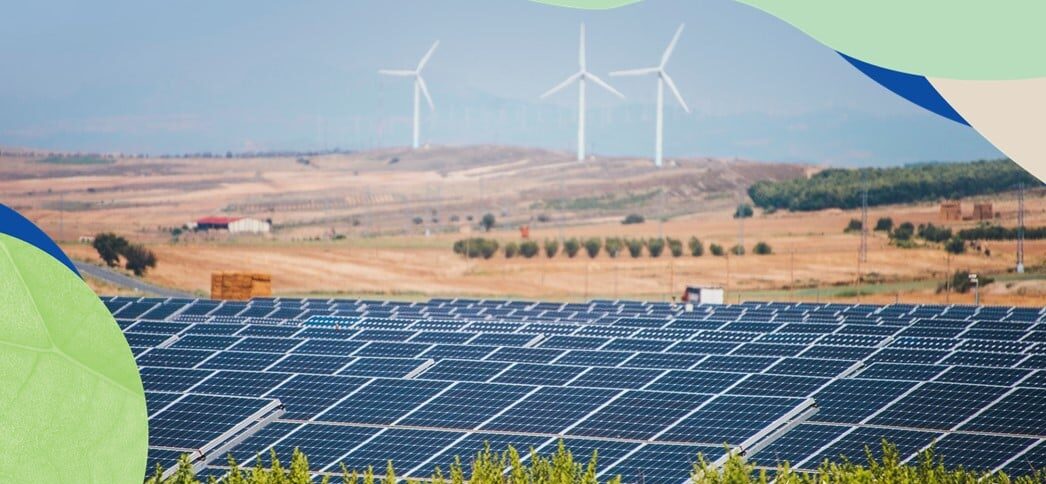
approach, prioritising renewable energy investments where they have the highest
output potential at the EU level, could increase average output by up to
approximately 42 per cent for solar and 110 per cent for wind, compared with a scenario with less
coordination among Member States.“
The ECB experts see no alternative to replacing fossil fuels with renewable energy sources. As also demonstrated by the war in Iran and the impact on energy, “the EU is highly dependent on fossil fuel imports, making it particularly
exposed to global energy market developments.“ The European Union and its euro area have everything to lose from these dependencies: “As a key input to virtually any production process, energy prices have a major
impact on firms’ costs and can harm their international competitiveness.”
Hence, the need to press ahead with the sustainable transition, with the ECB issuing targeted recommendations: first and foremost, a focus on cross-border investment, namely interconnectors. “Expanding interconnectors and electricity grids between Member States is vital
to efficiently distribute energy from renewable-rich regions to areas with high
industrial demand, stabilising energy prices and improving security of supply,” the ECB said. Additionally, strengthening connectivity with non-EU countries can provide
mutual support during energy crises, bridge the gap and stimulate investment in clean energy projects. Secondly, it suggests that work should be done on “proposals for an EU fiscal capacity for green investment, green bonds, as well as enhanced private sector participation, are critical to bridging the gap and stimulating investment in clean energy projects.”
The third recommendation for Member States is that tax systems that take into account the environmental performance of different energy sources, with “incentives that will support electrification
and the development of clean energy,” thereby discouraging the use of traditional sources. The fourth recommendation is to press ahead with the digital and technological transition. “Digitalisation enables smart grid technologies, which utilise digital communication technologies to monitor and control electricity flows in real time,” the ECB’s report emphasises. In this context, “Energy storage systems, such as batteries and pumped hydro, and demand
response programmes, are also vital to balancing supply and demand.”
Finally, the industrial strategy. According to the data, in 2023, China dominated clean
technology manufacturing investments, accounting for 80 per cent, compared with just 20 per cent from the EU and US combined. However, this should not be a cause for discouragement. “Despite China’s established dominance, Europe
has a prominent clean tech ecosystem, with substantial manufacturing capacity in
batteries, electric vehicles, wind energy, and heat pumps.” This is where the EU must focus, decisively and in a targeted and coordinated manner, to win the race for the future. “To maintain global leadership, the EU must support these industries,” the ECB experts said, noting that initiatives such as the European Commission’s Clean Industrial Deal “can
help to lower energy costs, promote clean technology markets and mobilise
significant funding for industrial decarbonisation.”