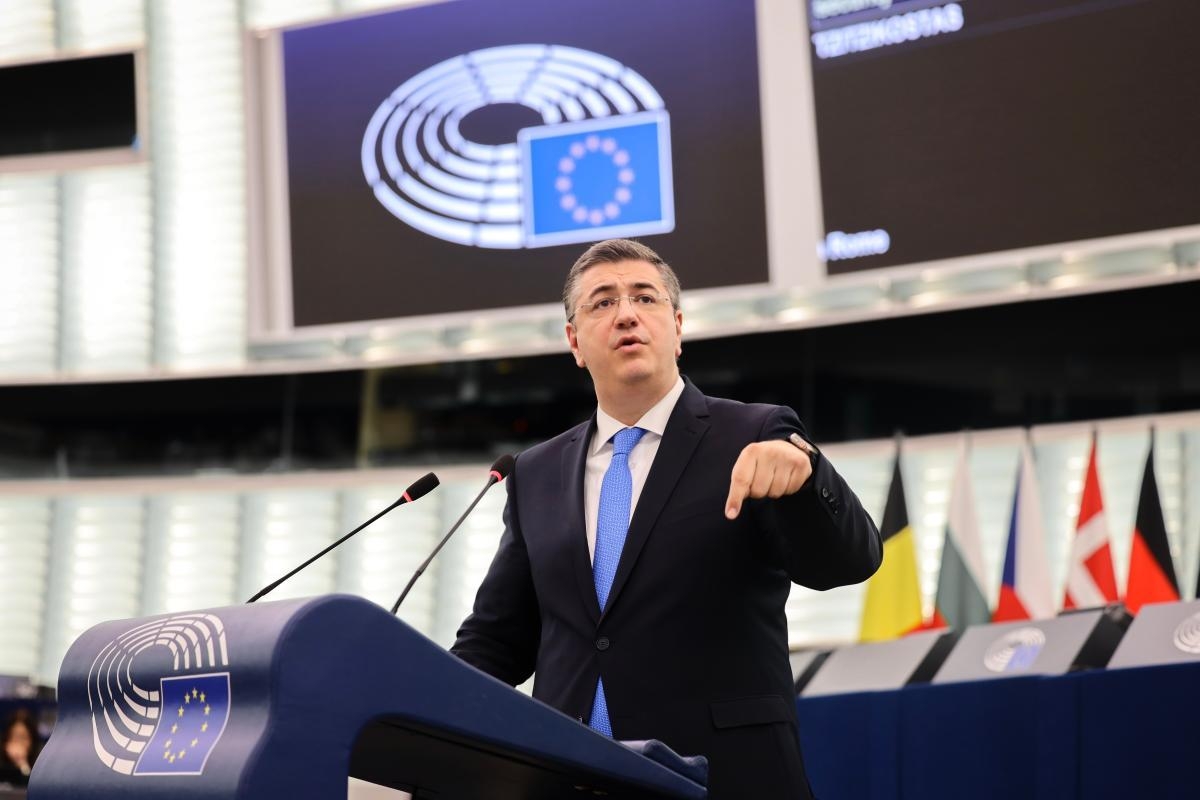

Brussels – The clash over biofuels, and over their role in the energy transition and the future of the automotive industry in the Old Continent, returns to the European Parliament. During today’s (21 May) debate in the plenary session in Strasbourg, MEPs presented two opposing views: on the one hand, there are those who consider biofuels a valid alternative to electric vehicles, a strategic tool for defending industrial competitiveness and achieving the goal of technology neutrality; on the other, there are those who regard them as a limited resource, potentially harmful to the environment and the agricultural sector, and therefore useful only in those sectors where electrification is particularly complicated. The European Commissioner for Sustainable Transport, Apostolos Tzitzikostas, outlined the Commission’s approach, which appears to be closer to this second view.
Biofuels: what they are and their pros and cons
Biofuels are energy sources derived from plant or organic biomass – such as vegetable oils, plants, or waste – that are intended to provide a more sustainable alternative to the fossil fuels traditionally used to power transport. Since they are derived from biomass, they reduce greenhouse gas emissions.
According to their supporters, in addition to their environmental benefits, biofuels offer other advantages that would make them even more preferable to electric vehicles. “Biofuels have an advantage over electric vehicles: they can often be used in engines of existing vehicles, with little or no modification required,” La Repubblica quotes a report by the World Economic Forum as saying.
On the other hand, several critical voices warn of the risks that a complete shift away from vehicle electrification towards biofuels would entail. One of the most sensitive issues is that of the use of agricultural land. As the European Environment Agency (EEA) explains, by increasing the area dedicated to biofuel crops, the area reserved for food production is reduced: “Production on agricultural land is being converted to supply raw materials for biofuels and, consequently, this is offset by new non-agricultural land being converted to grow food,” reads the EEA report. And the paradoxical effect of this “controversial phenomenon” is that, since 2010, overall emissions have increased rather than decreased.
Tzitzikostas to MEPs: “Yes to biofuels, but we are reviewing the list of high-risk ones”
Faced with this complex set of pros and cons, Brussels has always opted for a moderate stance. The Commission remains formally in favour of biofuels, but with very specific limits. Commissioner Tzitzikostas himself reiterated this position during today’s debate in the Chamber.
While saying that he was convinced that “biofuels and e-fuels play a crucial role in the decarbonisation of road transport” and that “it is essential to support and incentivise their production in Europe,” the Greek politician reiterated that their use must be limited as far as possible to “those hard-to-abate sectors where emissions are difficult to reduce, such as aviation and maritime transport.” Although he did not make this explicit, Tzitzikostas therefore excluded the broad category of road transport from the list, for which the Commission remains convinced that the best route forward is full electrification.
During his address to MEPs, the EU Commissioner also pointed out that, to represent a viable alternative to fossil fuels, biofuels “must be sustainable, without causing any negative impacts, as outlined in the Sustainable Transport Investment Plan that I presented last year.”
In this regard, as Tzitzikostas pointed out, “the Commission has recently revised the delegated act setting out which biofuels are to be considered high-risk and has found that both palm oil and soya qualify as highly harmful feedstocks,” moving to progressively phase them out.
The clash in the Chamber: the right and left divided over biofuels and electric vehicles
The Commissioner’s report was well received by the centre-left in the Strasbourg Chamber: from the Renew liberals to The Left, there was, albeit with varying nuances, a unanimous call to open up only partially to biofuels, and not to forget that the real objective remains the complete electrification of the transport sector.
Echoing Tzitzikostas’s suggestion that the use of biofuels should be limited to the aviation and maritime sectors, Dutch MEP Mohammed Chahim (S&D) emphasised the need to establish clear rules in this regard: “Without them, it will be the companies that can pay a higher price that will snap up biofuels, and it is not certain that these are the ones that need them most or that have no better alternatives.” The Danish MEP Sigfriid Friis (Renew) took a similarly cautious stance, stating that “biofuels are important for aviation and the maritime sector, but is it really wise to grow maize, soya, or wheat just to put them in car fuel tanks?“
While the German Martin Günther (The Left) went even further, describing biofuels as “an illusory solution” to the climate crisis, according to his compatriot Jutta Paulus (Greens), the limited benefits of these fuels are a matter of numbers: “One hectare of land used to grow biofuels produces a maximum of around 40 megawatt-hours of energy, whereas the same hectare covered with solar panels would produce 700,” she stated.
On the other side of the hemicycle, however, comes a string of harsh criticism of the Commission’s approach. For League MEP Silvia Sardone (Patriots for Europe), “betting everything on electric cars is wrong because we depend on China for raw materials” and “the biofuel alternative could be a major European gamble.” Instead, she concluded, “the contribution to transport decarbonisation that you attribute to biofuels, limited to 3 per cent, is unacceptable and ridiculous.” Along the same lines, Meloni supporter Stefano Cavedagna (ECR) described the EU executive’s choices as “contradictory” because “on the one hand, it claims to want to support industrial competitiveness, whilst on the other, it proposes a paltry percentage of biofuel use in the automotive sector.”
Finally, the Forza Italia representative Massimiliano Salini (EPP), albeit in a more conciliatory tone than his compatriots, limited himself to appealing to Tzitzikostas to “follow the principle of regulatory simplification” when updating the list of high-risk biofuels, moving away from the past approach “geared towards restriction and over-regulation.”
It should come as no surprise that the voices most in favour of greater openness to biofuels are those of Italy’s centre-right MEPs: Giorgia Meloni’s government was the first EU executive to give the green light to the conversion of diesel engines to run on biofuels, following a decree that came into force in November 2025.
English version by the Translation Service of Withub

![Il commissario per i Trasporti, Apostolos Tzitzikostas [Bruxelles, 5 novembre 2025]](https://www.eunews.it/wp-content/uploads/2025/11/tzitzikostas-251105-350x250.png)