- Europe, like you've never read before -
Monday, 1 June 2026
No Result
View All Result
  • it ITA
  • en ENG
Eunews
  • Politics
  • World
  • Business
  • News
  • Defence
  • Health
  • Agrifood
  • Other sections
    • Culture
    • Diritti
    • Energy
    • Green Economy
    • Finance & Insurance
    • Industry & Markets
    • Media
    • Mobility & Logistics
    • Net & Tech
    • Sports
  • Newsletter
  • European 2024
    Eunews
    • Politics
    • World
    • Business
    • News
    • Defence
    • Health
    • Agrifood
    • Other sections
      • Culture
      • Diritti
      • Energy
      • Green Economy
      • Finance & Insurance
      • Industry & Markets
      • Media
      • Mobility & Logistics
      • Net & Tech
      • Sports
    No Result
    View All Result
    Eunews
    No Result
    View All Result

    Home » Energy » EU: A long-term fuel shortage cannot be ruled out; we are preparing for every possible scenario

    EU: A long-term fuel shortage cannot be ruled out; we are preparing for every possible scenario

    While the Transport Commissioner has given assurances that 70 per cent of supplies are produced within the EU, the Energy Minister has highlighted the extra 35 billion paid out and added: "This crisis is worse" than those of the 1970s and 2022, "and we are still far too vulnerable"

    Caterina Mazzantini by Caterina Mazzantini
    13 May 2026
    in Energy
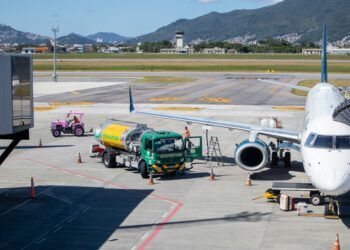
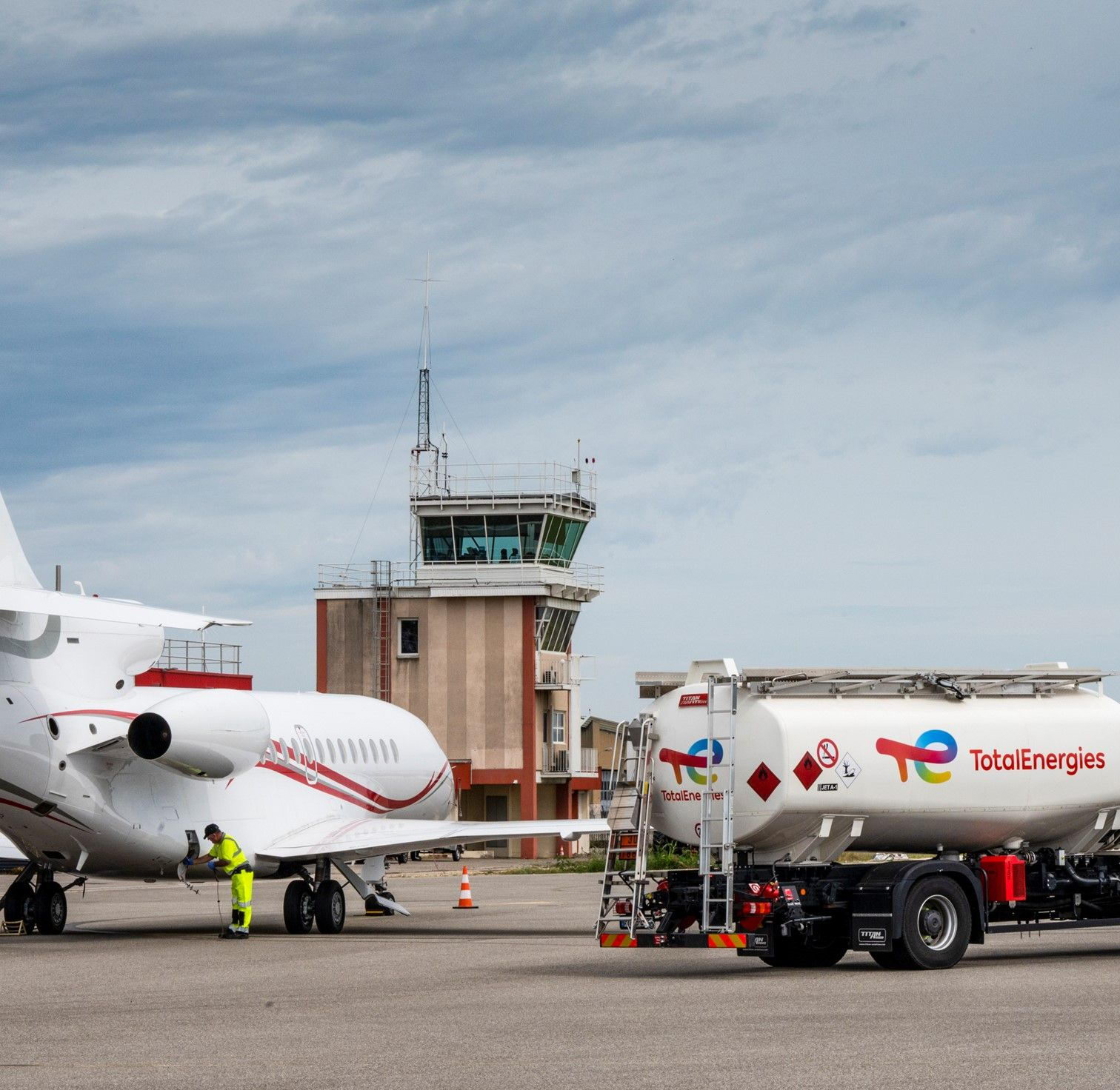
    TOTAL ENERGIES AZIENDA INDUSTRIA ENERGETICA PRODUZIONE CARBURANTI CARBURANTE BIO RIFORNIMENTO AEREO AEREI AEROPLANO AEROPLANI Source: Imago economica

    TOTAL ENERGIES AZIENDA INDUSTRIA ENERGETICA PRODUZIONE CARBURANTI CARBURANTE BIO RIFORNIMENTO AEREO AEREI AEROPLANO AEROPLANI

    Brussels – There are no indications of fuel shortages, but the situation is evolving, and long-term difficulties cannot be ruled out. The European Commission is therefore monitoring the situation and preparing for every possible scenario arising from the energy crisis and the war being waged by Israel and the US against Iran. During today’s press conference to present the passenger package (13 May), the European Commissioner for Sustainable Transport and Tourism, Apostolos Tzitzikōstas, sought to convey a message of calm, stating that “there is no indication so far of a fuel shortage in Europe in the immediate future.” In support of this view, Tzitzikōstas reiterated the resilience of the European system: “70 per cent of aviation fuel is produced within the EU, whilst only 20 per cent is imported from Gulf countries.” However, the Commission’s optimism clashes with the concerns expressed by Piero Cipollone, a member of the ECB’s Executive Board, who believes Europe could start running out of supplies as early as the end of May. Pressed on this discrepancy, the Commissioner admitted that “only time will tell,” highlighting the EU executive’s commitment to constantly monitoring the situation in the Strait of Hormuz. “Naturally, the Commission’s coordinating role is crucial for monitoring and deciding on collective action. And we are currently working on all possible scenarios,” he stated. “If necessary, we will also adopt some of the policies and decisions taken to assist Member States, airlines or any other sector or component of the European economy, solely and exclusively if necessary, which is not currently the case,” he emphasised. 

    If stocks hold up, the economic viability of routes is under pressure: “The real problem at the moment is the rise in fuel prices,” noted Tzitzikōstas. He explained that the price hike is making many scheduled flights very expensive, leading several airlines to cancel planned routes. 

    Against this backdrop, the Commission has reminded airlines of their obligations. Although pre-emptive cancellations are considered “acceptable’ in the face of unsustainable costs, Tzitzikōstas warned that airlines “will have to reimburse passengers” for cuts announced at short notice. The Commissioner argued that the EU can rely on the strength of its legislative framework, which Tzitzikōstas described as “one of the best in the world for passenger protection.” 

    Despite the war and its global repercussions, tourism appears to be holding up. With the season about to begin, the Commissioner for Tourism, Tzitzikōstas, noted that, following consultations with industry stakeholders across Europe, there are no signs of mass cancellations among tourists. On the contrary, tourist numbers appear to be holding steady compared to last year, a sign that Europe “is a safe and stable tourist destination.” And he launched into a promotional pitch: “We want to invite everyone to visit Europe, a place that will not disappoint. There will be no problems and, of course, they will be able to enjoy their holidays with their families.” 

    But while Tzitzikōstas is offering reassurances from Brussels, the European Commissioner for Energy, Dan Jørgensen, is sounding more concerned in Nicosia at the press conference following the informal meeting of energy ministers in Cyprus. According to Jørgensen, “the Commission does not foresee any very serious problems for security of supply in the very short term, but cannot rule out difficulties in the long term.”

     A development, he pointed out, that will depend on both the situation in the Middle East and the reactions of the markets and airlines.

    The Commissioner reminded that the European Commission has set up a dedicated observatory to monitor stocks, imports, and exports of aviation fuel, while reiterating the need to “step up and redouble efforts to phase out fossil fuels and improve energy efficiency.” 

    Jørgensen then sought to clarify the nature of the current situation: the one that began in late February “is not an energy crisis, but a fossil fuel crisis.” Since the start of the conflict in the Middle East, he explained, “we have paid an extra €35 billion for energy without receiving any additional supply.” And “although the European Union is better prepared today than it was during the crises of the 1970s and 2022, with greater use of renewables, more diversified suppliers and improved energy efficiency, this crisis is worse, and we are still too vulnerable,” concluded Jørgensen.

    English version by the Translation Service of Withub

    Tags: Carburanti aereiCrisi Hormuzdenseeu commissionJorgensenue

    Related Posts

    tassa sul carbonio emissioni ETS
    Energy

    The EU Commission proposes new parameters for the ETS: 4 billion for industry

    11 May 2026
    Fonte: Imagoeconomia
    Energy

    Aviation emissions are on the rise again in Europe: low-cost airlines are under fire

    8 May 2026
    Foto di Vitor Paladini su Unsplash
    Energy

    EU says high fuel prices do not justify increases in airfares

    8 May 2026
    Fonte: Ipa Agency
    Energy

    EU May petrol prices up 13.67 percent vs Feb; diesel up 23.89 percent

    8 May 2026
    Eelco Heinen, ministro delle Finanze dei Paesi Bassi, con Valdis Dombrovskis, commissario europeo per l'Economia. Fonte: Consiglio UE
    Business

    The Netherlands against Meloni: “The response to shocks cannot be more debt”

    4 May 2026
    map visualization
    Topo via Unsplash

    The EU moves towards phasing out animal testing in chemical safety assessments

    by Iolanda Cuomo
    1 June 2026

    Twenty-two measures to pave the way for a transition towards innovative approaches. Commissioner Roswall: "Today is a good day for...

    Vilnius, Lithuania; 1 June 2026. Andrius Kubilius, European Commissioner for Defence and Space, attending NATO Parliamentary Assembly in the Seimas.

    Kubilius insists: “Ukraine should join the future European Defence Union”

    by Giorgio Dell'Omodarme
    1 June 2026

    Speaking at the NATO Parliamentary Assembly, the European Commissioner for Defence described the Ukrainian army as "the best in Europe,...

    Luca Zaia. Foto d'archivio Eunews

    Italian regions are calling for flexibility under the Pact to tackle rising energy costs. Zaia: “The EU must listen to the government”

    by Caterina Mazzantini
    1 June 2026

    Speaking on the sidelines of the meeting of the Committee of the Regions’ (CoR) Commission for Natural Resources, the former...

    Via libera del consiglio Ecofin ad aiuti per un miliardo di euro a sostegno dell'Ucraina

    Ukraine: EU and European aid exceeds €200 billion

    by Emanuele Bonini emanuelebonini
    1 June 2026

    The update for February 2026 indicates total support of €200.4 billion, comprising military, economic, humanitarian, and bilateral contributions

    • Director’s Point of View
    • Opinions
    • About us
    • Contacts
    • Privacy Policy
    • Cookie policy

    Eunews is a registered newspaper
    Press Register of the Court of Turin n° 27


    Copyright © 2025 - WITHUB S.p.a., Via Rubens 19 - 20148 Milan
    VAT number: 10067080969 - ROC registration number n.30628
    Fully paid-up share capital 50.000,00€


    No Result
    View All Result
    • it ITA
    • en ENG
    • Politics
    • Newsletter
    • World politics
    • Business
    • General News
    • Defence & Security
    • Health
    • Agrifood
    • Altre sezioni
      • Culture
      • Diritti
      • Energy
      • Green Economy
      • Gallery
      • Finance & Insurance
      • Industry & Markets
      • Media
      • Mobility & Logistics
      • Net & Tech
      • News
      • Opinions
      • Sports
    • Director’s Point of View
    • Draghi Report
    • Eunews Newsletter

    No Result
    View All Result
    • it ITA
    • en ENG
    • Politics
    • Newsletter
    • World politics
    • Business
    • General News
    • Defence & Security
    • Health
    • Agrifood
    • Altre sezioni
      • Culture
      • Diritti
      • Energy
      • Green Economy
      • Gallery
      • Finance & Insurance
      • Industry & Markets
      • Media
      • Mobility & Logistics
      • Net & Tech
      • News
      • Opinions
      • Sports
    • Director’s Point of View
    • Draghi Report
    • Eunews Newsletter

    Attention