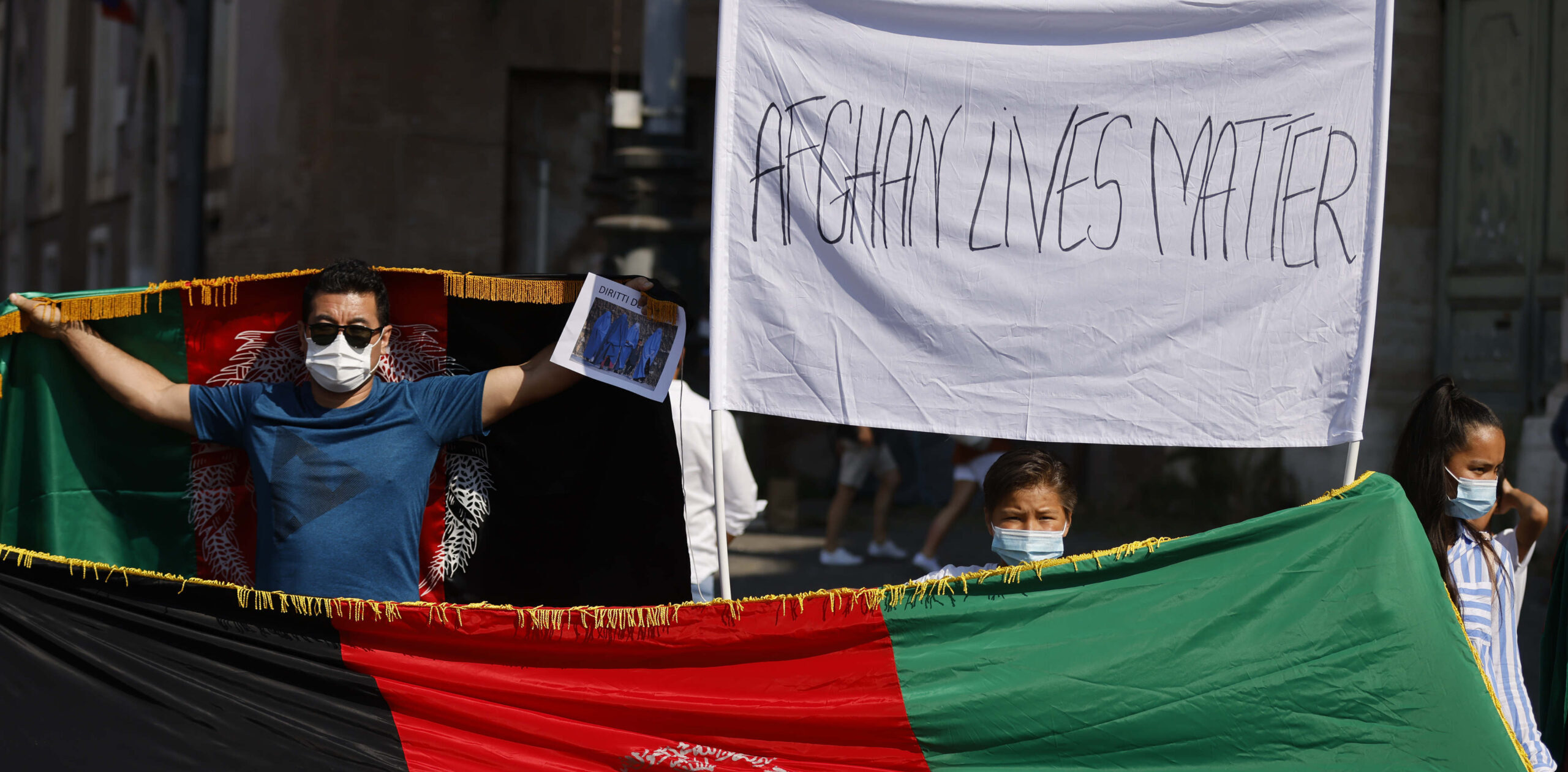
Brussels – A visit that may come as a surprise, but was planned: that of a number of Taliban officials with representatives of the European Commission, which took place today (23 June) in Brussels. On 12 May, the EU had announced that it had sent a letter of invitation to several members of the current government in Kabul to discuss the repatriation of Afghan migrants who are in the EU illegally and who have committed crimes.
The European Commission has stated that “the Commission and Sweden jointly chaired” today’s meeting, which was attended by 15 Member States. According to a Taliban source, the talks, which took place behind closed doors, focused on diplomatic services and the dignified repatriation of Afghan citizens. “This was a historic visit, as it is the first time ever that a delegation from the Islamic Emirate has visited the EU and held talks with Member States in Brussels,” said Abdul Qahar Balkhi, spokesperson for the Taliban Ministry of Foreign Affairs, who led the five-member delegation. Balkhi added that discussions centred on “the resumption of a wide range of consular services for Afghans within the EU, including the need for measures to build trust and strengthen the consular presence.”
A few hours before the meeting, during the usual press conference, the
spokesperson for Home Affairs, Markus Lammert, had neither confirmed nor denied the existence of the meeting. “The Commission does not disclose details of technical meetings before they have taken place,” he had said, adding that contacts “with representatives of the de facto authorities in Afghanistan have been ongoing for some time.” Today’s meeting, in fact, is the second of 2026: a technical meeting had been organised in Afghanistan in January. “Subsequently, the Commission prepared for a meeting here in Brussels,” explained Lammert, adding that this new meeting “was organised in response to an initiative by twenty Member States, which, in a letter, asked the Commission to coordinate technical contacts on repatriation.” The aim of these Member States, therefore, would be “to repatriate people who have committed serious crimes or who pose a threat to security.”
The Commission spokesperson was keen to emphasise that “when it comes to returns, the actual decision rests with the Member States,” and that the relevant authorities “examine each case individually.” Individual assessment is an obligation “also provided for under EU law,” and it is not for the Commission, nor indeed for the Union, to decide “whether and where a person may be returned.” What the European Commission can do, Lammert explained, is “assist and coordinate”. Furthermore, he specified that the contacts with the Taliban are “technical, operational-level contacts” which in no way “imply recognition” of their regime.
What the Berlaymont Building does not know, however, is the number of Afghan nationals affected by the repatriation operations. When asked specifically how many of the 18,000 Afghans in the EU are undocumented and have committed “serious crimes” or pose “a security threat”, the response was vague: the figures must be requested from the Member States. Hence, the concern that this provision could open the door to the possibility of repatriating even those who have not committed a crime but are subject to a repatriation order. In this context, Lammert pointed out that “any individual decision taken by Member States regarding repatriation must be adopted by the national authorities,” and that work is currently focused solely on “serious criminals.”
Meanwhile, civil society has organised a rally this afternoon in Brussels to protest against the meeting. The International Federation for Human Rights had called for the delegates to be arrested on their arrival, emphasising that senior Taliban officials are the subject of arrest warrants issued by the International Criminal Court for crimes against humanity and gender-based persecution.
As early as the announcement of the possible visit, in early June, 47 MEPs had sent a letter to the Belgian Foreign Minister, Maxime Prévot, asking that the visas be refused. Prévot, a member of the Les Engagés party, had stated that he did not approve of the invitation but that, as the host country for the European institutions, Belgium could not refuse to grant the requested visas.
And today, before the news of the meeting had been confirmed, MEP Hannah Neumann (Greens/EFA) has sent, together with other MEPs and former Afghan MPs, an open letter to Bart De Wever, Prime Minister of Belgium, and to Ursula von der Leyen, President of the European Commission. The 28 signatories say they are “deeply concerned.” “In 2021,” the letter states, “the European Union set out clear conditions for dialogue with the Taliban: respect for human rights, unhindered humanitarian access, concrete commitments in the fight against terrorism and significant steps towards the formation of an inclusive government.” All 27 Member States and the EU institutions supported these criteria, but “none of them has been met.”
The European Parliament “reiterated this position in its resolution of 21 May,” the appeal continues, “warning against any form of normalisation or implicit legitimisation of the Taliban as long as systematic human rights violations continue”. In these circumstances, “inviting Taliban representatives to Europe is a serious mistake.”
#Taliban shouldn’t be invited to #Brussels. This gives into blackmailing & normalisation.
Together with fellow parliamentarians & former Afghan parliamentarians, I sent an open letter to @Bart_DeWever & @vonderleyen#EU shouldn’t trade its principles for deportation deals.
1/3 pic.twitter.com/T7j6hclDdE
— Hannah Neumann (@HNeumannMEP) 23 June 2026
Such meetings, the signatories write, “are not merely technical exercises. Every invitation, every visa, every official meeting offers the Taliban what they have been seeking since they came to power: political legitimacy and international recognition.” Furthermore, “the stated rationale, namely, to facilitate repatriation, makes this approach particularly worrying.” According to the MEPs, this sets “a dangerous precedent, in which a regime accused of serious human rights violations can exploit cooperation on migration issues to secure political concessions and greater international acceptance.”
English version by the Translation Service of Withub


![Il ministro dei Trasporti, Matteo Salvini [Bruxelles, 5 dicembre 2024. Foto: Emanuele Bonini per Eunews]](https://www.eunews.it/wp-content/uploads/2024/12/salvini241205-120x86.jpeg)