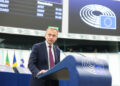
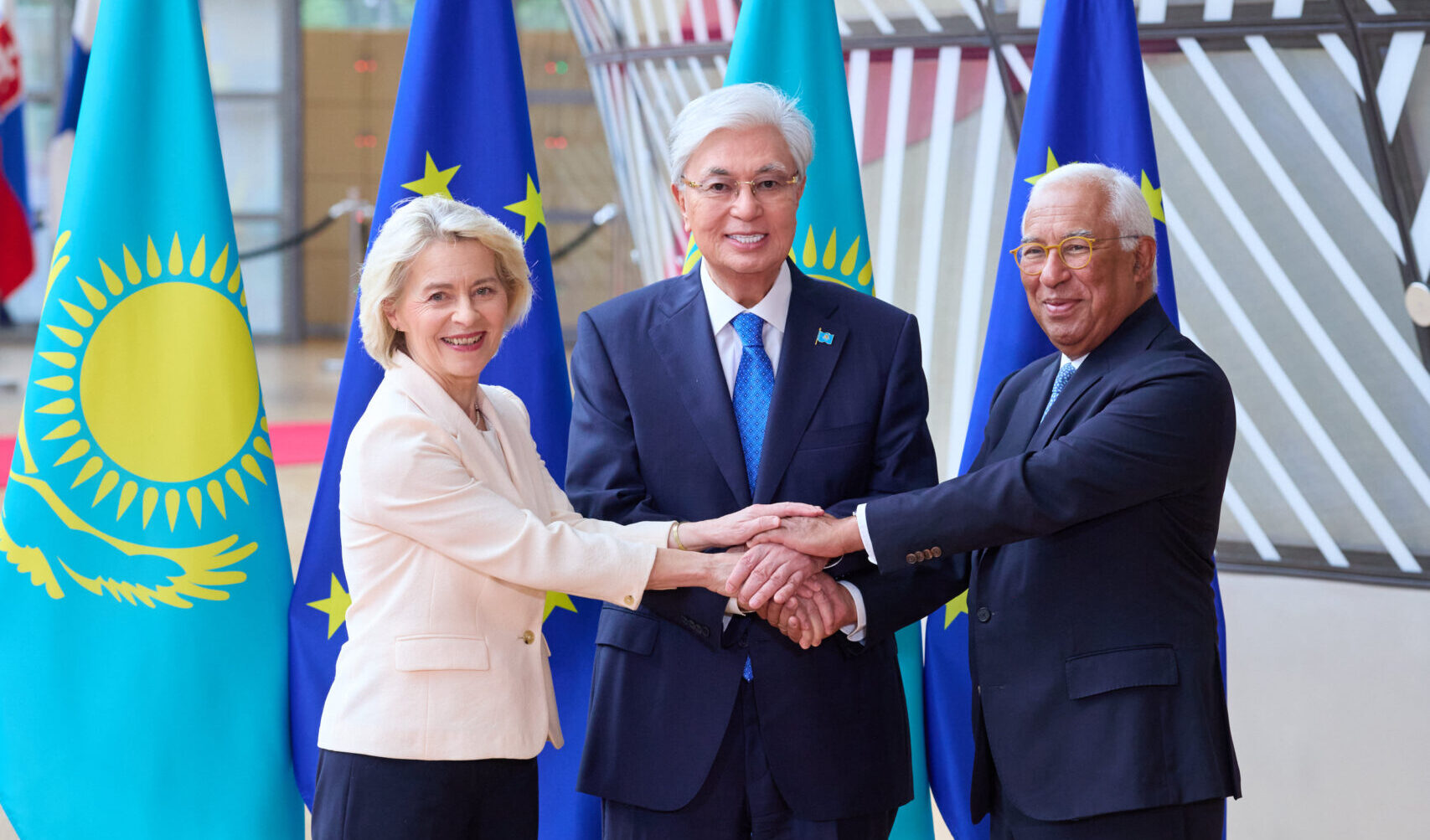
Brussels – “Kazakhstan is a gateway to the world, as is Central Asia,” and “President Tokayev’s visit today is a testament to the growing partnership between the European Union and Kazakhstan.” With these words, the President of the European Commission, Ursula von der Leyen, today (23 June) marked the meeting—held alongside the President of the European Council, António Costa—with the President of Kazakhstan, Kassym-Jomart Tokayev, in Brussels. At the meeting, the European Union and Kazakhstan signed a joint strategic declaration and several agreements, including on connectivity and critical raw materials. The aim is to strengthen “the investment climate and to step up cooperation in strategic sectors, including those covered by the EU’s Global Gateway strategy for Central Asia, in particular critical raw materials, energy, transport, digitalisation, and emerging technologies.” For the President, this is about “turning this gateway into a pathway for job creation, trade opportunities, and shared prosperity.”
The Kazakh president’s visit took place at “a time of growing geopolitical importance for connectivity, energy security, and the resilience of supply chains,” and the event should be seen in the context of the EU’s attempts to become a privileged economic partner for the Central Asian countries (Kazakhstan, Kyrgyzstan, Tajikistan, Turkmenistan, and Uzbekistan). The aim is clear: to attempt to contain the economic, and not only, influence of Russia in these regions.
Connections and airlines
A horizontal aviation agreement was signed today to improve air links between the EU and Kazakhstan and to offer new commercial opportunities for European airlines. Under the agreement, “all EU airlines will be able to operate flights between Kazakhstan and any of the 17 Member States that have concluded an agreement” with Kazakhstan. This contrasts with the current situation, “in which the beneficiaries are generally airlines owned and controlled by the Member States in question or by their nationals”.
Trade via the Trans-Caspian Corridor
Also, as part of the Global Gateway initiative, a framework agreement for a €150 million loan was signed between the European Investment Bank (EIB) and the National Road Company of Kazakhstan. Thanks to an “EU-backed guarantee,” this operation will finance the upgrading of Kazakh roads along the Trans-Caspian transport corridor, a key hub of the European initiative which aims to create “new direct east-west trade routes and reduce dependence on neighbouring countries.”
Internationally accredited chemical and analytical laboratory for critical raw materials
The EIB and the Kazakh government have also signed a Memorandum of Understanding for a study on the “feasibility of building an internationally accredited chemical-analytical laboratory for critical raw materials in Astana,” which is also a Global Gateway project.
Visa Facilitation Agreement and Readmission Agreement
Against this backdrop, negotiations between the European Commission and Kazakhstan on the two agreements have concluded “successfully,” paving the way for their internal adoption procedures. Once adopted, the Visa Facilitation Agreement will simplify the procedure for Kazakh citizens to apply for a short-stay EU visa. The Readmission Agreement, on the other hand, will facilitate the application of EU migration rules.
EU–Kazakhstan Round Table
On the sidelines of the leaders’ meeting, the European Commissioner for Trade, Maroš Šefčovič, and President Tokayev chaired a round-table discussion with several European companies keen to invest in Kazakhstan. In this context, Astana signed an agreement to purchase up to 50 Airbus aircraft worth €7.145 billion.
Relations between the EU and Kazakhstan are based on the Enhanced Partnership and Cooperation Agreement, which has been in force since 2020. The European Union is Kazakhstan’s leading trade and investment partner, accounting for a third of the country’s foreign trade. Today’s meeting followed the first EU–Central Asia summit, held in Samarkand in 2025. On that occasion, the European Union and the five Central Asian republics established a strategic partnership, and the Berlaymont announced a €12 billion investment package called “Global Gateway” in the sectors of transport, digital connectivity, water resources, energy, climate, and critical raw materials. “Following the success of our first EU-Central Asia summit last year, our Global Gateway strategy will continue to bring our regions closer together,” reiterated the head of the Berlaymont Building.
English version by the Translation Service of Withub