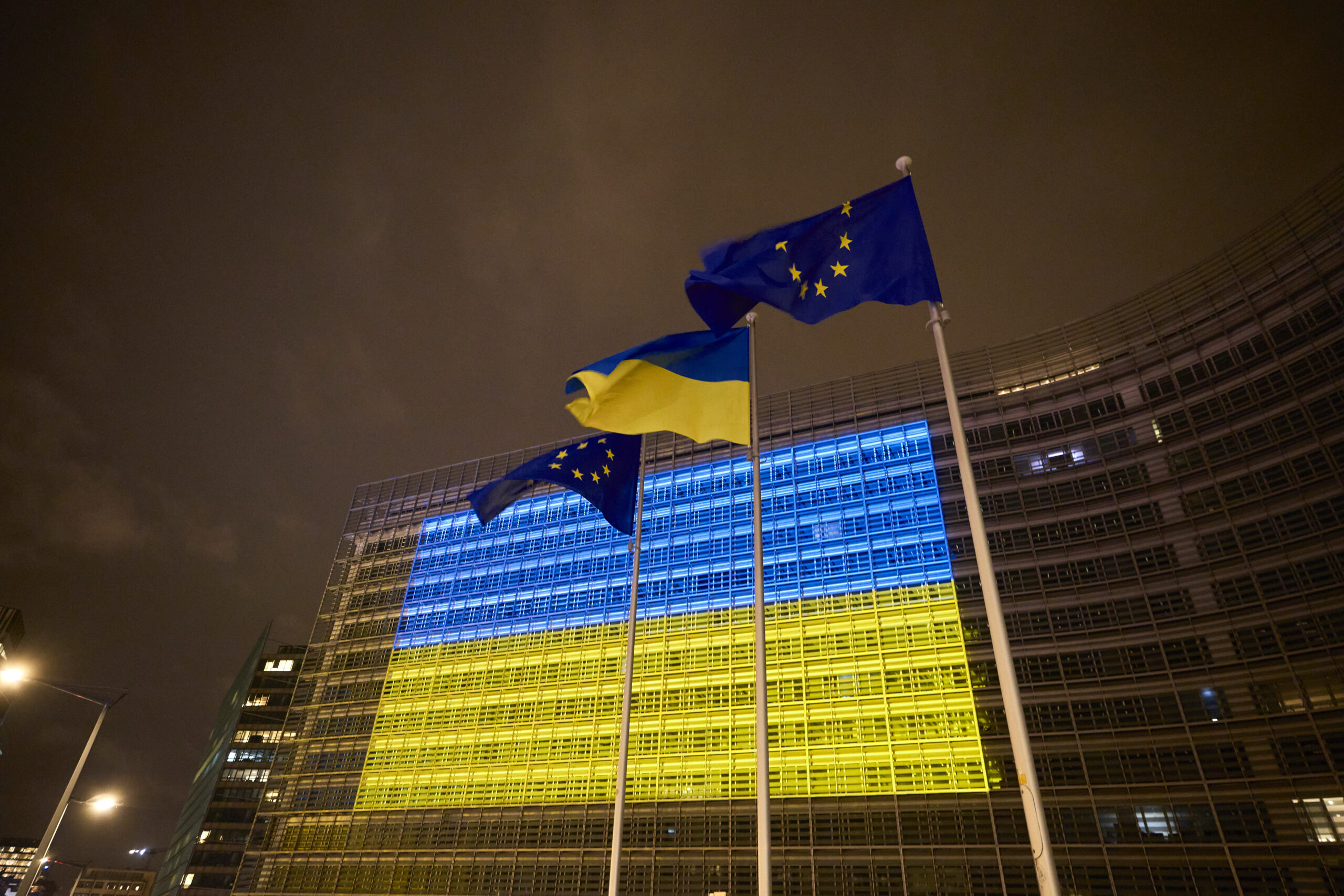

Brussels –It’s official: following last week’s approval by the ambassadors of the 27 Member States, the European Union has today (14 July) opened the sixth negotiation cluster in Ukraine’s accession process. This is the External Relations cluster, a thematic grouping that sets out the parameters for aligning candidate countries’ international, trade and defence policies with those of the EU. This milestone was marked at the intergovernmental conference on Ukraine’s accession, held today in Brussels.
“This is the second cluster that the European Union has launched with Ukraine, following the launch of the first on fundamental principles in June,” said the Minister of State for European Affairs and Defence of the Republic of Ireland, Thomas Byrne, during a press briefing held on the occasion of the Intergovernmental Conference on Ukraine. Byrne noted that “in recent years, despite Russia’s ongoing war of aggression, Ukraine has made significant progress and has taken concrete steps to align its national legislation with the EU acquis.” At a time when “Russia’s illegal war is more deadly than at any other point since the full-scale invasion,” the progress made by Ukraine in the enlargement process “under extremely difficult circumstances is all the more impressive,” he noted.
“Last month we launched the first working cluster, which covers Ukraine’s reform priorities for an independent judiciary, transparent public procurement and stronger safeguards against corruption and organised crime,” European Commissioner for Enlargement, Marta Kos, stressed. “Today we are launching the sixth negotiating group, which covers foreign relations, as well as our security and defence policies in these areas.”
A country wishing to join the Union must first apply for, and be granted, “candidate” status. Once this stage is complete, and provided all Member States agree, negotiations begin between Brussels and the country concerned. The process comprises 32 thematic chapters grouped into six categories known as “clusters.” On 10 July, Coreper – the Committee of Permanent Representatives, comprising the 27 ambassadors of the European Union member states – decided to open Cluster 6, relating to external relations, for Kyiv. This cluster comprises two distinct negotiation chapters. Chapter 30, “External Relations”, covers the EU’s common commercial policy, humanitarian aid, and development cooperation. It also requires alignment with EU trade legislation, international commitments and the relevant foreign policy positions. Chapter 31, “Foreign, Security and Defence Policy”, concerns the Union’s common foreign, security, and defence policy, including alignment with the EU’s foreign policy positions, political declarations, sanctions, and restrictive measures.
“For us, the opening of cluster six serves as a further reminder of the importance of a common foreign and security policy in the current context,” the Ukrainian Deputy Prime Minister, Taras Kacha, stressed. Along with Byrne, Kacha is convinced that “thanks to the progress made last year in the technical preparation of the accession dossiers,” Ukraine will soon be able to open the remaining clusters.
The European Commissioner for Enlargement, Marta Kos, described today as a “Super Tuesday”, as conferences on the accession of other candidate countries, including Montenegro and Moldova, are due to take place throughout the day. For Kos, therefore, “Ireland is one of the great success stories of enlargement in Europe,” given that, just “14 days into its Council presidency,” the Union is already taking significant steps towards enlargement. “As a next step, we should proceed to open the remaining four negotiating chapters as soon as possible,” Kos concluded, emphasising that “they are all technically ready” and that “Ukraine has met all the conditions.”
English version by the Translation Service of Withub