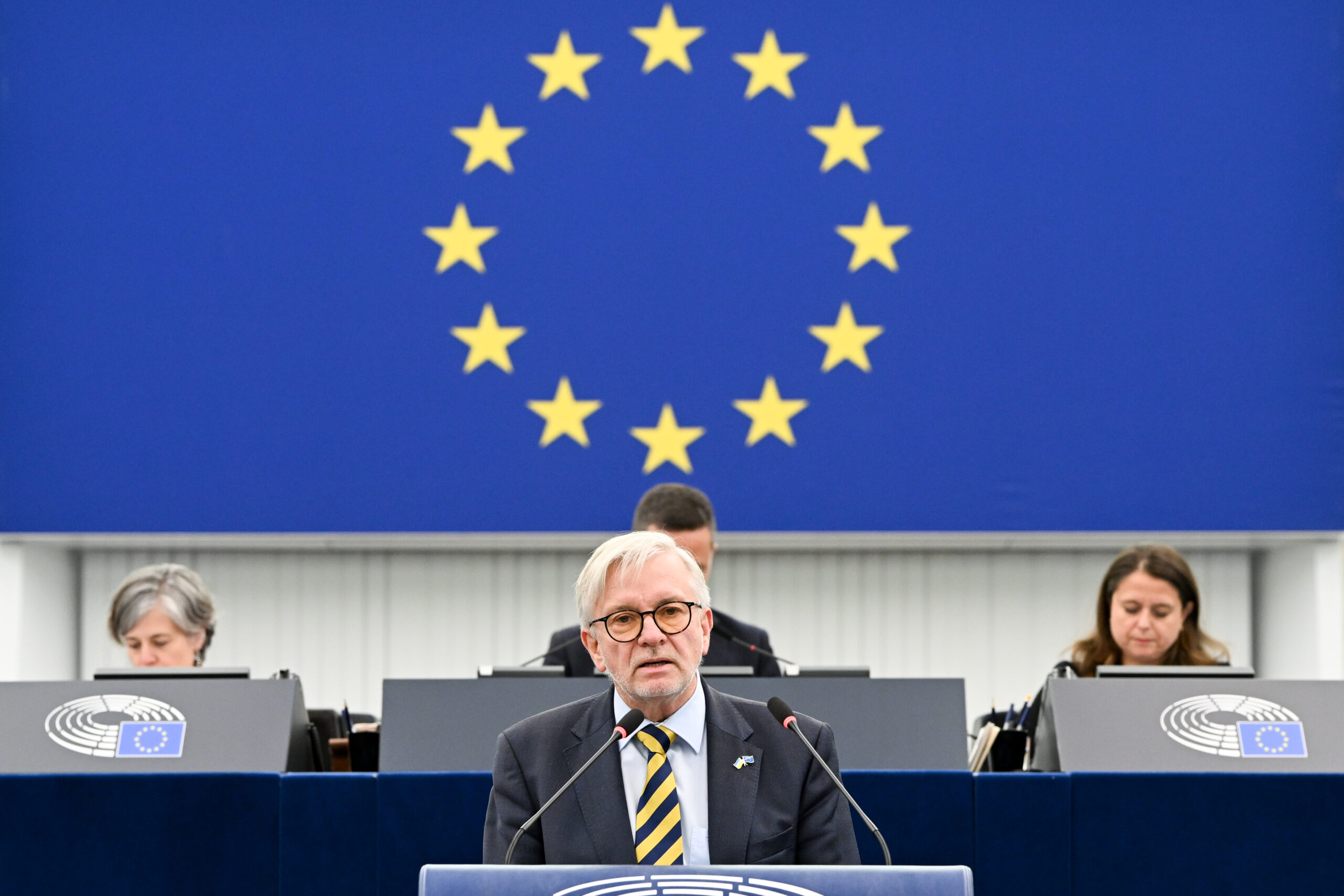
Brussels – Ukraine, Moldova and Serbia are three cases that show either progress or setbacks in their path towards European Union membership. The European Parliament’s plenary session in Strasbourg today (8 July) discussed and voted on the annual progress reports on the three countries’ path towards the EU. The bottom line remains a merit-based process in which the three candidate countries must adhere to reforms and democratic values.
The assessment is positive for Ukraine. It is emphasised that it is necessary to “work to strengthen the future security of Ukraine and the European continent” and to take account of Russia’s interference. Consequently, with 460 votes in favour, 136 against, and 59 abstentions, MEPs have welcomed the opening, in June, of the first thematic cluster of accession negotiations and expressed the hope that the other negotiating chapters will be opened shortly. The European Parliament also praised Kyiv’s efforts to “strengthen its democratic institutions and safeguard the separation of powers during the war,” in particular the progress made in reforming the judicial system and combating corruption. “The continuation of judicial reforms and the unhindered work of anti-corruption institutions remain essential to making progress on the path to accession and meeting citizens’ expectations,” explained the MEP from the European People’s Party (EPP) and rapporteur for the report, Michael Gahler. MEPs also rejected previous pressure from the US administration calls for Ukraine to hold elections while the war with Moscow is ongoing.
Moldavia has also been praised for the progress made on reforms linked to accession to the European Union, including justice and anti-corruption, “despite ongoing foreign interference led by Russia.” The vote was 505 in favour, 115 against, and 45 abstentions. Parliament welcomed the opening of accession negotiations on the “key clusters”, urging Member States within the Council to open the others without further delay. MEPs also reiterated their call for Russia to withdraw all military personnel, equipment, and ammunition from Transnistria.
The view expressed by the chamber was quite different from that regarding the results reported by Serbia. Although the Serbian government continues to assert that EU accession is its strategic objective, the European Parliament believes its actions demonstrate the opposite. In the report on Belgrade, adopted with 468 votes in favour, 116 against, and 79 abstentions, MEPs emphasised that there is “a persistent gap between Serbia’s legislative alignment with EU standards and the effective implementation of reforms.” In the Parliament’s view, negotiations should only proceed once “measurable and sustainable progress has been made in areas such as the rule of law, free and fair elections, the fight against corruption and organised crime, the independence of the judiciary, freedom of the press, public administration reform, and improvements to the functioning of democratic institutions.” The European Parliament therefore expressed concern at the Commission’s “conciliatory” approach towards Serbia. It went on to call for any slowdown in the pace and intensity of reforms in Serbia to be taken into account in the financial support the EU provides under its pre-accession funding instruments. Furthermore, in the chapter on Serbia, Kosovo is a key issue. Here, for the Parliament, the normalisation of Belgrade’s relations with Pristina is a condition for the support provided under the reform and growth plan. MEPs also condemned “Serbia’s close ties with Russia and the intensification of security and defence cooperation with China,” emphasising that “full alignment with the EU’s common foreign and security policy remains a non-negotiable requirement for accession.” This also includes alignment with the EU’s restrictive measures against Russia.
English version by the Translation Service of Withub

![Da sinistra: il presidente del Consiglio europeo, Antonio Costa; il presidente dell'Ucraina, Volodymir Zelensky: la presidente della Commissione europea, Ursula von der Leyen [Bruxelles, 18 giugno 2024. Foto: European Council]](https://www.eunews.it/wp-content/uploads/2026/06/euco_ua260618-120x86.jpg)
![[foto: Saverio De Giglio/imagoeconomica]](https://www.eunews.it/wp-content/uploads/2026/10/cpt-120x86.png)