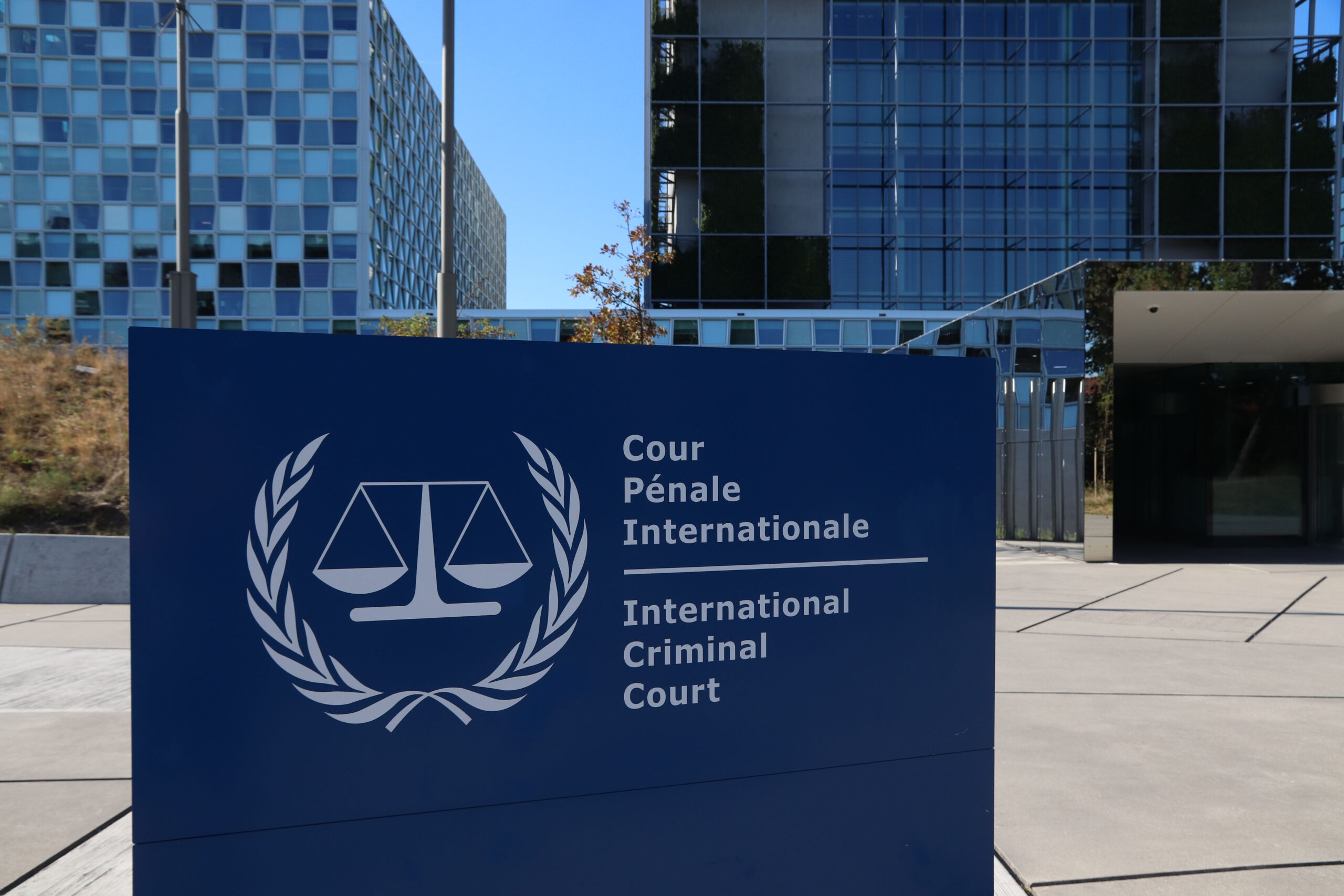

Brussels – The European Union stands in solidarity with the International Criminal Court and considers any attack or threat against the ICC, its officials and all its staff to be unacceptable. The spokesperson for Foreign Affairs, Anouar El Anouni, emphasised this today (14 July) during the European Commission’s daily press briefing, answering a question regarding the latest threats from the US to impose sanctions on the Court and to put pressure on other countries to withdraw.
“We, as the European Union, stand firm in our support to the International Criminal Court and the principles set out in the Rome Statute“ and we “respect its independence and impartiality,” replied El Anouni, noting that the EU is “strongly committed to international criminal justice and the fight against impunity,” while “attacks or threats against the Court, its elected officials, its staff or those who cooperate with it are simply unacceptable.” The spokesperson also pointed out that “the ICC does not target sovereign states nor does it pose a threat to their sovereignty,” but that, “under the Rome Statute, it exercises jurisdiction over individuals responsible for the most serious crimes of concern to the international community.”
Although the US is not a party to the International Criminal Court—just as Israel and Russia are not—yesterday the US Secretary of State, Marco Rubio, described the ICC as “an existential threat” to the US. In a video message on X, and in an article published in the Wall Street Journal, Rubio stated that, “at this very moment, the ICC and its allies are declaring war on our country, not with bullets or missiles, but with statutes, treaties, and the force of what is called ‘international law’”. A danger which, in his view, “has only grown”, to the extent that “today it threatens every aspect of our political and legal system.” What is more: “If we remain passive, we will all be at the mercy of foreign judges situated thousands of kilometres away, exposed to the constant risk of being tried, or even imprisoned, for the so-called crime of defending our country,” Rubio added. All this because the Court “is seeking to become the unaccountable arbiter of a new global law, with the power to prosecute and arrest our citizens and to pose an existential threat to American sovereignty.” For all these reasons, “we will teach them what American resolve truly means,” Rubio warned.
https://www.eunews.it/en/2025/02/07/eu-tough-on-trumps-sanctions-against-the-hague-but-the-court-is-under-attack-also-in-europe/
In an official press release, the department headed by Rubio has been more explicit regarding the means that will be used to “dismantle the threat” and “systematically neutralise the ICC’s ability to operate, to target
American servicemen or officials, or otherwise threaten American sovereignty.” Among the measures under consideration—which refer to interference and influence over third countries—are “diplomatic calls from the Secretary of State, Deputy Secretary, ambassadors, and other members of senior leadership to foreign nations highlighting the abuses of the ICC and the risks posed to Americans and other nations urging them to withdraw from the ICC”; “nations that partner with American law enforcement and the U.S. military or that enjoy the benefits of the U.S. security umbrella are called upon to reject the ICC’s purported authority to prosecute American officials and servicemen”; “increased scrutiny of nations that refuse to reject the ICC’s false authority while relying on U.S. assistance”; “diplomatic appeals urging other countries which, like the United States, are not parties to the Rome Statute, to use their own diplomatic networks to take similar action alongside us”; “the revocation of visas and travel bans for ICC personnel” and “an increase in sanctions against the ICC and its affiliated organisations.”
The US administration led by Donald Trump has launched its offensive against the Court, which is based in The Hague, in the Netherlands, particularly following the Court’s investigations into Israel and the issuance of arrest warrants, in November 2024, for the Israeli Prime Minister, Benjamin Netanyahu, and the Defence Minister, Yoav Gallant, for war crimes and crimes against humanity. Washington has imposed sanctions on several judges at the Court, including the chief prosecutor, barring those affected from entering the United States and from carrying out any property or financial transactions.
Established in 2002, the ICC prosecutes individuals accused of the most heinous atrocities, including war crimes, crimes against humanity and genocide. There are 125 States Parties to the Rome Statute of the International Criminal Court: 33 are African states, 19 are Asia-Pacific states, 20 are from Eastern Europe, 28 are from Latin America and the Caribbean, and 25 are from Western Europe and other regions. The US, Israel, and Russia are not among them; the president of Russia, Vladimir Putin, has been the subject of an arrest warrant since March 2023.
In the face of these most recent attacks, “the Commission continues to support the work of the International Criminal Court (ICC), including its investigations into war crimes and crimes against humanity. And we are already facilitating all appropriate measures, including diplomatic, legal, and financial initiatives, which may help to ensure the continuity of the Court’s activities,” said the European Commission’s spokesperson on sanctions, Siobhan McGarry. “For each measure, the Commission—obviously in close contact with the ICC itself, the Member States, and the relevant stakeholders—is carefully assessing the necessity, proportionality, effectiveness, and the relevant legal and practical implications,” she emphasised. Finally, “I would like to point out that, with regard to payment accounts, there has been a recent ruling that is of some relevance in this context: the court reaffirmed that, under European Union law, all consumers legally resident in the EU, in accordance with the Directive on basic payment services and payment accounts, have the right to open a basic payment account.” This “means that a bank cannot refuse to open, nor can it close, a basic payment account except for a limited number of reasons, such as suspicion of money laundering or terrorist financing, or in the event of inactivity. “We therefore reiterate once again that staff, like any other citizen, are entitled to a basic payment account,” the spokesperson concluded.