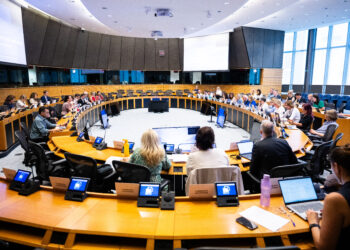
Brussels – In the end, everything is discussed except immigration. The extraordinary meeting of the Civil Liberties Committee of the European Parliament, convened to discuss the migration crisis in Ceuta, overlooks the migrants in favour of an “everyone against everyone” clash. The Spanish right is pitted against Pedro Sánchez’s Socialist government, which is also under attack from non-Spanish right-wing figures. The Socialists and the Greens are attacking everyone—leaders, ministers and right-wing parties—for failing to show solidarity with Spain, and even among the liberals some are subtly criticising the Meloni government. Holding the stage from the outset, however, is the absence of the two members of the Sánchez government who were invited to attend, Fernando Grande-Marlaska Gómez (Home Affairs) and Elma Saiz Delgado (Immigration and Inclusion). “It is regrettable that both ministers declined the invitation at a time when the European Parliament is demonstrating its commitment,” criticises the chair of the parliamentary committee, the Spaniard Javier Zarzalejos (PP/EPP). “In the face of a mass breach of the European Union’s borders and with over 100 victims, it would have been appropriate for them to attend,” he insists.
Scheduling issues and the need to manage the migration crisis, which has not yet been fully resolved, were the reasons given by the Spanish ministers for not attending the video conference, given that the European Parliament is closed for the summer recess. The absence of members of the Sánchez government therefore has an impact on the debate, which begins with criticism from the People’s Party, this time the European one. “Not being here is a choice,” was the rebuke from Lena Dupont (EPP) directed at the absent ministers. “If they wanted to make their voices heard, this was the place to do so,” she pressed. Similar criticism came from Fabrice Leggeri of the sovereigntists (PFE). But in the sovereignists’ benches, there are also those, such as the Spaniard Jorge Buxadé (PFE), who attack Rabat: “It is the Moroccan authorities who have orchestrated all this on social media.”
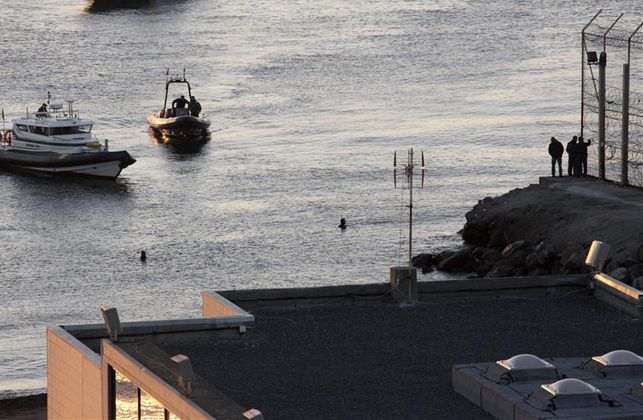
From the Socialist benches, Juan Fernando Lopez Aguilar (PSOE/S&D), also Spanish, defends Sánchez against attacks from all sides, while attacking everyone in turn: “Spain has shown solidarity with the Baltic states and Poland in the face of threats from Russia, while the EU has not done the same” in response to the situation in Ceuta and the arrival of around 80,000 people who have flooded into the Spanish city on the border with Morocco. “We need compulsory solidarity,” he declares loudly.
“There has been solidarity from the European Commission and, I might add, from the Member States as well,” says the Commissioner for Migration,
Magnus Brunner, in an attempt to steer a debate that has already gone off the rails back onto the right track. The reassurances from the EU executive lasted only a few seconds, just long enough for the Conservative (ECR) MEP,
Assita Kanko, to take the floor and resume her attacks: “What has happened is serious.
The Spanish government must stop creating pull factors” for foreign nationals. Then came a barrage of new attacks on Morocco: “There are serious indications that Moroccan border guards allowed migrants to cross and, in some cases, encouraged them to do so.” And then, she insists, “we must investigate the role of social media and disinformation,” including the Russian one. Criticism of the Meloni government comes from the Liberals: “In 2024, Italy was under pressure from migration, and we all recognised that solidarity was needed,” says Fabienne Keller (RE), in what sounds like a rebuke to the Italian government for the way it responded to the crisis in Ceuta. Tieneke Strik of the Greens adds to the criticism: “Reinstating border controls is illegal,” she states, referring to Italy’s notification that it is suspending the Schengen rules on free movement. This is also because, as her colleague Saskia Bricmont (Greens) echoes, “the EU as such has not suffered from migration crises.” Therefore, she argues, the Ceuta issue, combined with the extraordinary parliamentary sitting, “creates situations that play into the hands of the right.” This is a rebuke directed at the political exploitation of the issue by other groups.
The debate, convened in a great hurry, only serves to create confusion—a political row that Brunner attempts to quell by promising greater commitment from the Commission. “Most people have returned to Morocco, and this shows that our measures are working. This does not mean we cannot do better.” Then a reminder, which seems directed at Italy: “Closing borders should be used as a last resort and must be proportionate.”




![Persone migranti a Ceuta [foto: imagoeconomica]](https://www.eunews.it/wp-content/uploads/2026/08/ceuta.png)