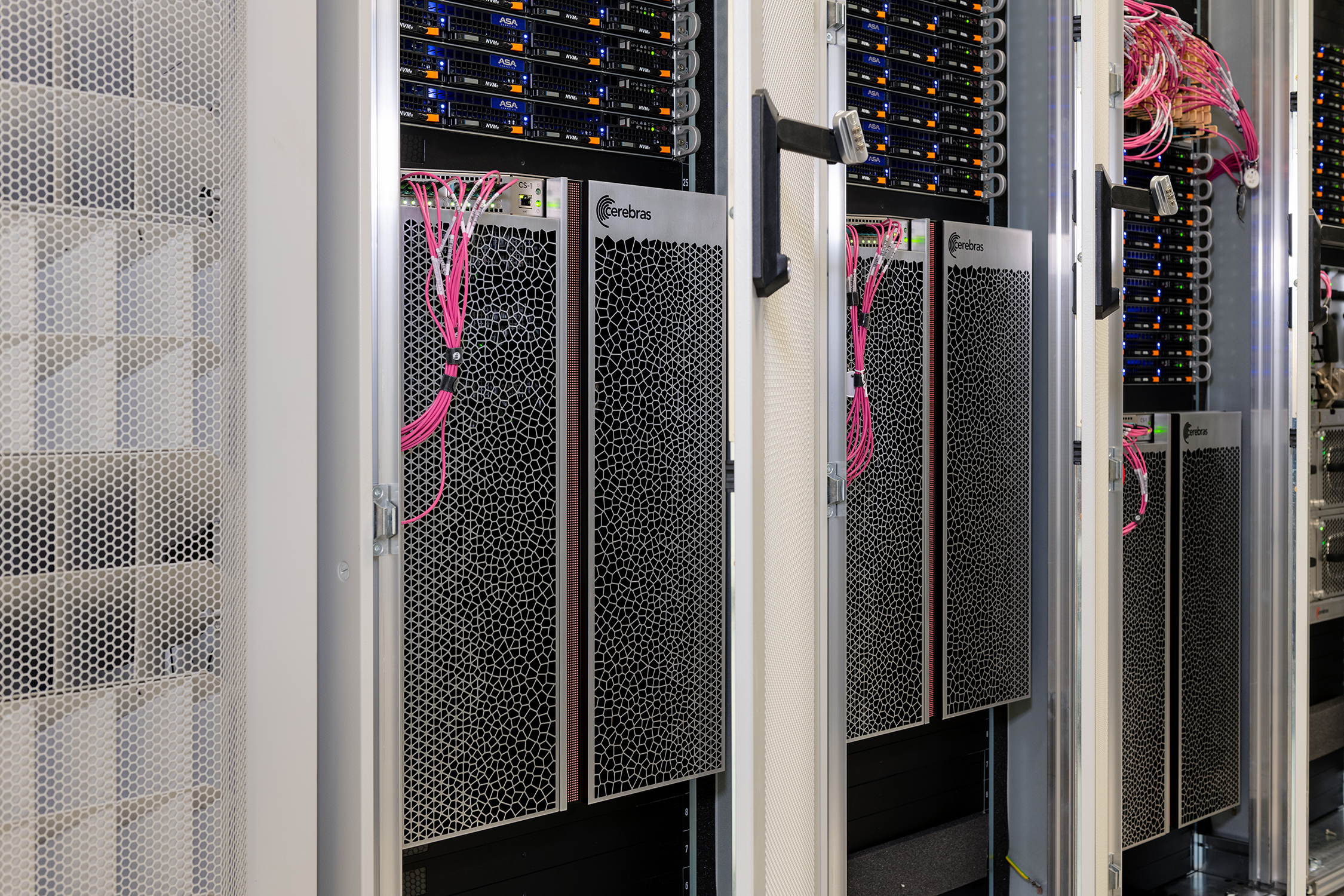
Milan – There are almost 2,800 data centres across the 27 countries of the European Union, spread across 505 cities, with a total installed capacity of over 50.5 GW. The European network of data centres is heavily concentrated in a few countries and major urban areas, with Germany and France alone hosting nearly a thousand facilities.
According to data from Datacentermap, Germany is the country with the highest number of data centres: 562, spread across 75 cities. France comes second, with 418 facilities in 70 cities, while Italy ranks third with 270 data centres spread across 50 cities.
However, the ranking changes significantly when installed capacity is taken into account. France moves into first place with around 7.46 GW, ahead of Germany with 7.32 GW. Finland, with 6.35 GW, outperforms countries with many more installations, while Spain reaches 5.64 GW.
Paris is the European capital of data centres
Paris is the clear leader among individual cities, with 180 data centres, ahead of Frankfurt with 150, and Dublin with 116. Milan takes fourth place on the podium, with 105. The Lombard city is ahead of Amsterdam (80), Madrid (75), Berlin, Helsinki and Stockholm, all of which have 50.
The first four cities — Paris, Frankfurt, Dublin, and Milan — are home to a total of 551 data centres, accounting for almost 20 per cent of the European total.
Even in this case, however, the number of facilities alone does not reflect the scale of the phenomenon. Paris has an installed capacity of around 4,075 MW and Frankfurt 2,821 MW, while Milan stands at 2,019 MW. Some smaller centres, on the other hand, have very high capacities: Gdańsk, in Poland, has just four data centres but boasts an installed capacity of 3,201 MW.
Milan leads the way in Italy
Italy ranks third in the EU in terms of the number of data centres, with 270 facilities. However, it lags considerably behind Germany, which ranks first with 562, while France has 418.
The Italian market is heavily concentrated in Milan. The Lombard capital is home to 105 data centres, accounting for almost 39 per cent of all those in the country. Next comes Rome, with 30 facilities, Turin with 13, and Bergamo with 12.
Milan also stands out for its installed capacity: around 2,019 MW, accounting for over two-thirds of Italy’s total of 3,087 MW. The city also has 59 operational facilities, 21 planned and a further 21 currently under construction.
Rome, on the other hand, has 30 data centres and a much lower installed capacity of around 136 MW. Turin has 13 facilities totalling 401.5 MW, while Bergamo has 12 data centres with a total capacity of 284 MW.
Over 400 facilities are planned
Most of the data centres surveyed are already operational: there are 2,192 in total, accounting for around 78 per cent of the total. However, the sector continues to expand: a further 425 facilities are planned, and 163 are currently under construction.
In addition to these, there are nine sites for which land has been set aside, six projects classified as uncertain, and a very small number of disused or cancelled facilities.
Overall, therefore, nearly 600 data centres in the dataset are not yet operational. The distribution of the projects suggests that European capacity could continue to grow significantly in the coming years, particularly in the major, well-established hubs.
The sector’s geographical distribution remains highly concentrated, however: Germany and France together account for 980 data centres, more than a third of all facilities recorded in the EU, while the top five cities — Paris, Frankfurt, Dublin, Milan, and Amsterdam — account for more than a fifth.
English version by the Translation Service of Withub






![[Copyright: European Union]](https://www.eunews.it/wp-content/uploads/2026/10/euco-261015-120x86.png)