
Brussels – What if empires were not merely political organisations of the past, but a lens through which to examine the inequalities of the present? In his book,
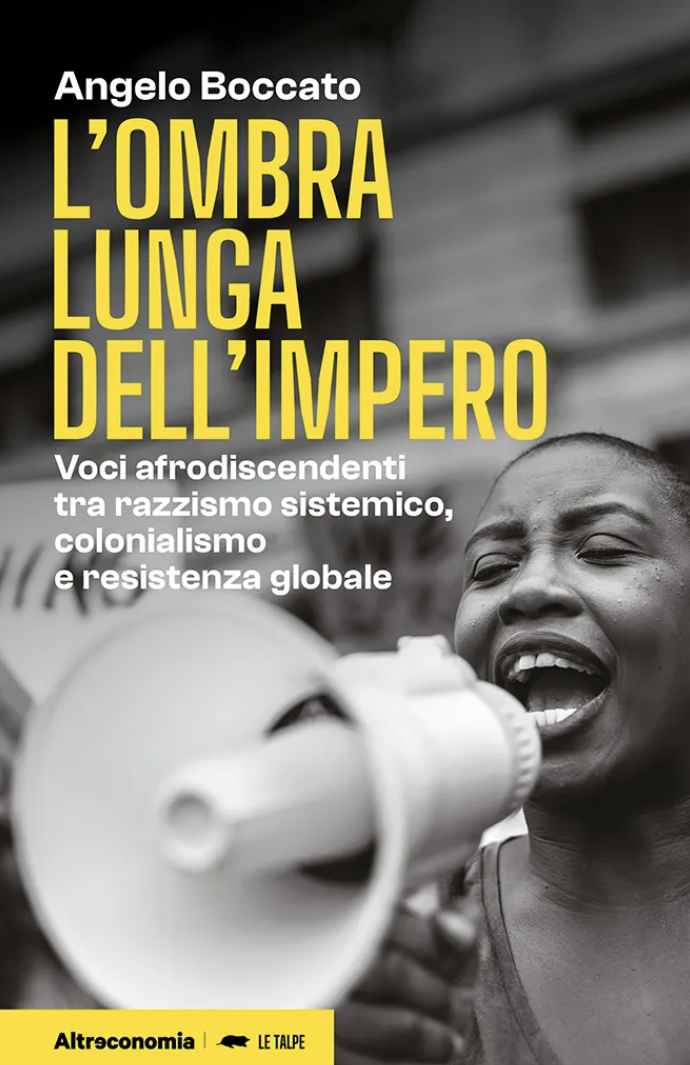
L’ombra lunga dell’impero, Voci afrodiscendenti tra razzismo sistemico, colonialismo e resistenza globale (The Long Shadow of the Empire, Voices of African Descent Amid Systemic Racism, Colonialism and Global Resistance), Angelo Boccato uses the concept of the empire to, on the one hand, “narrate the injustices and crimes of the past and present,” and on the other, to “understand how to build the resistance of the future.” According to the author, European colonial empires cast a very real shadow over the daily lives of migrants, marginalised people and those of African descent, despite the fact that most of them were dismantled in the last century. As he explains to Eunews, the author has decided to give a voice to these people, so that they may reclaim a narrative that has always viewed them as objects and never as subjects.
An Italian-Dominican journalist who has been living in London for more than ten years, Angelo Boccato writes about human rights, social issues, migration and the far right for Italian and international publications. In the British capital, he is one of the organisers of the Festival of Italian Literature in London (FILL) and edits a newsletter on Substack called The Black Megaphone.
His essay was published this year by Altreconomia and falls somewhere between “narrative journalism” and “social criticism”. In addition to an analysis of the debate on British and Italian colonialism, the book contains a chapter on Brexit. In the book, the journalist recounts some of his experiences in the field, particularly in Paris, Rome and Milan, where he documented the conditions in which migrants in Europe live after crossing the Mediterranean. These accounts are complemented by chapters on journalism and the need for more racialised voices in the media, for a deeper examination of racial profiling, surveillance, and artificial intelligence, and on the victims of hate in Italy and the UK.
Eunews: The book is the result of years of work, drawing on first-hand experience across Europe. When did you first decide to put it all down on paper?
Angelo Boccato: “The book brings together reports and interviews I have worked on over the last ten years. I had lots of ideas and chapters already written, but I wanted to bring them up to date. While I was analysing all the material, it was suggested to me that I use the empire as an interpretative framework, and from there I reworked the essay along those lines. In Britain, there is a growing body of academic literature both on how the empire has shaped today’s societies and on the denial that the colonial experience ever existed. I was greatly inspired by both.”
E.: In the book, you link Brexit to nostalgia for the British Empire. Why this connection?
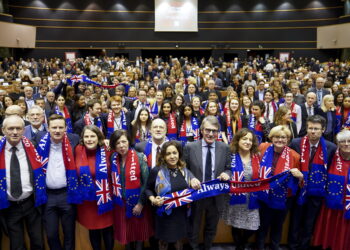
A.B.: “The link between Brexit and the British Empire is tied to the narrative of the ‘Leave’ campaign—that is, the political movement that campaigned for and won the referendum on 23 June 2016—which was characterised by a profound longing for the United Kingdom’s past glory. It was a historic moment in which it seemed that the country could no longer find a place at the table of the great powers, in a multipolar world that was far more chaotic than in the past. In this context, however, ‘imperial nostalgia’ was the preserve of the wealthiest classes, certainly not of the working classes, let alone of immigrants. A ‘global’ Britain outside the European Union was becoming ‘a safe haven in a chaotic world’ which, ten years on from the referendum, has failed to deliver on its promises. Undoubtedly, the United Kingdom remains an important country on the global stage, but I do not believe its influence has increased since leaving the European Union. As I write in the book, the real outcome of Brexit is not an increase in the UK’s geopolitical influence, but the explosion of ‘culture wars’, which have fundamentally polarised the debate, leaving the UK far more divided than it was ten years ago.”
E.: You write that Brexit was a success in terms of the “culture wars”, leading to a global resurgence of the far right that culminated in the election of Donald Trump. What are the “culture wars” and why are they linked to the US elections?
A.B.: “Brexit and Donald Trump’s election in 2016 both took place in the same year. At the time, the tycoon’s election was considered highly unlikely, but it did in fact happen. That year, other far-right parties across Europe were also hailing Brexit or the idea of a referendum that would put the decision on whether to remain in the European Union in the hands of the people. The Dutch political scientist, Cas Mudde, explains this dynamic very well in his book The Far Right, Radicals and Extremists: From Opposition to Power. According to the scholar, all the successes of the far right in recent years are part of a dynamic whereby ‘those who were previously excluded’ can now make their voices heard, becoming the voice of the people against the establishment. In reality, far-right figures are themselves part of the establishment, or at the very least, very close to it. Returning to Brexit, the ‘Leave’ camp has legitimised a series of dynamics and electoral outcomes that would previously have been unthinkable and which are now the order of the day. A practical example that helps us understand how ‘culture wars’ work is the way in which the right derides the word ‘woke’—that is, everything that is progressive. The word ‘woke’ literally means ‘awake’ or ‘aware’, and refers to active attention to social injustices, racism, and gender inequality. By dismissing a cultural effort aimed at raising public awareness, the right-wing stirs up a clash in the media. Culture wars can also take on violent forms. For example, the British actor of African descent, Paapa Essiedu, received serious racially motivated death threats after being cast as Severus Snape in the new television series, Harry Potter, produced by HBO. Not all culture wars manifest themselves in such a violent way, but they are not necessarily harmless.”
E.: What impact do empires have today on people who face discrimination?
A.B.: “There are imperial legacies that must be reckoned with, and today racialised people are clearly regarded as ‘second-class’ citizens. They were already in that position during the era of the nineteenth-century empires, and today they continue to lead disadvantaged lives. The far right promotes a narrative of a simpler world—that is, a world with few people ‘of a different skin colour’. A more ethnically homogeneous society is presented as the panacea for all ills. Therefore, when discussing the consequences of empire, I believe it is very serious that there is a context which favours narratives such as that of remigration. It is important to note that we are not talking about deporting those without valid documents, but all those who are seen as undesirable, and this also includes second-generation immigrants. These are people who have lived their entire lives in Europe, and who stand in the way of that ‘return to a more homogeneous society.’”
E.: How does today’s context differ from the past, for example from the twenty years of Fascist rule?
A.B.: “I believe that history never repeats itself in exactly the same way, and I do not think that what we are experiencing today is a return to the 1920s. For example, in Europe we’ve had Orbán’s Hungary, a formal democracy, but one that has been essentially hollowed out. In this situation, there is immense control over the media, massive restrictions on freedom of expression, increasingly stringent laws, and much more. This is the skeleton of a democracy, the substance of which has been abandoned.”
E.: In your book, you address the issue of representation in the media, highlighting the absence of non-white voices in the world of journalism. Have there been any improvements in recent years?
A.B.: “Even in multicultural countries such as the United Kingdom, the situation remains fairly limited. Newsrooms are mainly staffed by white people who have attended private universities, who apply a filter based not only on ethnicity but also on class. This means that only people belonging to a certain social group manage to pursue a career in journalism. Consequently, only they report reality, and events are therefore observed from a very privileged vantage point, which inevitably has its shortcomings. To resolve this situation, it is necessary to genuinely open up these spaces, reserving jobs for people from more disadvantaged backgrounds and under-represented ethnic groups. However, I do not believe that newsrooms are willing to take this on.”
E.: How has Starmer’s work as Prime Minister been perceived by second-generation immigrants in the country?
A.B.: “There has been a significant rift between the Labour Party and its Muslim voters, caused by the government’s inaction regarding the genocide in Gaza. The new Prime Minister, Andy Burnham, has admitted that the party was wrong, but we now need to see whether there will be a change of tack on this front or not. In recent years, the Labour Party has decided to work hard to combat antisemitism but not to the same extent against other forms of discrimination. They have created a sort of hierarchy of hatred, but that is never helpful. All forms of hatred must be combated; one cannot pick and choose which ones to tackle and which ones to remain silent about.”
E.: Are the colonial crimes of the past being addressed in Italy and the UK? Does the school system play a role?
A.B.: “In Italy, it doesn’t seem to me that there is even a semblance of a conversation on the subject, whereas in the UK it is discussed, but the narrative is highly misleading. Certainly, the role of education is fundamental, but we need historical, cultural, and artistic analysis to understand what the empire represented and how imperial history continues to influence today’s mindset. Otherwise, we will continue to live in that shadow. All this requires political will, which I do not currently see in either country. In Britain, the existence of the empire is not denied, but its nature is. In fact, it is still portrayed as an export of civilisation. In Italy, the colonial experience is portrayed as a mere appendage of fascism, when in reality it lasted ninety years: the Italian colonial experience began with the acquisition of Assab Bay in Eritrea in 1870 and ended only in 1960, when the Italian-administered part of Somalia joined the British-administered part to form the Republic of Somalia. At school, these ninety years are downplayed, just as certain very serious developments are underestimated, such as the establishment of apartheid in Eritrea, where certain parts of the city were accessible only to the colonisers. No one asks why cities such as Asmara (Eritrea) were built on the model of Italian cities. These are issues we do not discuss in schools, yet they are very much present and influence the way Italian society relates to multiculturalism and other matters. If this part of history is not analysed, it is essentially sidelined. In my view, this is also due to the fact that Italy has not come to terms with its fascist past, which makes the lack of analysis of certain dynamics all the more evident”.
E.: In your book, you describe three field experiences in Paris, Rome, and Milan, where you were able to see first-hand what migrants crossing the Mediterranean have to face. What was that like?
A.B.: “I visited the Foundation of Progetto Arca in Milan, which since 1994 has been helping people living in extreme poverty, the homeless or those in difficulty, and in Rome at the Baobab Experience, a voluntary organisation founded in 2015 to provide initial reception, support, and protection to migrants in transit, and in Paris at Utopia 56, set up in December 2015 to coordinate volunteers in the ‘Calais Jungle’, the informal migrant camp that sprang up in northern France, near the port and the English Channel, before it was finally cleared and demolished in October 2016. All these experiences demonstrate that there are all too often political shortcomings which volunteers and activists step in to fill. Their role is important, but they should not be stepping in to replace politics, only to support it.”
E.: What is solidarity between peoples in an imperial context, as you mention in the book?
A.B.: “In the book, I discuss South Africa’s support for Palestine. Its past efforts to dismantle apartheid are part of a struggle that is still ongoing. The situation in the West Bank today is not very different from that in South Africa in the past, while the people of Gaza are victims of genocide. In this sense, it is essential to learn about, research, and reflect on the forms of resistance against the colonial crimes of the past in order to shape the struggle against the colonial realities of the present. In the case of South Africa, apartheid ended when the South African authorities found themselves in total global isolation as a result of the economic boycott. In the case of Israel, this does not seem a likely scenario in the near future, but I have included this story in the book because it is necessary to look to that experience in order to bring about similar changes in the future.”
English version by the Translation Service of Withub