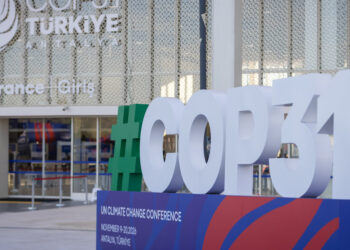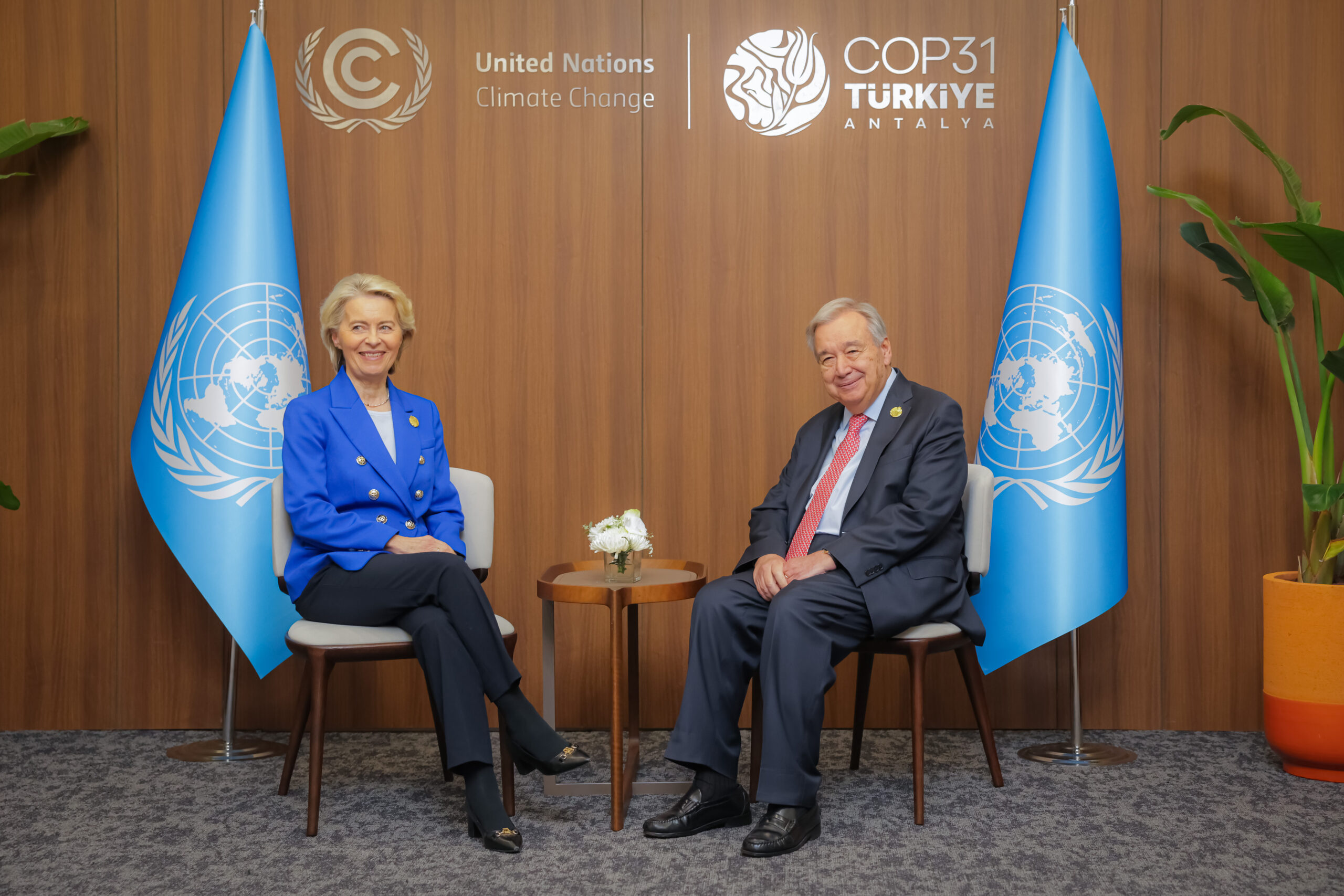
Brussels – The summer that just passed was the “summer of truth” for the fight against climate change. This was stated by the President of the European Commission, Ursula von der Leyen, who spoke at COP31, addressing the leaders of the countries gathered to negotiate and define global policies against global warming. The event is taking place at a particularly delicate time, marked by the intertwining of the climate crisis and energy instability.
“Floods in Nepal, drought from Sudan to Central America and, in Europe, one of the worst fire seasons on record”: these are some of the examples cited by von der Leyen to describe the increasingly evident effects of climate change. Compounding the picture is the energy crisis, with disruptions to supplies through the Strait of Hormuz that “are shaking global energy markets”. For all these reasons, “we are at a global tipping point,” warned the President of the European Commission.
The latest United Nations report, Limiting Global Warming: Navigating Overshoot, which states that exceeding the 1.5-degree threshold compared with pre-industrial levels is now inevitable and could occur as early as the coming years, further underscores the urgency of stepping up our efforts. This is a target that the international community had committed to pursuing under the Paris Agreement, but which current emissions trajectories are making increasingly difficult to meet.
“Europe will play its part,” assured von der Leyen, highlighting the Union’s progress towards the climate and energy targets set for 2030. The EU is “on track” to reduce net emissions by at least 55 per cent compared with 1990 levels, increase the share of renewable energy in total energy consumption to 42.5 per cent (with the ambition of reaching 45 per cent) and reduce final energy consumption by at least 11.7 per cent compared with baseline projections. These targets, the President explained, represent “an important step towards becoming the first climate-neutral continent.”
Electrification, which “is accelerating”, will also play a central role in the transition. Von der Leyen confirmed Europe’s support for the global “35 by 35” commitment, which aims to increase the share of electricity in global final energy consumption to 35 per cent by 2035. According to the International Energy Agency (IEA), this is an achievable target, capable of delivering benefits on several fronts: reduced dependence on fuel imports, lower energy bills for households and businesses, reduced emissions and greater energy security.
Finally, the Commission President highlighted the need to strengthen international partnerships. “The clean transition can only succeed if it succeeds worldwide,” she emphasised, noting that the European Union is the world’s leading provider of climate finance. Last year, Brussels contributed over €32 billion to support developing countries and, through the Global Gateway, has mobilised more than €300 billion in sustainable investment programmes. “We are helping our partners to build clean economies, because the clean transition is in our common interest,” concluded von der Leyen.
English version by the Translation Service of Withub