
Brussels – Netflix, TV series, sports, and music: for millions of Europeans, streaming has now become a regular item in their digital spending. In 2025, 32.7 per cent of internet users in the EU had a paid subscription to a film, series, or sports streaming service, the largest share among the four subscription types according to data released by Eurostat, the European Union’s statistical office. This figure is up from the 30 per cent in 2024, when users accessed TV series, films and television programmes mainly through their computers.
Music trails behind, with 23 per cent of users paying for a streaming service. Much lower, however, is the willingness to pay for news: just 7.2 per cent pay for subscriptions to news sites, newspapers, or online magazines. The proportion of those paying for streaming gaming services is even lower, at 6.1 per cent.
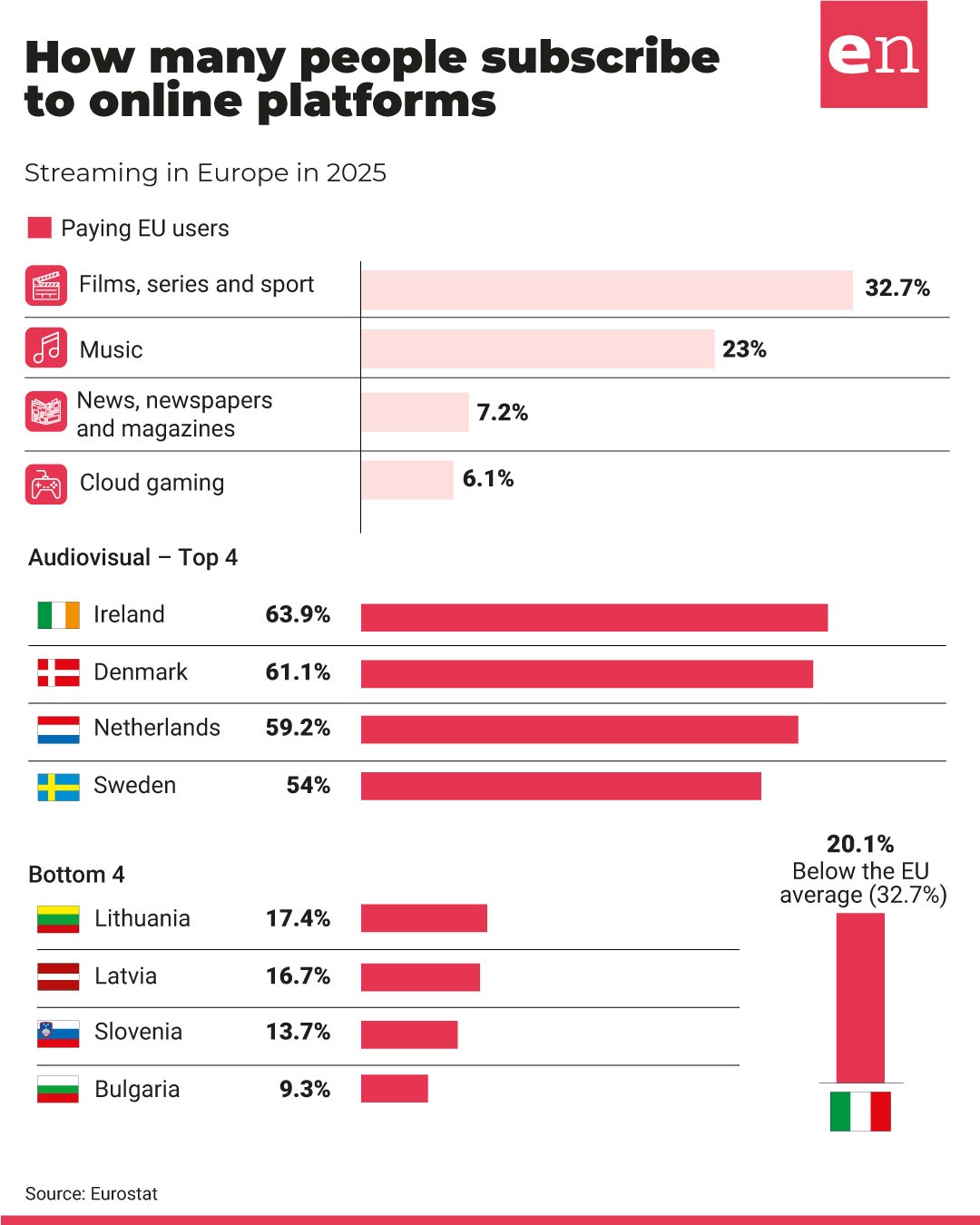
The true European streaming capital is Dublin. Ireland is well ahead at the top of the rankings: in 2025, 63.9 per cent of internet users had a subscription to film, TV series or sports services. Denmark follows, at 61.1 per cent, and the Netherlands, at 59.2 per cent. Sweden also exceeds the 50 per cent mark, with around 54 per cent of users. At the opposite end of the scale is Bulgaria, where the figure stands at just 9.3 per cent. Next come Slovenia (13.7 per cent), Latvia (16.7 per cent) and Lithuania (17.4 per cent). The gap is therefore enormous: there are over 54 percentage points between Ireland and Bulgaria.
Paid streaming is now firmly established in Italy as wel, but the share – at 20.1 per cent – remains below the European average of 32.7 per cent. This figure places Italy in the low-middle part of the EU rankings, some way behind the levels seen in Ireland and Denmark. This gap also reflects differences in digital consumption habits and, above all, the willingness to pay for online content.
Northern Europe also leads the way in music. Sweden has the highest proportion of music service subscribers, at 52 per cent, followed by Ireland (51 per cent), the Netherlands (50 per cent) and Denmark (49 per cent). In Bulgaria and Croatia, however, the percentage remains below 10 per cent, at 7 per cent and 8 per cent, respectively.
English version by the Translation Service of Withub