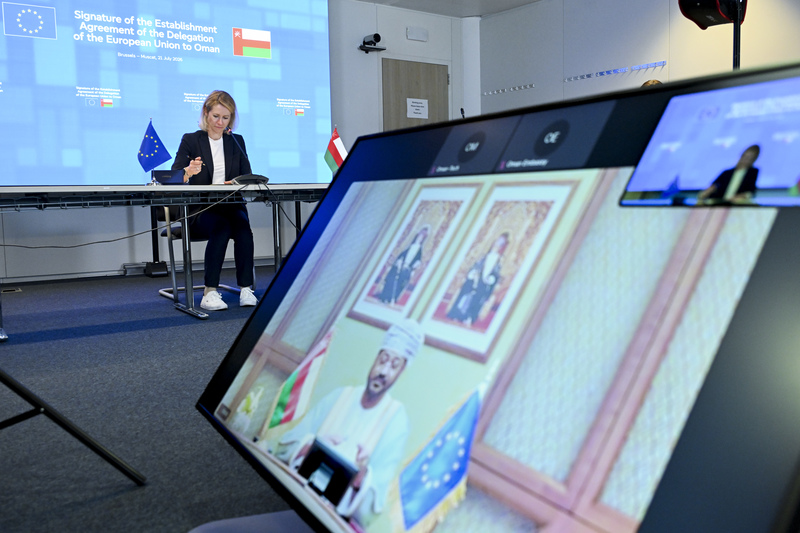

Brussels – The high-level group on defence has been scrapped before even being launched. All it took was the announcement by the High Representative for Foreign Affairs and Security Policy, Kaja Kallas, to prompt the capitals to reiterate that foreign policy remains unchanged. A clear and forceful rejection – and not the first for the Estonian official, who is pushing hard to carve out a role and influence that national governments have no intention of granting her: it had already happened with the plan for Ukraine, with the proposal that leaders downsized just three days later. Now, history is repeating itself.
“Some Member States felt that this was not the right path to take at this time,” said Christian Wigand, Kallas’s spokesperson, during the regular press briefing. Member States have rejected the idea of coordination at the European level. It is a “no” that will be difficult to overcome, so much so that “after discussions with the ministers, we have decided not to take the initiative any further,” Kallas’s spokesperson stated succinctly.
The High Representative was put back in her place in less than a week. The announcement of this special group’s initiative was made at the end of the 1 September informal meeting of foreign ministers, with the first meeting, according to Kallas’s plans, theoretically scheduled for this morning (7 September), but ultimately cancelled following a counter-order issued by the partners. France and Germany are said to have withheld their support, and not even Italy would have gone to such lengths to save face for Kallas and her initiative.
Brussels is attempting to downplay the situation. “The High Representative is exploring new ways to engage with Member States,” her spokesperson said. Kallas, in essence, is not giving up despite this latest rebuke from her partners. The reason, Wigand explains, is that “the diagnosis hasn’t changed: Europe needs to move more quickly on defence” in terms of decisions and policies. But the rift that has developed remains unchanged. Paula Pinho, chief spokesperson for the European Commission, lets slip that the EU countries “did not support” the initiative. As for the reason, “they are in a better position to explain why”.
Forward as always, then. Certainly not in the way the High Representative had in mind, left by the capitals in the decidedly uncomfortable position of acting on behalf of no one but herself. Not through any fault of her own, given that it is Ursula von der Leyen herself who has undermined the High Representative’s mandate and prerogatives. In her centralising zeal, the President of the European Commission has effectively hollowed out Kallas’s role, leaving her even weaker, even in the eyes of the EU’s partners.
English version by the Translation Service of Withub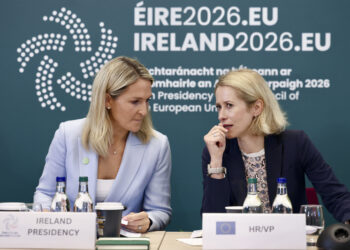



![[credits: Dietmar Rabich / Wikimedia Commons / “Münster, Stadtweinhaus, Beflaggung Ukraine und EU -- 2022 -- 0219” / CC BY-SA 4.0]](https://www.eunews.it/wp-content/uploads/2026/03/ue-ucraina-120x86.jpg)