
Brussels – Europe continues to transport its goods mainly by road, but when it looks beyond its own borders, sea transport accounts for the lion’s share. According to new data released by Eurostat, the Statistical Office of the European Union, 13.29 billion tonnes of goods were transported by road in the EU in 2025, 1.8 per cent more than in 2024. In terms of distance travelled and weight transported, road transport reached 1,886 billion tonnes-kilometres, up by 0.9 per cent.
In terms of weight, the products driving volumes were those derived from mining and quarrying, totalling 3.04 billion tonnes, accounting for 22.9 per cent of the total. These were followed by food, beverages and tobacco, at 1.61 billion tonnes, and other non-metallic mineral products, at 1.60 billion tonnes. However, when distance travelled is taken into account, food, beverages and tobacco rank first, with 311.1 billion tonne-kilometres.
Italy accounts for a significant share of this trend: vehicles registered in the country transported approximately 1.23 billion tonnes of goods by road in 2025, while the overall performance was 161.7 billion tonne-kilometres, equivalent to 8.6 per cent of the EU total. Italy thus ranks among the top five European countries for road freight transport, behind Poland, Germany, Spain and France.
A specific chapter is dedicated to dangerous goods, which in 2025 accounted for 4 per cent of the total volume of European road transport, measured in tonne-kilometres. This category includes, among others, flammable liquids, toxic substances and explosives. The highest proportion was recorded in Finland, at 9.8 per cent, followed by Ireland (7.8 per cent) and Cyprus (7.5 per cent).
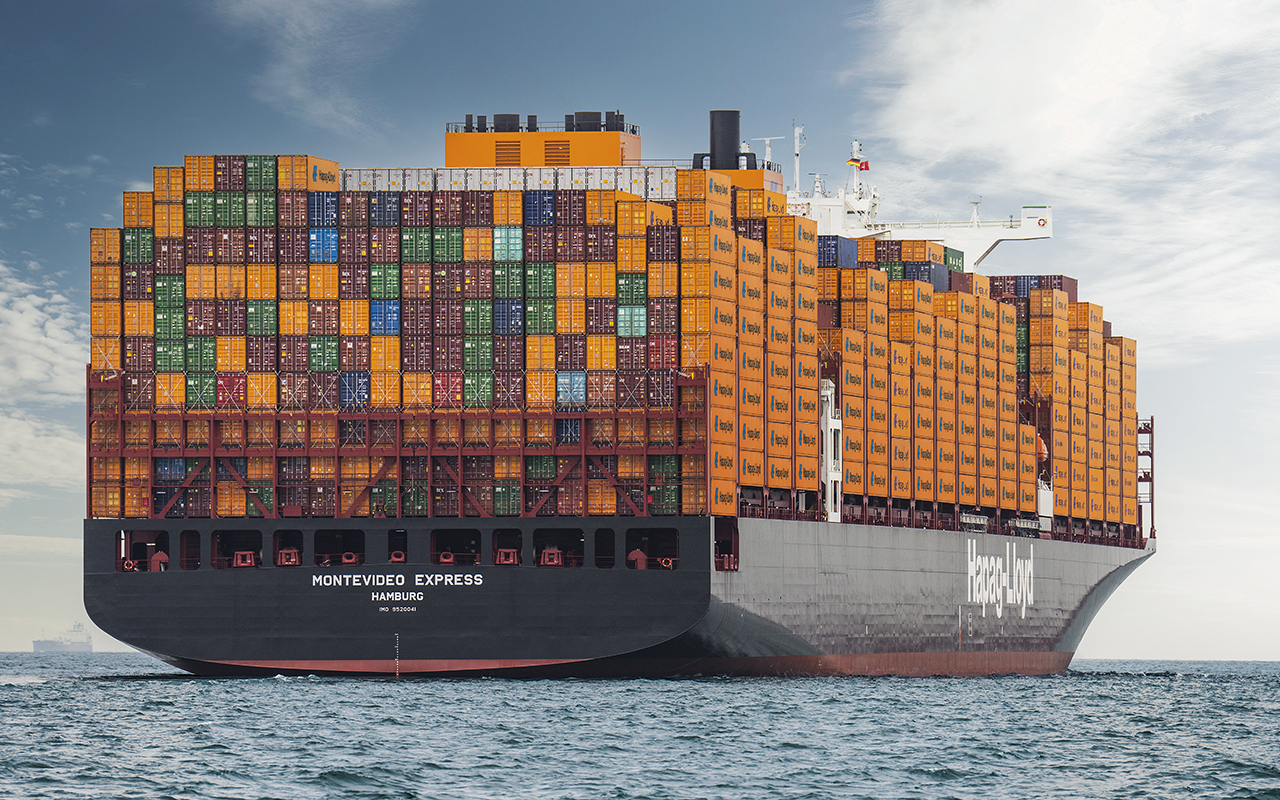
While road transport remains essential for moving goods within the EU, the picture changes when we consider trade with non-EU countries. According to Eurostat, in 2025, maritime transport handled 1.1 billion tonnes of European imports and 0.5 billion tonnes of European exports to the rest of the world, representing 73.3% of inbound and 72.6% of outbound volumes.
The gap is even more evident when looking at the value of goods. Air transport, while accounting for just 0.3 per cent of import volume and 2.9 per cent of export volume, accounts for 20.7 per cent of import value and 29.1 per cent of export value in economic terms. Sea transport, on the other hand, remains the main channel by value as well, accounting for 50.2 per cent of imports and 40.4 per cent of exports.
Finally, road transport accounts for 6 per cent of non-EU imports by volume and 17.4 per cent of exports, but these figures rise to 19.5 per cent and 24.9 per cent respectively when considering the value of goods. The picture emerging from the Eurostat data is therefore one of a dual geography of European logistics: road transport for moving goods within the single market, and sea transport for connecting the European economy to the rest of the world.
English version by the Translation Service of Withub