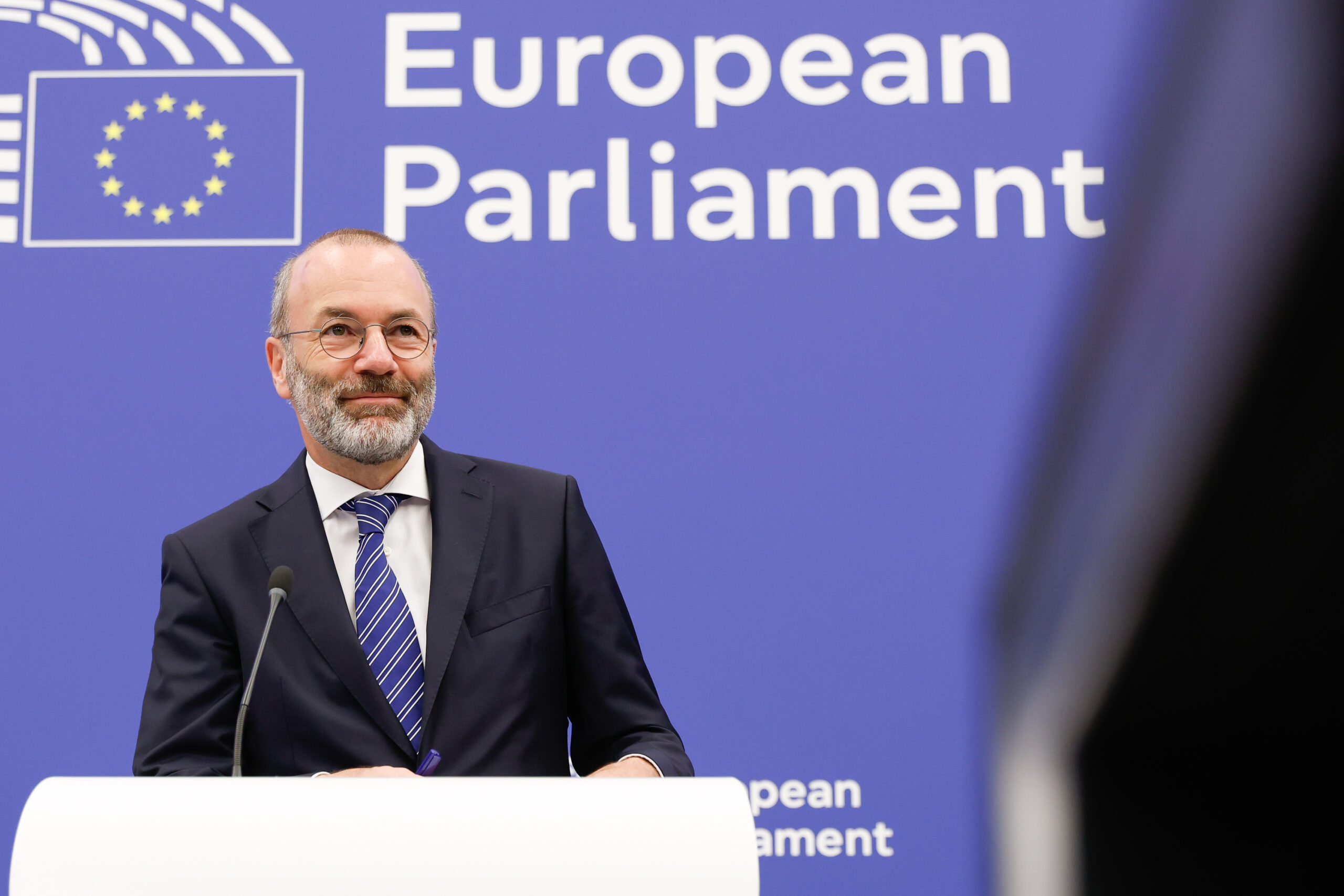
Brussels – “The first step is to give citizens a voice. My message today is that if Alberto (Núñez Feijóo, ed.) is strong, if the Partido Popular is even stronger, then there will be no need for any influence from more radical forces, nor will these be decisive.” These were the words of Manfred Weber, MEP and chair of the European People’s Party (EPP) group, during a press briefing today (6 October) in Strasbourg, on the sidelines of the European Parliament’s plenary session.
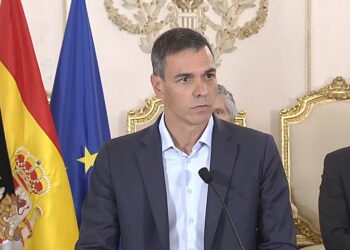
Yesterday (5 October), the Spanish Prime Minister, Pedro Sánchez, announced that Spain will go to the polls on 29 November for a snap general election. And today, Weber did not miss the opportunity to weigh in on the matter: “Spain’s future is now in the hands of the Spanish people, who have a say in the matter. And at this moment, I firmly believe that Alberto Núñez is the right man to take the lead,” he said.
Alberto Núñez Feijóo is the current president of the conservative Partido Popular (PP), and the leader of the opposition to Sánchez in Spain. His party in Europe is part of the EPP family, which is why Weber is hoping for the fall of one of the last socialist strongholds in Europe. If Núñez were to secure “a strong mandate, he would truly be able to govern Spain from a centre-right perspective and in a serious manner,” Weber added. In the past, the PP entered into local and regional governing agreements with the far-right party Vox, a possibility that Weber did not rule out outright in his briefing.
Among the ranks of the European Conservatives and Reformists (ECR), the co-chair of the European Conservatives and Reformists (ECR), Nicola Procaccini, stressed that “the result will affect the whole of Europe and also the balance of power within the European Council, particularly in important debates concerning migration, competitiveness or the role of a state in the economy.” Regarding the internal balance of power within the European Parliament and possible changes within the Socialist Group in the wake of the elections, Procaccini observed that “the model of a mixed majority between the right and the left is already in crisis,” pointing out that “should the Socialists decide to create a sort of parliamentary ‘Vietnam’ in an attempt to win back support on the left, at that point it will be up to the European People’s Party to decide.”
The remarks of the leader of the Socialists (S&D), Iratxe García Pérez, were instead hopeful. She said that “the Socialist Party is standing in these elections to win” and “to govern the country” with “the same courage and conviction we have shown over the last three years.” The Spanish government “has placed the defence of a social Europe, multilateralism, solidarity and a sound budget at the heart of the debate” and is standing in these elections with “the whole of European social democracy on its side.” Finally, regarding the balance of power within the European Parliament, the co-president of the Greens, Terry Reintke, stated that her group “is committed to working with pro-European forces, provided there is a clear cordon sanitaire against the far right.” She also reassured that the Spanish government’s decision “is part of the democratic process and will not substantially destabilise the European Union.” Therefore, “the elections do not scare us,” she concluded.
English version by the Translation Service of Withub