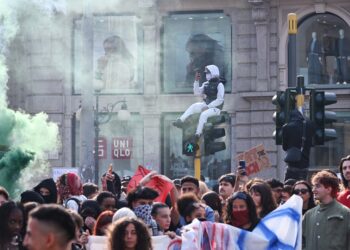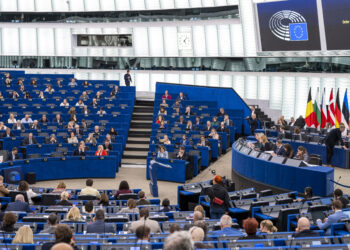
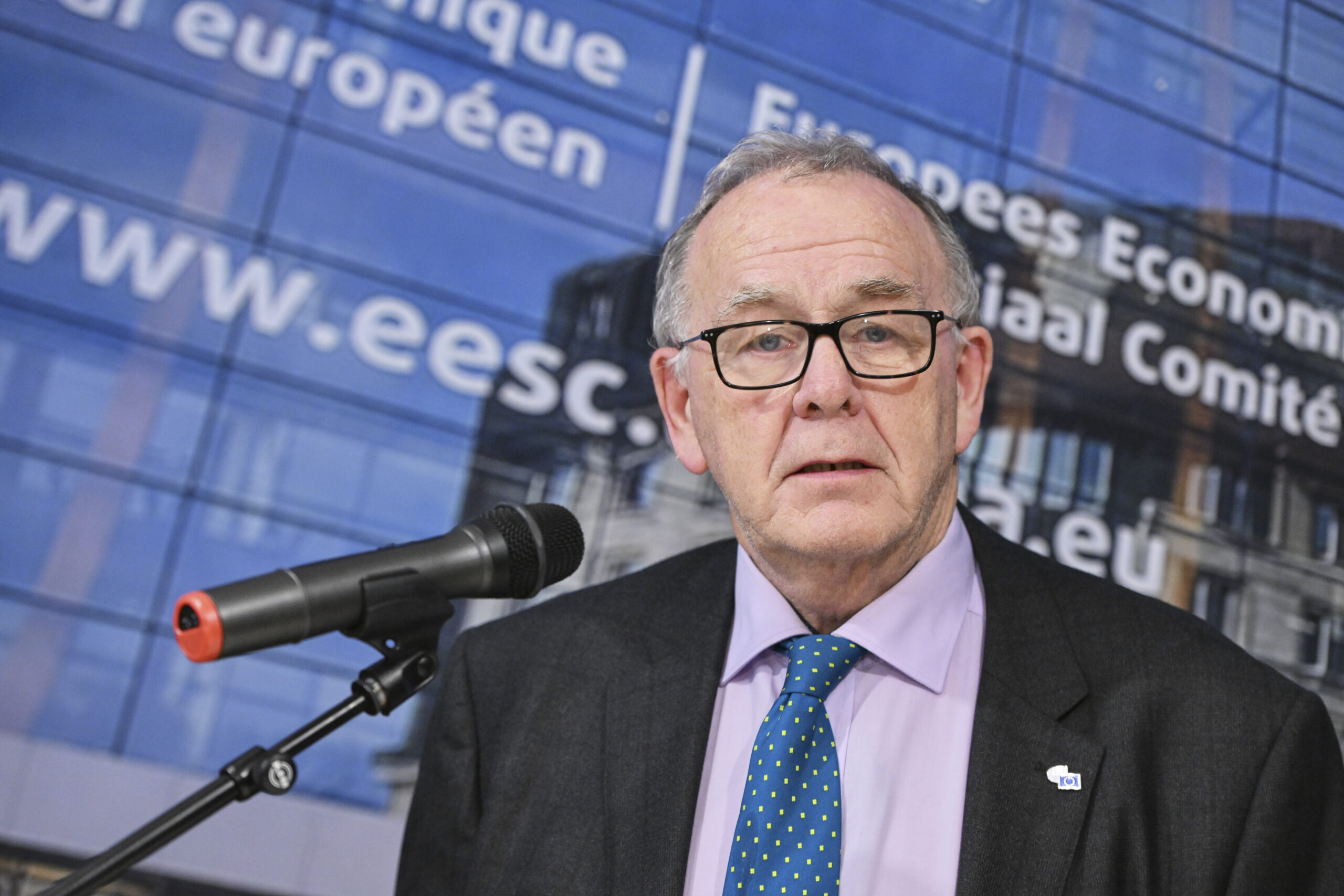
Brussels – “Young people desperately need to hear from politicians that their concerns are being listened to and their anxieties shared.” These were the words used today (21 October) by the President of the European Economic and Social Committee (EESC), Séamus Boland, to defend the young people who have taken to the streets in Italy, Spain, and France in recent days to protest against the high cost of living, energy prices, and the tax burden, during a press briefing today (21 October). Boland explained that “poll after poll shows that the cost of living is citizens’ main concern” and, for this reason, tomorrow he will host “our first annual high-level conference on tackling poverty, which will be attended by EU leaders, policy-makers, and civil society organisations.” The title of the high-level debate – to be held on the sidelines of the Committee’s 609th plenary session – is “Eradicating poverty by 2050: fulfilling our collective responsibility”.
To tackle poverty, according to the President, “An integrated European response is needed to tackle its multidimensional nature, ranging from housing and education to health and access to services.” Here, “the involvement of civil society is essential: policies must be designed with the people they will affect in mind. This is only possible by involving the social partners and civil society itself,” he noted. During tomorrow’s meeting, a memorandum of understanding will also be signed between the European Commission and the EESC regarding the EU’s strategy against poverty , which, according to Boland, “will enable the development of better, more concrete, and widely supported policies.” This signing comes after the president “discussed this issue over the past year with European Commission President Ursula von der Leyen, Prime Minister António Costa, Parliament President Roberta Metsola, 19 commissioners and numerous high-profile MEPs.”
On the cost of living in the European Union, Boland reiterates that we must “talk about an emergency” because, as long as we talk “about solutions – perhaps short-term ones – people get the impression that nobody is really listening to them.” On the contrary, when “the emergency is acknowledged, I believe the level of unrest may subside, because a positive signal is finally being sent,” he observed. For this reason, in recent days the President met with a French student and “listened to him very carefully” because “the voices of young people expressing their discontent must be heard and translated into concrete action.”
After many media outlets and politicians had, in recent days, spoken of the protests solely as incidents of violence, Boland recalled that “even in 1968 – a time I experienced first-hand – young people were denigrated in exactly the same way.” And “we know full well how that turned out,” he commented, adding that “we must not disparage them.” On the one hand, “it is obvious that we must firmly oppose any incitement to violence,” as “it is not the best way” to put forward one’s demands. On the other hand, however, “we must not condemn young people for freely expressing their opinions and concerns about the future, because if they are worried, it is because the generations currently in power are not getting the message across, and because we continue not to listen,” he clarified.
Regarding the current negotiations on the EU’s multiannual budget (MFF) for 2028–2034, Boland noted that “the EU’s current – and appropriate – focus on competitiveness and security must not come at the expense of social inclusion.” This means that the MFF “must not only adequately fund priorities such as cohesion, competitiveness, and rural development, but must also involve people and communities in its implementation.” At a time “when citizens are demanding to be heard, we must strengthen, not weaken, this voice,” he concluded.
English version by the Translation Service of Withub