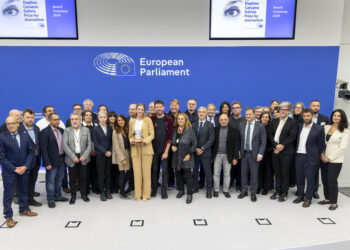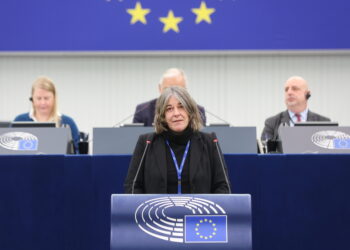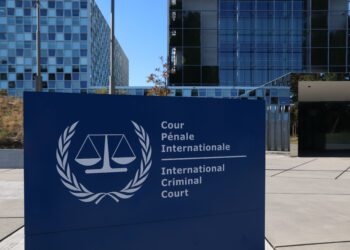
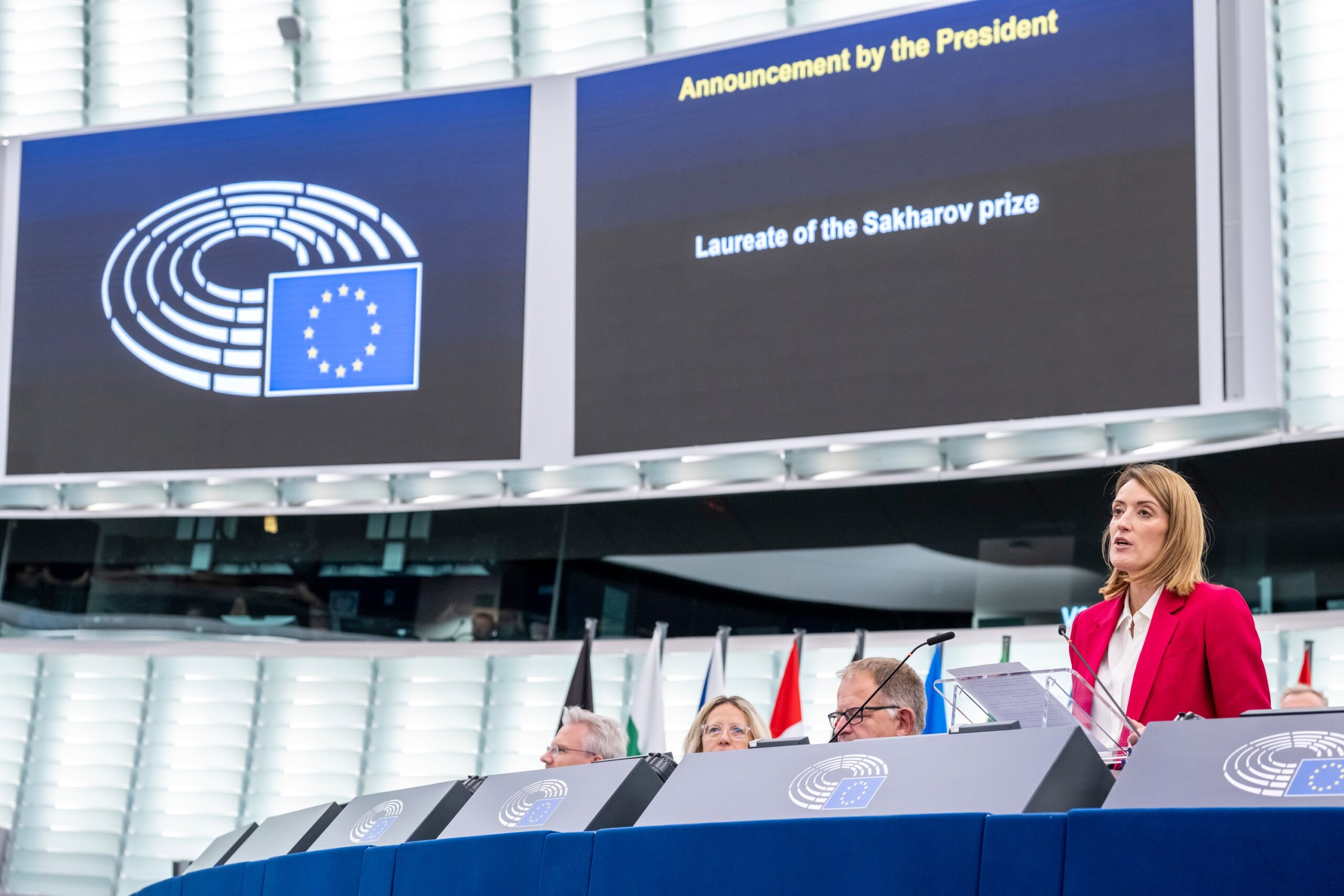
Brussels – Recognise the role of those who, despite threats from certain political leaders, continue to defend international justice. Today (22 October), during the plenary session in Strasbourg, the European Parliament awarded the 2026 Sakharov Prize for Freedom of Thought to the International Criminal Court (ICC) and its officials. In announcing the winner, the President of the European Parliament, Roberta Metsola, stated that “the EU is founded on respect for international law” and that, by awarding this prize to the ICC, “the European Parliament recognises the work of those who bring justice to victims, including through investigations, prosecutions, and trials.”
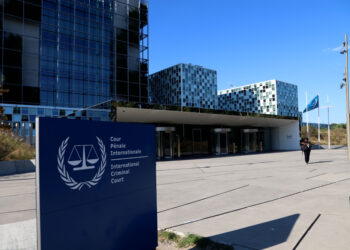
Established in 1998 under the Rome Statute, the ICC is the world’s first permanent international criminal court. It investigates and, where warranted, tries individuals accused of the most serious crimes of concern to the international community as a whole, such as genocide, war crimes, crimes against humanity and the crime of aggression.
In a press release, the European Parliament emphasises that the award highlights the work of the Court, “which includes criminal investigations, prosecutions, trials, and the issuing or authorising of arrest warrants in cases concerning, amongst others, Afghanistan, Russia, Israel, the Democratic Republic of the Congo, Uganda, Mali, Libya, and the Central African Republic.”
This victory comes at a historic moment when the Court continues to face numerous threats from the Trump Administration, culminating in sanctions against its officials. The hostility stems from the arrest warrant issued on 21 November 2024 against the Israeli Prime Minister, Benjamin Netanyahu, a partner of the United States. The European Union has takes a stand in defence of the Court, assuring that it will take all necessary measures to ensure its continued operation. The Sakharov Prize is an award presented to individuals, groups, and organisations in recognition of their efforts in support of human rights. The political groups in the European Parliament presented the nominees on 1 October during a joint meeting. In addition to the ICC, proposed by the Socialists, the nominees also included the Tanzanian activist, Tundu Lussu, nominated by the European People’s Party and the Conservatives and Reformists, and the Iranian twins, Taraneh and Romina Rahimi, who were arrested by the Islamic Revolutionary Guard Corps. During her speech in the Chamber, Metsola mentioned them, recalling that Lussu “is currently in prison, having fought for free and fair elections in Tanzania,” whereas “Taraneh and Romina should have their whole lives ahead of them, yet one of them faces the death penalty and the other decades in prison for protesting.” Now, they are “all part of our ‘Sakharov family’,” she emphasised. The award ceremony is scheduled to take place during the December plenary session, when the European Parliament will award the winner a sum of €50,000.
Commenting on the victory, the Democratic Party MEP (S&D) Marco Tarquinio, stated that his “S&D group had firmly believed in this, because standing alongside the ICC means standing on the side of international law and drawing a red line: no one, not even the most powerful and overbearing, is above the law.” The co-chair of the Greens, Terry Reintke, emphasised that for “a European Union that stands up to Donald Trump, autocrats, and dictators around the world,” it is “essential to defend international law, and the ICC is one of the key institutions in this regard.” For the co-chair of The Left, Manon Aubry, this is “excellent news.” Her group, she explained, had “supported the nomination for its work against impunity.” And “in the face of the sanctions imposed on it, our support for the ICC must be unwavering.” The President of Renew, Valérie Hayer, also commented on the award, stating that, while on the one hand, “the far right’s complacent attitude towards Trump and Putin, who undermine international law, speaks volumes,” on the other hand, “today’s vote reaffirms Europe’s commitment to its founding values: justice, human rights, and the rule of law.” The President of the European Council, António Costa, also celebrated the award, noting that the award “sends a powerful message to the world: Europe stands firmly in support of international law, the fight against impunity and accountability for the most serious international crimes.”
The President of the ICC, Tomoko Akane, expressed her gratitude to the European Parliament, explaining that the award reaffirms “the importance of independent judicial institutions and of those who work to uphold international law,” emphasising “the importance of ongoing international cooperation and support, so that the Court can fulfil its mandate independently and impartially, in the service of justice and the victims of the most serious crimes.” In “a world marked by rising conflicts, there can be no peace without justice, nor security without law,” she concluded.
The prize is named after Andrei Dmitrievich Sakharov, a Russian nuclear disarmament and human rights activist who was awarded the Nobel Peace Prize in 1975. Last year, the prize was awarded to the journalist and activist for the Polish minority in Belarus, Andrzej Poczobut, a well-known critic of Aleksandr Lukašėnka’s regime, and the Georgian journalist and director of independent media outlets Batumelebi and Netgazeti, Mzia Amaglobeli.