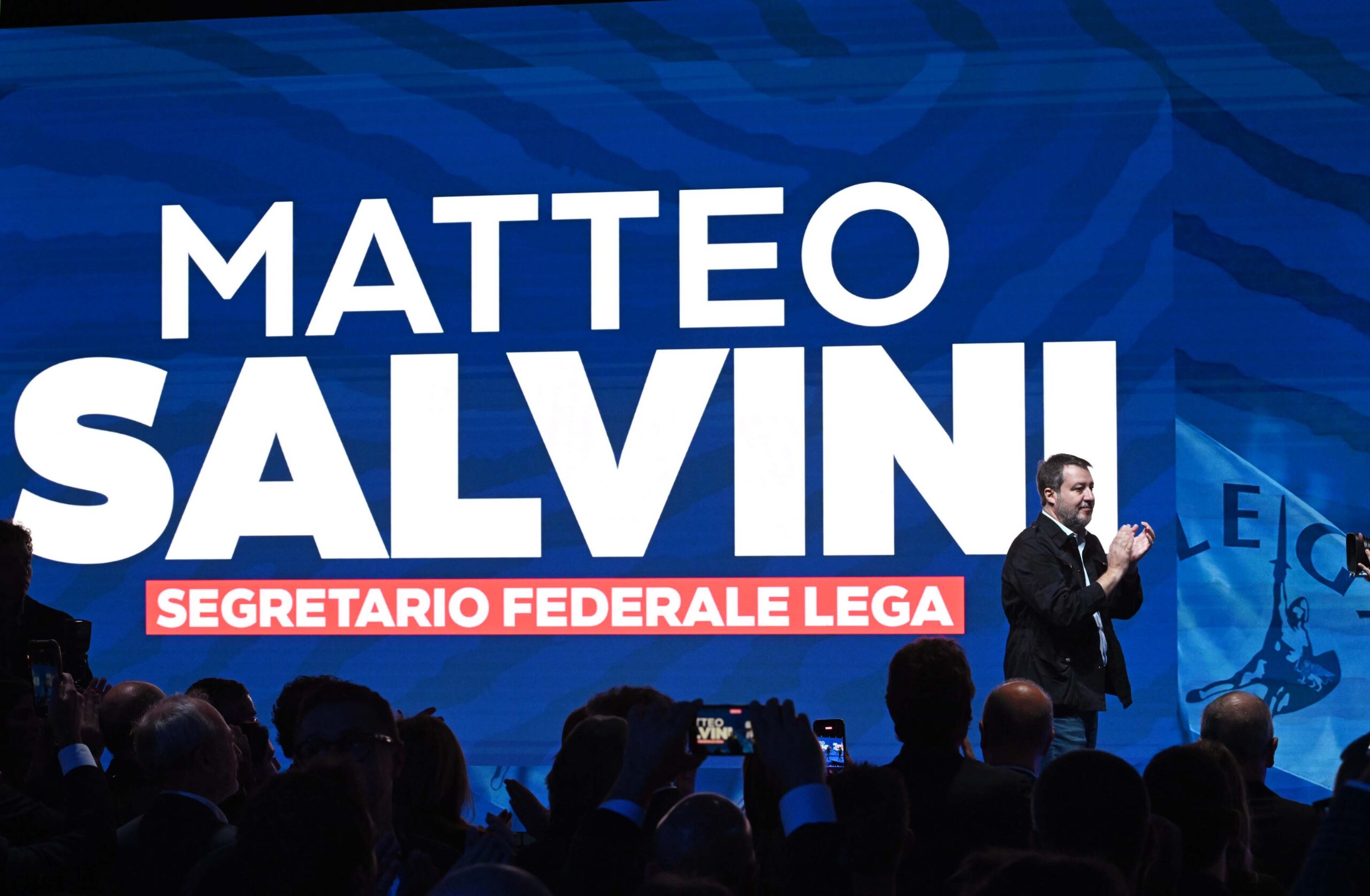
Brussels – “No more weapons and money to Ukraine”. This is how Matteo Salvini won over his audience, who – partly on the basis of this commitment – re-elected him as secretary of the Northern League. Of course, in politics it is not uncommon to say one thing and then do another. Still, the public statement by the Carroccio leader – first outgoing and then re-elected – cannot be easily ignored, because the Ukrainian issue is a sensitive one in Rome as it is across Europe. Salvini risks causing a rift with Brussels and other capitals, as well as creating a fracture that will be difficult to heal with the governing majority of which he is a part.
Why Matteo Salvini remains Deputy Prime Minister, however, within a coalition where the positions of Fratelli d’Italia and Forza Italia on military and financial support for Kyiv have so far been unwavering, and not even the election campaign currently underway in the country seems to have dampened them. The League congress, on the other hand, takes positions that are in open contrast to both the national government’s agenda and the EU’s.
His comments on Ukraine have earned him the support and appreciation of Luca Zaia, the League’s leading figure in Veneto: “This war has been going on for almost longer the Second World War; it is becoming increasingly radicalised and risks turning into our own Afghanistan,” he commented on the sidelines of the party conference. Essentially, Salvini is right, argues Zaia: “Of course, I’m a conscientious objector as well…”
Salvini is looking to his grassroots supporters and to the dissenting voices within the party. Indeed, the League is rife with discontent over its management and decisions that have not been widely supported. The decline in support is a major concern, and General Vannacci’s role has played a part in it: he was brought into the League by Salvini himself to bolster the party’s voter base, only to be subsequently sidelined by Vannacci. The MEP has used the League to carve out a political path of his own, which now competes with Salvini’s party.
Salvini has been re-elected for the fourth time. He secured around 76 per cent of the vote against Massimo Garavaglia, a challenger in name only. He will remain in office until 2030, but will have to start working immediately to keep the reins of a party that is already seeing defections: Rome’s MP Simonetta Matone is leaving to join Forza Italia, in protest at Salvini’s leadership and a political direction that has failed to materialise.
Now the puzzle is how to keep the legislature going and how to handle an issue that the EU would also like to see resolved, as shown by the ongoing peace discussions and the need to have a representative at the table, but on which no one outside Italy has any doubts.
English version by the Translation Service of Withub