Brussels – Reaching at least a partial political agreement on the post-2027 Future Common Agricultural Policy (CAP), without addressing the financial and horizontal issues, which remain at the heart of the negotiations on the European Union’s next long-term budget: This is the objective of the Agrifish Council meeting, which began today (26 October) in Luxembourg, where the agriculture ministers of the 27 Member States will discuss the regulation that will shape the future of the European Agricultural Policy. Also on the agenda are trade issues and fishing opportunities in the Baltic Sea for 2027. “I am confident that today we will be able to reach a partial general approach,” said the Irish Minister for Agriculture, Martin Heydon, who is chairing the meeting as part of Ireland’s rotating presidency of the EU Council. “We need a CAP that is adequately funded, workable, and flexible for European farmers,” he added, citing the funding of agricultural policy as one of the presidency’s priorities. The discussions will continue tomorrow.
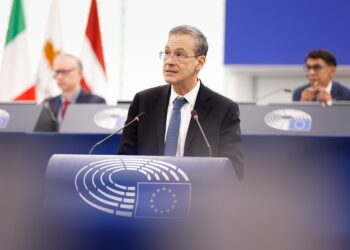
However, while the Irish Presidency says it is confident of reaching a broad agreement, Italy has once again set out its demands and red lines. Among the points raised and contested by Rome is social conditionality, namely the link between the disbursement of European aid and compliance with labour standards. “The removal of the rules that make the granting of Common Agricultural Policy aid conditional upon the protection of agricultural labour is unacceptable to us,” stated the Minister for Agriculture, Francesco Lollobrigida, speaking at the Council. “Compliance with labour laws must be a prerequisite for access to any form of public support,” the minister emphasised, describing the issue as “fundamental both from an ethical and social perspective and for the competitiveness of European businesses.” In this context, “I have heeded the call from Italian and European trade unions on this matter, and we intend to support this approach,” the minister explained. “We will demand that all trade agreements with third countries require respect for labour and workers, and that the exploitation of workers in other parts of the world – which benefits our competitors and obviously harms our entrepreneurs and operators – be combated,” he emphasised. According to Lollobrigida, adherence to common standards helps to distinguish the European production model from that of third countries. Italy is also calling for these principles to be taken into account in trade agreements with non-EU partners, to prevent competition based on different rules. “Exploiting a worker in Europe or elsewhere in the world is, in our view, unfair, wrong and must be combated by every means,” he commented.
The other key issue concerns risk management tools for agricultural businesses, which are vulnerable to natural disasters and market crises. Lollobrigida criticised the absence, in the proposal under discussion, of the mechanism allowing 3 per cent of direct payments to be allocated to a national mutualisation fund, which can be activated in the event of catastrophic events such as droughts, floods, and frosts. This is an optional instrument already provided for in the 2023–2027 Strategic Plan – the single programming document combining European funds from the EAGF and the EAFRD – which Rome is seeking to have confirmed.
Finally, the minister called for adequate funding for the
Unity Safety Net,
the European Commission’s 6.3 billion crisis fund intended to provide support in the event of commercial or climate-related crises. “Italy has defended funding for agriculture; now Europe must provide solutions to the difficulties our farmers face every day,” he concluded.
English version by the Translation Service of Withub