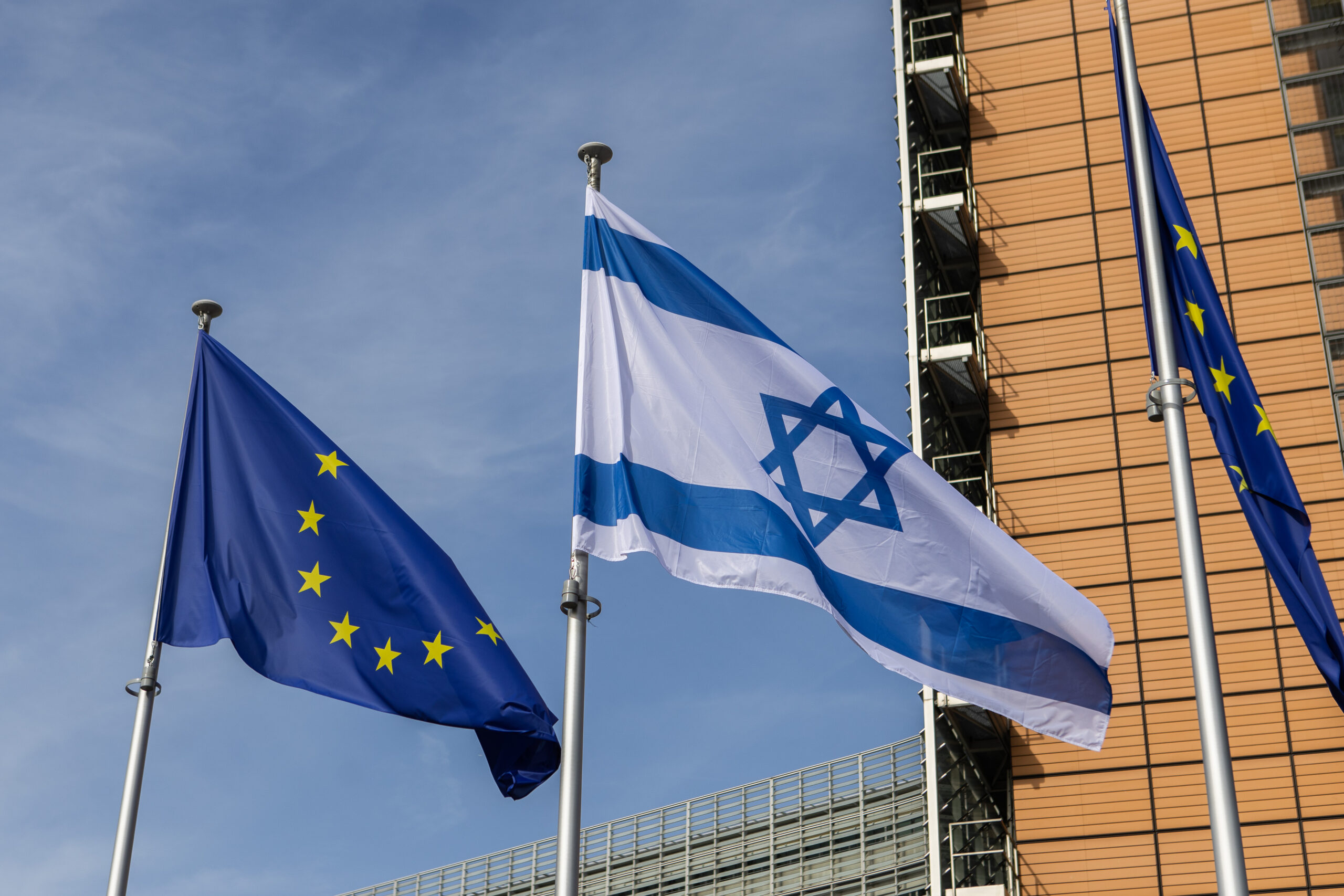
Brussels – Allegations of genocide; rulings by the International Criminal Court; an international arrest warrant against the outgoing Israeli Prime Minister, Benjamin Netanyahu, and the former Defence Minister, Yoav Gallant, for crimes against humanity and war crimes: there is no reference to any of this in the wording chosen by the European Commission to comment on the election in Israel. On the contrary. “The European Union looks forward to working with Israel’s future government, building on our long-standing relations and our shared commitment to democratic principles and shared values,” stated today (28 October) the European Commission’s spokesperson for Foreign Affairs, Anouar El Anouni, regarding the elections in what Brussels considers to be the largest democracy in the Middle East.
Yesterday, Tuesday 26 October, over 7.3 million Israelis were called to the polls to vote for the party that will lead the Knesset, the country’s parliament. According to a report published this afternoon (28 October) by Reuters, the Israeli elections have resulted in a deadlock in which neither the outgoing Israeli Prime Minister, Benjamin Netanyahu, nor the opposition candidate, Gadi Eisenkot, has a clear path to forming a government. With around 85.6 per cent of the votes counted, Netanyahu’s bloc is expected to win around 43.7 per cent, whilst Eisenkot is expected to win around 37.7 per cent.
During today’s (28 October) press briefing, El Anouni stated that “the European Union congratulates the Israeli people on yesterday’s elections, which were characterised by a high turnout, reflecting Israel’s vibrant democracy.” While the country “is now entering a phase of political negotiations to form the next Israeli government,” the spokesperson explained, “our approach will continue to be based on frank and open dialogue, aimed at strengthening bilateral cooperation, addressing all issues of mutual interest and working together to promote regional stability, security, and a just and lasting peace.”
El Anouni emphasised that he could not know “what the next steps will be or how the situation will develop,” and therefore refrained from commenting “on what might or might not happen.” What is certain, however, is that the European Union wishes to keep all channels of cooperation open, “focusing on frank and open dialogue, with the aim of strengthening our bilateral cooperation, addressing all issues of concern, and working together to promote regional stability, security, and a just and lasting peace,” the spokesperson added.
In the face of the enthusiasm at the Berlaymont Building, the PD (S&D) MEP, Cecilia Strada, pointed out that, while awaiting the final results, “one thing is clear,” namely that “the problem is not just Netanyahu or his government, but an entire system that makes the violation of rights and violence a political method while Western governments look the other way, as the European Union continues to do.” According to Strada, we must now “carry on fighting as before, and even more so than before, within the institutions and on the streets to secure justice, self-determination and freedom for the Palestinian people.” As long as Gaza “remains an open-air prison, as long as the occupation stifles life, the economy, and the future of the West Bank, and as long as the settlements in the Occupied Territories are not dismantled,” she commented, “whoever sits in the new Israeli government, nothing will be right.”
English version by the Translation Service of Withub