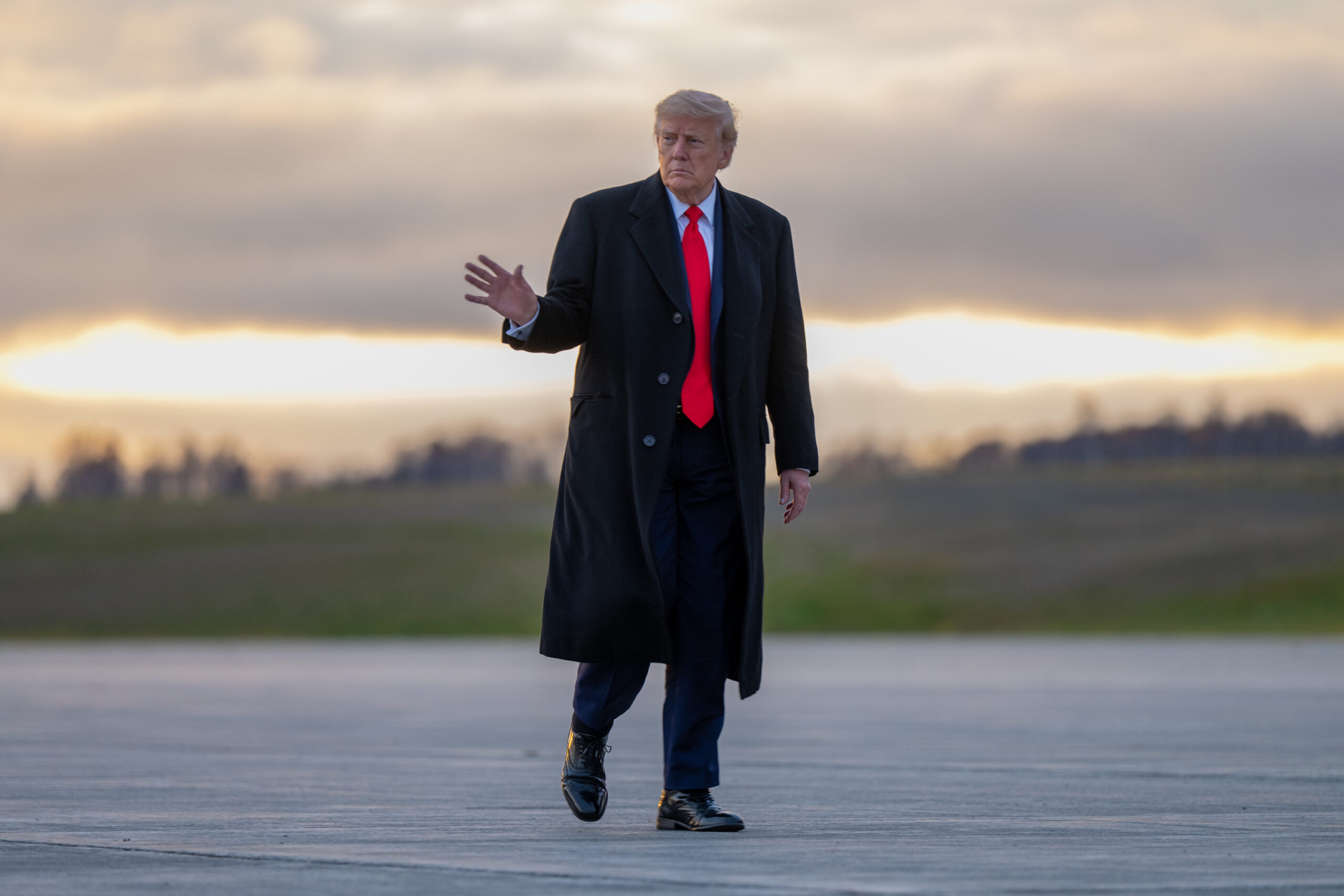
Brussels – Donald Trump is trying to play it off as if nothing has happened. The US President is seeing his Republican Party lose the midterm elections and a country reshaped politically and institutionally. The Democrats have secured control of both houses of Congress. Progressives have won 24 seats in the House of Representatives and as many as seven in the Senate, thanks to historic victories in Texas and Kansas – conservative strongholds – while also losing ground in Iowa and South Carolina. These figures enable them to reach the number required for a majority in both chambers. It is a debacle that the European Union had been quietly bracing for.
Trump tries to joke about it, saying that the outcome can be explained by the fact that “my name wasn’t on the ballot; otherwise we would have won”, then adopts an air of institutional seriousness by publicly stating that he intends to “accept the results”. These latter statements follow his declaration that he was ready to become ‘Mr Veto’ in the event of a Democratic victory. Words follow words, suggesting that the second half of the parliamentary term may be even more fraught with uncertainty. Because Trump continues to say one thing and its opposite, proving himself unpredictable and, as a result, unreliable. The prospect of decision-making paralysis and blackmail cannot be entirely ruled out, even though Trump himself admits he is ready to “cooperate” with the new Congress. Only to revert to his earlier stance – that of using his veto power – five minutes later.
On the other side of the Atlantic, people are watching with silent respect and equally silent hope. It is a fact that Trump has been a curse for the EU. From the tariffs that have hit the twelve-star economy, to the US military operations in Iran and the ensuing crisis, Trump’s policies, aimed at undermining sustainability agendas, have led many within European chancelleries – and even more so within the EU institutions – to hope for an electoral defeat in the midterm elections.
US elections could also reshape bilateral relations. The key word is “could”. Everything remains to be seen, and everything, once again, hinges on Donald Trump and how he chooses to behave. There is certainly an awareness that a Trump who no longer holds full power is an easier counterpart to deal with, insofar as he is less likely to cause upheavals, but this does not make him any less unpredictable.
The usual prompt and detailed commentary on events of any kind has been put on hold. There have been no social media reactions from any of the institutions, which are awaiting official confirmation of Trump’s defeat. Breaking the silence is Luděk Niedermayer (EPP), vice-chair of the European Parliament’s Committee on Economic Affairs: “Trump’s mad policies have driven an unusually high number of Americans to the polls and to change sides.” Not exactly an endorsement – quite the opposite, in fact. Meanwhile, from the ranks of the Socialists, Christel Schaldemose expresses “cautious optimism on behalf of Europe”, urging people to avoid easy triumphalism. “The EU must continue to be stronger and stand on its own two feet.” This holds the key to Trump’s future.
English version by the Translation Service of Withub