
Brussels – To keep electricity bills under control in the long term, it is necessary to increase transparency, adopt a systemic approach to the electricity system, and modernise the rules governing grid connections. This is the approach recommended by the European Economic and Social Committee (EESC) in an opinion entitled “Future-proofing electricity bills in the EU”, adopted during the October plenary session. According to the Committee, at present, electricity bills for households and businesses are rising due to soaring wholesale gas prices, geopolitical tensions (including conflicts in the Middle East) and the rapid growth in demand for electricity from data centres, artificial intelligence infrastructure, and electric vehicles. To overcome these dependencies and combat climate change, the EESC states that the EU must first and foremost electrify its economy, using “more decarbonised” solutions, but that such a solution “can only be achieved through sustainable, high-quality, and affordable electricity.” The EESC therefore recommends an approach based on three principles.
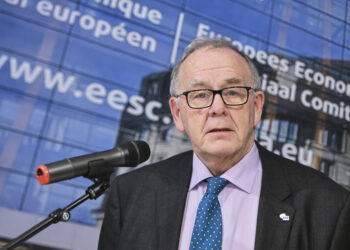
The first is “improving transparency.” The Committee emphasised that consumers are entitled to greater clarity regarding electricity transmission costs. The rapporteur for the text, Christophe Béguinet, clarified that “consumers must know exactly what they are paying for and why. Network charges are not a form of taxation, but a tariff.”
The second is “a comprehensive approach to the electricity system,” based on reliable and consolidated data, available “almost in real time.” This would ensure the overall efficiency of the system and enable the best possible price to be achieved. In the text, the Committee explained that “the electricity system is extremely complex, as it involves very specific physical constraints which, combined with liberal regulatory mechanisms, make it a very unusual market.” In order to successfully transition to a systemic approach, “transmission system operators (TSOs) and distribution system operators (DSOs)
need to work together more.” Specifically, the Committee calls for clear signals to be sent to the markets regarding grid access charges, following rules such as: “reflecting the costs incurred by network operators as accurately as possible; introducing hourly, seasonal or dynamic tariffs, based on locally determined pricing; setting prices for grid connection
on the basis of the costs, while ensuring alternative mechanisms for energy access, especially for isolated and vulnerable households; promoting local pricing of grid connections.”
The final principle concerns the revision of the rules on grid connection. The EESC considers it necessary to adapt the rules governing the handling of grid connection applications and has suggested introducing new priority rules for grid connections, in line with the objective of electrification.
The EESC’s opinion follows the European Commission’s presentation in July 2026 of its Action plan for electrification and a legislative proposal aimed at making electricity bills in the EU “future-proof”, by reducing system costs and promoting electrification and digitalisation. The aim is to transform Europe into the world’s first “electricity-powered” continent, raising the electrification rate from 23 per cent of energy consumption – current estimates – to 46 per cent by 2040.
English version by the Translation Service of Withub