The early 1980s. The consultancy contract was very interesting. The task was to trace the origins of Italsider’s malaise and malfunctioning, from a managerial point of view. Corporate culture moved along Gaussian curves, but tightly spaced ones. Improvement campaigns followed one another: recovery of materials lost in the nooks and crannies of the plants, better maintenance, attempts to Japanise (or even Scandinavianise) entrenched habits, streamlined chains of command, company styles harmonised from Genoa to Taranto… Weeks of classroom training: foremen, operational managers, white collars. In short, the full catalogue.
To me, a young apprentice consultant on leave from active economic journalism, fell the job of improving communication and making the transmission of instructions flow more smoothly, and of helping to develop simplified common languages to ensure a faster ‘alignment’ and a rapid descent of strategy from the executive floors to the shop floor, from the blast furnaces to the ‘plate train’, which, as many newcomers still discover today, does not leave from a station… Training sessions lasting weeks, a discovery of the loveliest Salento in the breaks, dinners at Massafra, at the Malavoglia restaurant, since turned into the Osteria la Botte and open nowadays only at weekends. Thoroughly traditional Apulian cooking, an immersion in southern gastronomic culture.
I had just come back from a month of work travel in South Africa, visiting mines and studying questions of cultural and social integration. I had fallen in love with Fanakalo. It is a language born in South Africa in the nineteenth century and known as the specific idiom of the gold and diamond mines. A dialect, an extended jargon, developed to let workers of different ethnic groups talk to their supervisors; its vocabulary is a cocktail: a little under three quarters Zulu, a quarter English and the rest Afrikaans. At one point it was spoken by more than 700,000 people. Two weeks to learn it, and it made sure that orders were understood by the different groups of workers first, and then carried out. And that the dynamite went where it should and nowhere else.
The name means ‘do it like this’. Besides the mining variant, there were agricultural and domestic subdialects. It had become the lingua franca of southern Africa; it has declined steadily since the end of apartheid in favour of English, and survives today in a few underground gold and platinum mines. I never made an Italian version, but the principles that simplified the understanding of processes I pinched and used, every one. It did not help much. Truly grasping the course of the wretched end of the steelworks that supplied the sheet for the expensive Swedish cars, genuine status symbols in those years, went beyond simplifying the language of the factory.
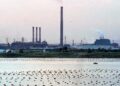
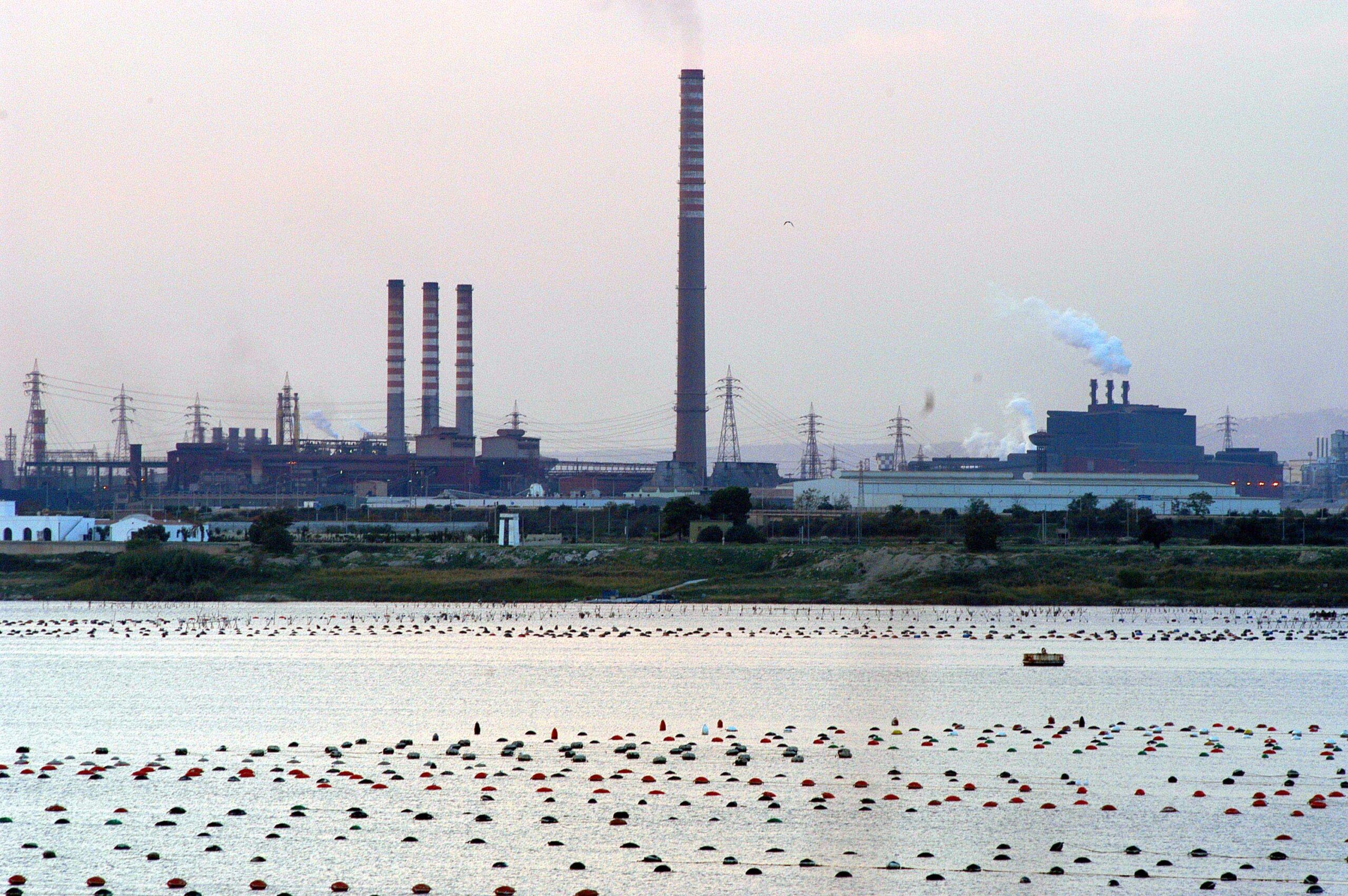
On the morning of Tuesday 3 November, a firm called Liz Italia began switching off the burners that kept the cowpers of Taranto warm, the auxiliary plants that recover heat and preheat the air blown into the base of the blast furnace. A gesture without noise, which closes sixty years of integrated steelmaking. The Court of Cassation rejected the receivers’ appeals on 29 October; the last cast of pig iron had come out on 8 October, with the raw materials exhausted; blast furnace 1 has been under seizure since the fire of May 2025, and number 4 is stopped for maintenance. By the end of the week the coke ovens and blast furnaces will be cold, and the company has asked to extend the wage guarantee scheme (cassa integrazione) to as many as 8,622 workers of the group, 6,964 of them in Taranto.
In real terms, less than one might think in volumes and much more in substance. Italy produced 20.7 million tonnes of steel in 2025, second in Europe after Germany, almost all of it from electric furnaces fed with scrap. What is missing is flat rolled steel: the coil for cars, household appliances, pipes, the plate for Fincantieri. Between 2012 and 2023 the production of flat products fell from 14.5 to 9.6 million tonnes, and in 2023 we imported 11 million tonnes of flat semi finished products against a need of 15. Taranto does not switch off a production; it ratifies a dependence already accomplished. And it leaves the questions that follow.
Where will we buy it? Where we already buy it, with Turkey in the lead and the other non EU countries following. But the market has changed beneath our feet. From 1 July the duty free quotas fell to 18.3 million tonnes, 47% less than in 2024, and outside the quota the duty is 50%; since January there is also CBAM, the Carbon Border Adjustment Mechanism, which offsets the cost of emissions paid by EU producers against the prices available to third country producers who do not have to pay for emissions. We shall buy at higher prices, in competition with all the European importers for scarcer quotas. The paradox lies in the timing: Europe raises its walls just as Taranto stops, and for the first time in years a steelworks would have, on paper, a protected market.
Was it only the fault of the factors of production? No. Energy weighs: European steelmakers pay more than 50% above their Chinese and Indian rivals for industrial electricity, and more than double the Americans, and on 28 October gas rose above 100 euros per megawatt hour. But the same price burdens Linz, Salzgitter and Dunkirk, which are not closing. Labour matters less than its productivity: Antonio Gozzi, president of Federacciai, the Italian steel federation, recalled that Acciaierie d’Italia kept about ten thousand employees to produce five million tonnes, the same workforce as in the days of ten million. And in 2024 output fell below 2.5 million, against the six that the plan promises for 2026.
Are the responsibilities political? Yes, and heavy ones: decrees in endless succession to keep open what the judges wanted stopped, a government that after the ruling ‘takes note’ while remarking that the Court of Cassation set aside the conclusions of its Prosecutor General, sales attempted with Baku Steel, Jindal and Flacks and ended without a buyer. To stop there would be convenient. The Milan Court of Appeal had given ninety days to remove the asbestos still present in the plant; a blast furnace that stops because of a fire in a tuyère, another left without ore, are errors of management, not of the legislator. Whoever has run the plant in these years has handed over installations that the Court of Cassation judged a source of serious danger.
Do those who replace us run the same risks? They run different ones, and more widespread. The Turkish producer depends on imported scrap and on energy; the Asian one sells in a world that produced 1,803.8 million tonnes in 2025, 2% less, in chronic overcapacity, and faces the European duty of 50% outside the quota. The risk for us is to depend, in a market that is closing, on suppliers who tomorrow may be diverted elsewhere or left outside a quota.
Who in Europe can still produce, and why? Those who have chosen the electric furnace, the niche and a state behind them. Feralpi closed 2025 with 2.7 million tonnes (+4.7%), 1.7 billion in revenues and more than 500 million invested in three years. SSAB has rising profits in the third quarter thanks to premium products; voestalpine forecasts EBITDA between 1.6 and 1.85 billion and is bringing two electric furnaces on stream at Linz and Donawitz in 2027, with an Austrian scheme compensating the cost of electricity. Nobody wins by size: Salzgitter closed 2025 with a net loss of 70 million. What wins is specialisation, scrap, subsidised energy and commercial protection, all together.
Back to the image of the morning of the 3rd, the burners switched off. A preheat can be relit; a cooled blast furnace is far harder and costlier to bring back into service, and the binding offers close on 8 November, with the Italian consortium looking chiefly at the rolling mills. The autopsy says this: Taranto was not killed by the price of gas, but by years of postponement in which everyone left the decision to someone else. We shall buy the steel. What remains to be settled is on what terms, and from whom.
Thinking back, more than forty years on, a sentence comes to mind: Basa futi lo fornes lo kubi, mfowethu! ‘Light the damned furnace again, friend!’ In Fanakalo.
_________________________________________
Network resources have been used to validate date sequences, certify figures based on public and corporate sources, check deeds and personalities/companies, ensure the formal correctness and format of the story. The starting point remains a series of personal notes and an original narrative written by the author.