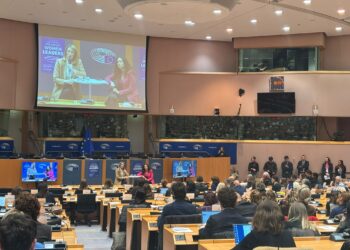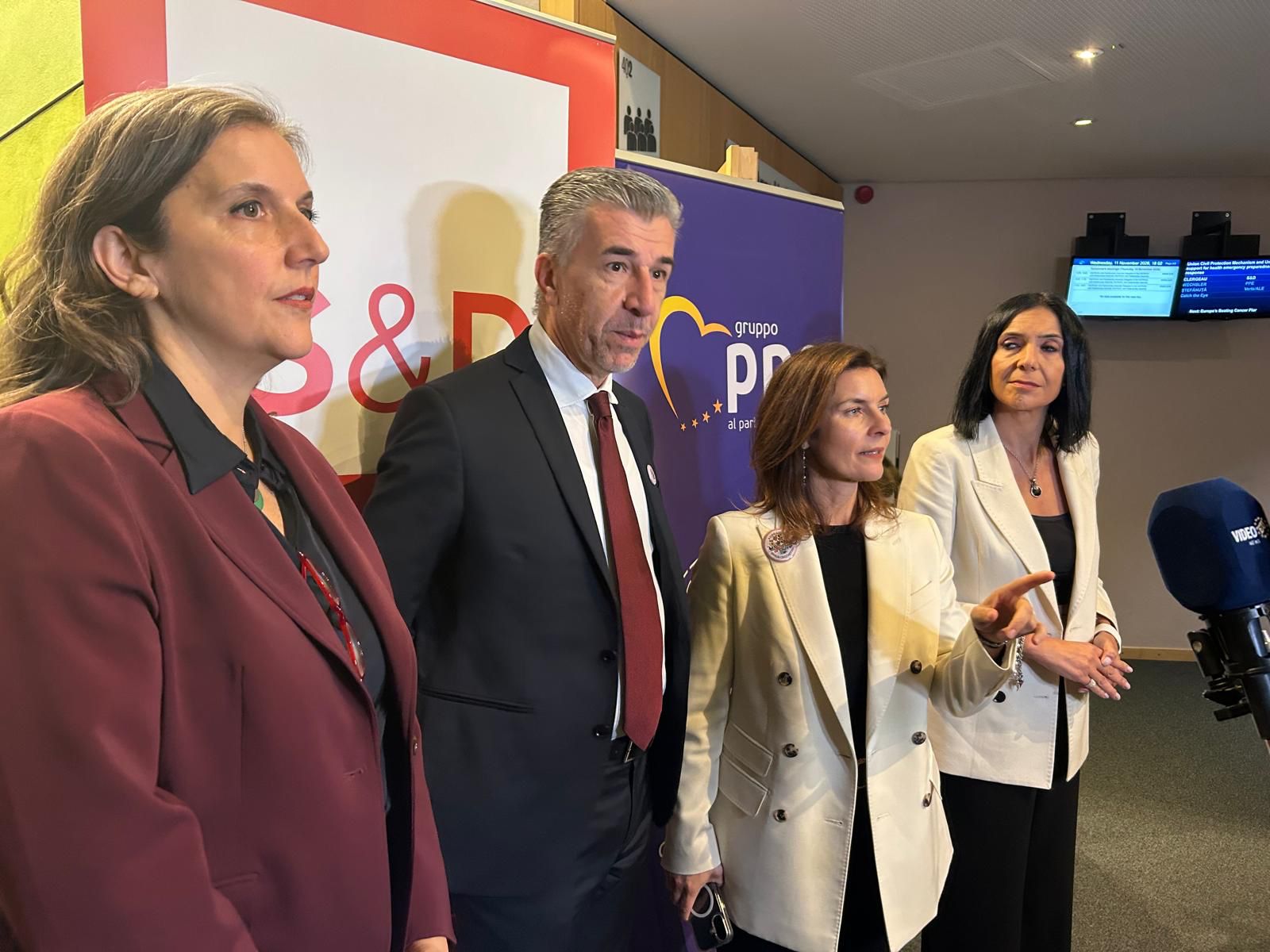
Brussels – “I wouldn’t want to see another father having to say what I have to say; I’d like to see other families happy, living their lives in peace.” Gino Cecchettin arrives at the European Parliament this afternoon (11 November), exactly three years to the day since he last saw his daughter Giulia, who was murdered by her ex-boyfriend Filippo Turetta. A date that need not be recalled to reopen old wounds, but which this year has become an opportunity to reignite a battle: the fight against femicide and male violence against women. At the heart of the initiative entitled “Make some noise for Giulia – The European commitment against gender-based violence”, promoted by MEPs Annalisa Corrado (PD-S&D), Alessandra Moretti (PD-S&D), and Giusi Princi (FI-EPP), is the screening of “If I Don’t Come Back Tomorrow”, the film that tells Giulia’s story and chronicles her family’s journey following her femicide.
“We must all step outside our comfort zones and take action to break down the stereotypes that shape our lives,” said Cecchettin, who addressed the audience at the European Parliament, appealing in particular to men. “We must combat that toxic machismo, that cage that complicates our lives,” emphasised Giulia’s father and president of the Giulia Cecchettin Foundation. Therefore, it is not simply a matter of condemning violence when it occurs, but of challenging the cultural norms that precede it and make it possible. “It is a cultural issue, but even if it is a cultural issue, the institutions can still do a great deal,” he added, pointing to education as the starting point because “everything stems from there.”
According to the president of the Cecchettin Foundation, the initial response to the film also demonstrates that talking about violence can bring about change. On the day of its premiere, “If I Don’t Come Back Tomorrow“ was watched by over 100,000 pupils, from Year 9 to high school. And following the screenings, she explained, the anti-violence centre that runs the 1522 helpline recorded an increase in calls from younger girls. “It means that talking about it stirs something – a question – and shows that within a romantic relationship there may be a hidden process of violence that is subtle and perhaps goes unnoticed.” The film, she explained, can act as “a lever” to bring these signs to light and “start saving lives.”
It is precisely on prevention that the three MEPs chose to focus the initiative, bringing before the European Parliament a call that also resonates within the Italian political debate: to introduce sex and relationship education in schools. “Women and girls must always be free to choose whom to love, how to love, and above all to choose to say ‘no’ – and that ‘no’ must be respected,” emphasised Moretti. For Corrado, gender-based violence is a collective responsibility, one that must increasingly involve men as well. Princi, on the other hand, insisted on the need to “take action from early childhood,” because “we cannot allow possession to be seen as almost a form of love” or “control to be interpreted as a form of protection.”
The broad-based participation of MEPs from various political groups was intended to emphasise precisely this: the prevention of violence cannot be a partisan battle. “Freedom is a universal value and has no political colour,” Princi pointed out. But the most powerful message of the day remains that of Cecchettin: “Not understanding the emotions that guide our entire lives is a shame, because then our lives do not go in the direction we would like.” This is a cultural endeavour which, he insisted, must begin long before violence becomes irreversible.
English version by the Translation Service of Withub