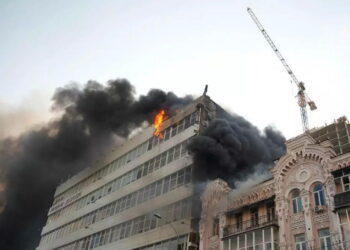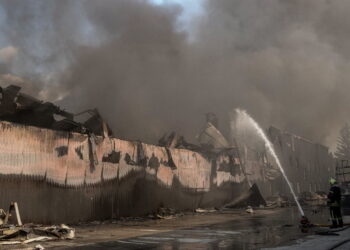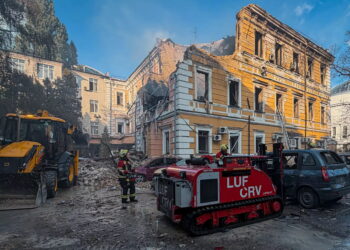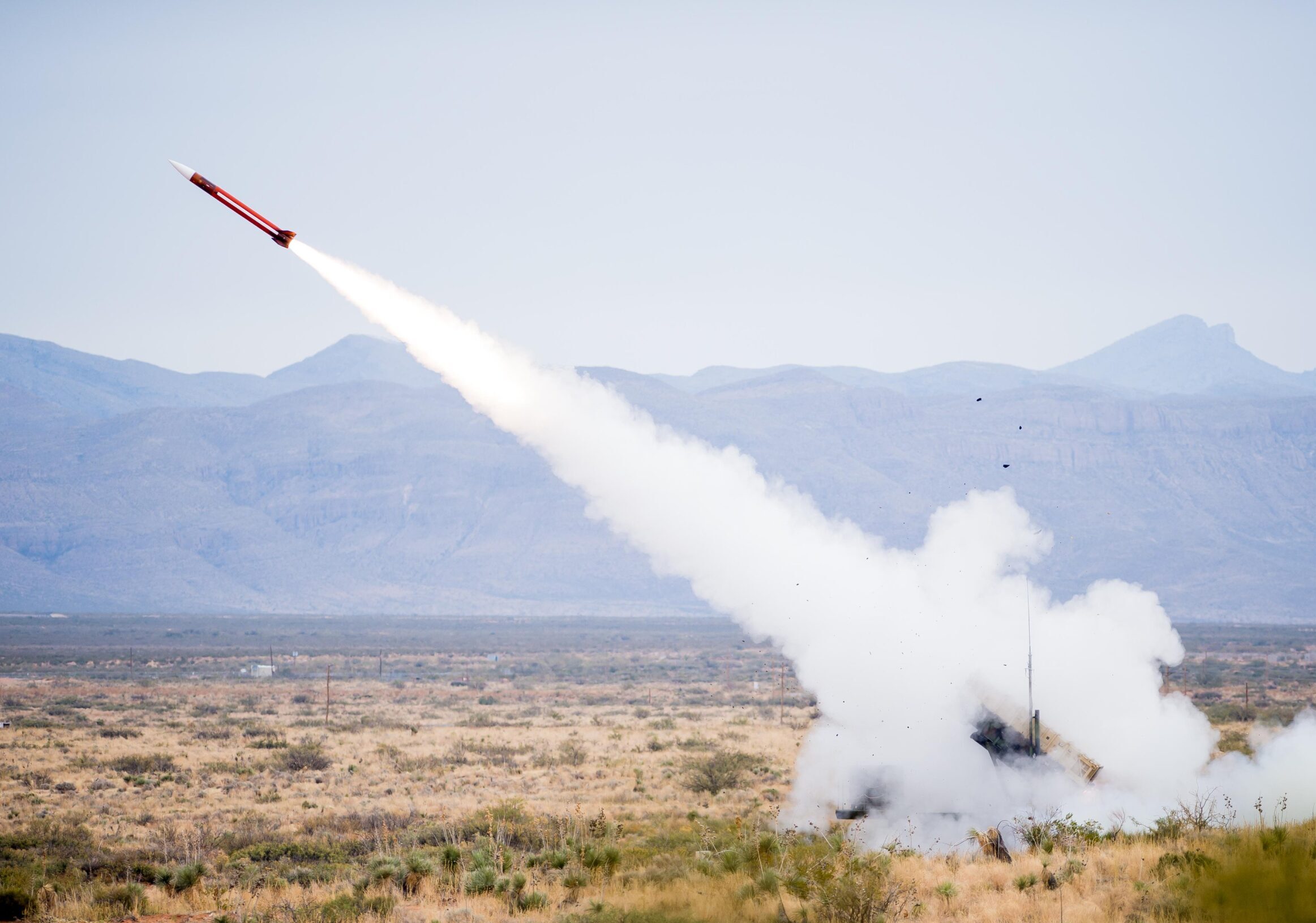
The contrast between America’s combat-proven Patriot system and Europe’s developing Freyja programme presents a problem that goes beyond missile performance: who can manufacture the weapons, how quickly, and who controls their delivery.
Patriot depends on American production capacity and delivery schedules. Freyja remains unproven, but Ukraine and its European partners hope to develop and manufacture it more independently.
On 10 November, President Volodymyr Zelenskyy said Kyiv expected to receive a Freyja system this winter and test it against ballistic threats. Expanding production, he said, was also a priority.
Ukraine has also completed its contribution to the programme: Fire Point’s FP7.X interceptor and launcher. European partners must supply and integrate the remaining technology.
Last month, the Department of State approved a possible $2.1 billion sale of 500 PAC-3 MSE Patriot interceptors to Ukraine. No delivery schedule was announced, and Reuters reported that the missiles, which have yet to be manufactured, are not expected until the early 2030s.
Approval v delivery
Patriot remains Ukraine’s most capable operational defence against Russia’s most difficult ballistic threats. Its interceptors are expensive, slow to produce, and in high global demand.
The package would provide a substantial future supply. But contracting and production must follow while Lockheed Martin fulfils other orders.
The scale of the shortage is striking. In September, Zelenskyy said Russia was producing around 140 ballistic missiles a month. Lockheed Martin, meanwhile, delivered 620 PAC-3 MSE interceptors throughout 2025, equivalent to roughly 52 a month. That production must serve the US military and other Patriot operators, not just Ukraine.
These figures measure different things, but illustrate the pressure on interceptor supplies. Ukraine’s actual deliveries provide a more direct measure of its shortage. In October, Zelenskyy said Ukraine had received an average of just 12 Patriot interceptors a month from the US during 2026.
Ukraine’s need is urgent. Zelenskyy has asked allies to transfer interceptors from existing inventories and replace them through the new order. Those governments must balance Kyiv’s requirements against their own stocks.
The Patriot deal shows the difference between securing approval to buy weapons and having them available for use. Ukraine can obtain approval for hundreds of interceptors without controlling when they leave the production line.
Freyja’s schedule
Freyja is intended to address that longer-term dependence. Led by Ukrainian defence manufacturer Fire Point and backed by European partners, the programme aims to develop an additional source of ballistic-missile defence.
Fire Point is responsible for the FP7.X interceptor and launcher, while European companies are contributing radar, guidance and command technology.
Zelenskyy’s statement suggests an initial configuration could arrive in Ukraine this winter. It does not establish readiness for deployment or confirm an actual interception attempt.
Fire Point’s schedule includes a virtual-target interception before the end of 2026 and a physical attempt around July 2027. The first would test software, communications and engagement calculations rather than destroy an incoming missile.
The winter trials could mark an important step, but Freyja must still demonstrate that its components can work together to intercept a physical target.
Can Europe deliver?
Freyja is the flagship programme of the Integrated Anti-Ballistic Missile Coalition, launched in Paris in July by Ukraine and nine European countries.
Fire Point is expected to act as prime contractor and retain overall design authority. It has agreements with 13 industrial partners.
The goal is to build a production network across Ukraine and Europe, with manufacturing capacity spread across several countries. Fire Point is targeting a single interceptor at less than €1 million, 4 to 6 times cheaper than Patriot. Neither figure has been demonstrated yet.
This takes the argument from Part I further: the factory is part of the weapon. Performance matters, but so does the ability to manufacture, modify and replenish missiles in sufficient numbers.
Freyja’s open architecture is intended to accommodate components from several suppliers, reducing dependence on one production line and making upgrades easier.
On 11 November, in an interview with Breaking Defense, Fire Point CEO Iryna Terekh said Freyja was designed to avoid dependence on a single supplier. She described the system as interoperable, comparing its modular approach to Lego, and said it should be cheaper and easier to manufacture at scale. Those claims have yet to be demonstrated.
That approach also carries risks. Radars, command systems, data links and guidance components must operate together accurately and reliably. A delay involving one supplier could hold up the entire system.
There is also the question of performance. Patriot has intercepted ballistic missiles in combat; Freyja has yet to complete a physical ballistic-target interception. Even a successful test in 2027 would leave further development and qualification before deployment.
Freyja’s significance extends beyond developing another interceptor. It is a test of whether Ukraine and its European partners can establish a more independent, sustainable source of ballistic-missile defence.
Until then, Patriot remains essential. The question is whether Freyja can give Ukraine and Europe greater control over the weapons they will need in the next conflict, as well as this one.