Brussels – In 2025, the agricultural sector generated added value of almost €250 billion, accounting for 1.3 per cent of the European Union’s GDP. According to the data published today by Eurostat, the EU’s statistical office, agricultural income per annual work unit is estimated to have risen by 8.2 per cent compared with 2024, reaching a level 18 per cent higher than in 2020 and 64.9 per cent higher than in 2010.
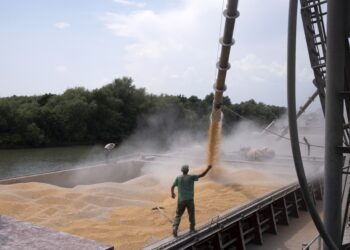
The total value of European agricultural production reached €558.7 billion, a 4.8 per cent increase compared with the previous year and a new all-time high. This result was driven primarily by crops, which accounted for 48.9 per cent of total production, amounting to €273.2 billion. Just over two-fifths of the value, 42.6 per cent (238.2 billion), came from livestock and animal products, in particular milk, cattle, and pigs.
At the national level, more than half of the value of the EU’s agricultural output (56.8 per cent) is concentrated in the bloc’s four largest economies. France tops the rankings with €93 billion, followed by Germany with €78.5 billion, Italy with €74.3 billion and Spain with €71.8 billion. Taking into account Poland and the Netherlands, both at 41.6 billion, and Romania (23 billion), the top seven countries together account for 75.8 per cent of European agricultural production.
Italy remains one of the main drivers of European agriculture. The Italian agricultural sector recorded a 4.2 per cent increase in production value at current prices, reaching €75.2 billion, compared with €72.2 billion in 2024. Even more significant was the trend in value added, which rose by 5.9 per cent to €43.1 billion, despite a slight decline in volumes (-0.2 per cent). This result has enabled Italy to retain its top position in the EU in terms of agricultural value added. In terms of crops, olive oil (+9.6 per cent in volume), cereals (+4.1 per cent) and wine (+2.9 per cent) stood out in particular, while fruit production fell by 7.3 per cent.
The sector’s growth was accompanied by a more modest rise in production costs. In 2025, expenditure on intermediate goods and services – including animal feed, fertilisers, seeds, fuel and veterinary services – rose by 1.8 per cent compared with 2024, reaching €309.1 billion. This figure is, however, 11.8 billion lower than the peak recorded in 2022, when the Russian invasion of Ukraine had caused severe tensions in the markets and driven up commodity prices.
The difference between the value of production and intermediate costs brought the gross value added of European agriculture to €249.5 billion, an increase of 8.8 per cent year-on-year. This result was driven by the increase in the value of production (+4.8 per cent), which outpaced the rise in costs incurred by farmers.
On the employment front, however, the agricultural workforce continues to shrink. In 2025, the sector employed the equivalent of 7.5 million full-time workers, 2.8 per cent fewer than in the previous year. Since 2010, a total of 2.9 million full-time equivalent jobs have been lost, with a particularly sharp decline in Bulgaria, Hungary, Romania, and Poland.
The decline in the labour force, together with the growth in disposable income per unit of labour, helps to explain the rise in productivity in the sector. Overall, real agricultural income per annual labour unit rose by 8.2 per cent in 2025. The most significant increases were recorded in Lithuania (+39.2 per cent), Estonia (+30.8 per cent), and Luxembourg (+26.4 per cent). Bulgaria (-6.1 per cent), the Netherlands and Greece (both -5 per cent), and Portugal (-4.8 per cent) bucked the trend.
English version by the Translation Service of Withub