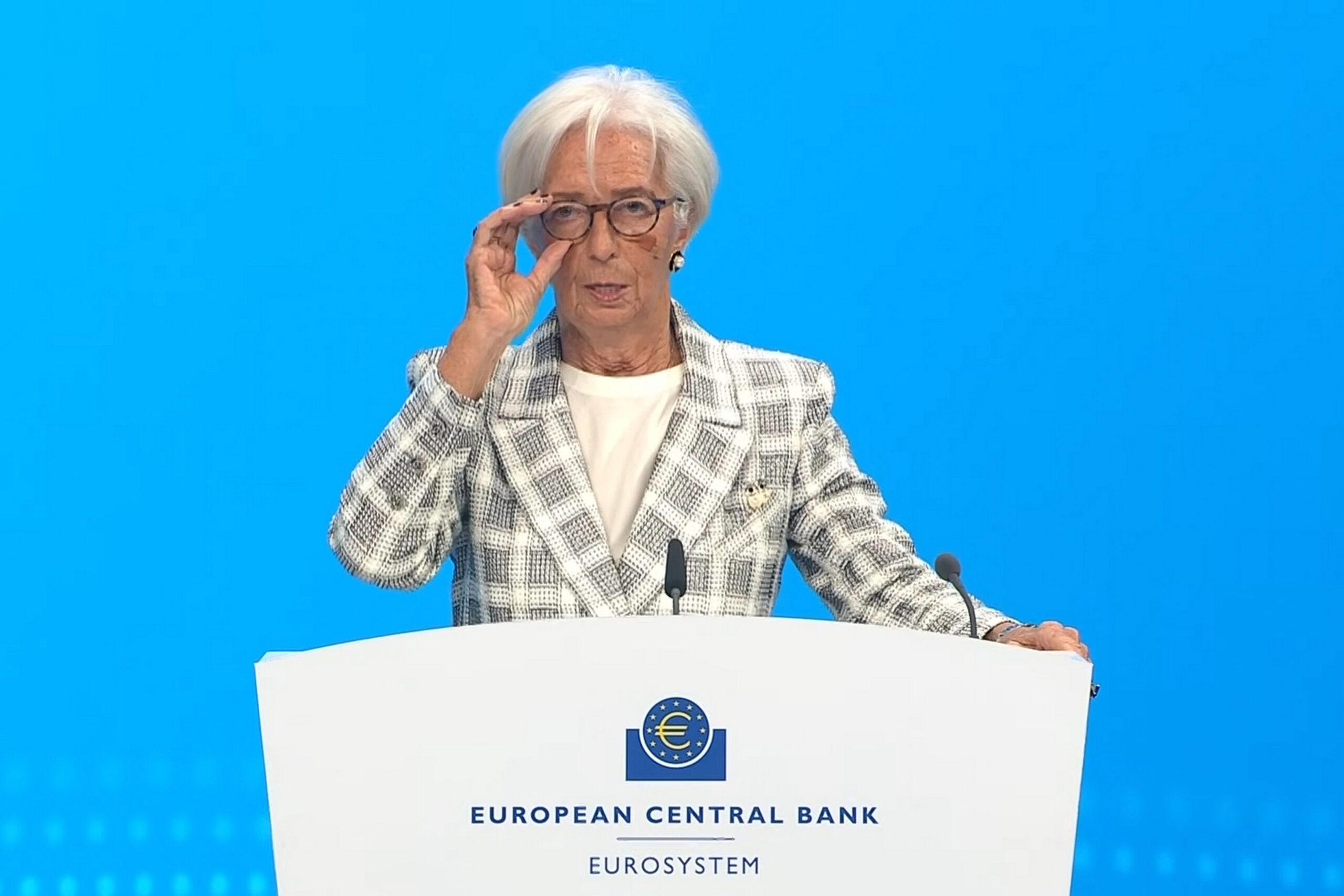
Brussels – The European Union has relied too heavily on others, putting off the work of building and integrating the Union. Today, it risks repeating the same mistake, one that has already proved costly. The President of the European Central Bank, Christine Lagarde, delivers a scathing indictment of the limitations and short-sightedness of those who shaped the European model over the years: “Our growth relied too heavily on external demand for an economy of our size,” she said in her speech at the 36th European Banking Congress in Frankfurt. Translation: Instead of investing in the single market and attracting others to Europe, efforts have been focused on selling abroad.
This was a strategic mistake, as well as a decision that undermines European competitiveness: “Dependencies that we once saw as a normal part of an open economy, from critical raw materials to technology, can now be used against us,” Lagarde noted, in an implicit reference to Russia’s use of gas and the one set up by China for the raw materials the EU needs.
The truth, as the ECB President acknowledges, is that the EU has invested little and half-heartedly in itself. “Take capital markets. We have all agreed for more than a decade that Europe needs a capital markets union”, she said by way of example. “But building it means taking on vested interests now, for gains that arrive years later.” The result is that “Each year without it, more of our savings are invested abroad, and more of our growing firms look elsewhere for funding.”
Amid this potential and resource drain, the ECB President goes on to point out that there is never a condition in place to bring about the change needed: “no single year’s loss is large enough to overcome the resistance to change.” The real, structural problem facing the European Union, she argues, is that “we can see the problem early, but we can act only once it has become impossible to ignore. And by then, almost by definition, it is too late.”
There is now a risk of repeating the same old mistakes: “One recent estimate suggests that raising Europe’s share of the world’s AI computing capacity from around 5 per cent to 15 per cent by 2030 would require investment of around 1.3 trillion euros”, Lagarde points out. “But as long as we can buy computing power from foreign providers and frontier AI models remain available to us, the case for paying that price is hard to make.” This means the EU will never invest, thereby tying its own hands and feet in the face of its competitors.
English version by the Translation Service of Withub